
The line board read. This is the first move of every repair, before any tool touches the panel.
Here is the honest version of this article, before the process. If you care about how your vehicle turns out, do not repair the dent yourself. At best it will look different, not better. That is not a sales line, it is what 35 years of fixing driveway attempts looks like from our side of the shop.
What this guide will do is show you how a dent is actually repaired, the real process, from the light read to the last tap. Not the version with a plunger and a hair dryer. The version a professional runs every day. Read it to understand what your repair involves, to judge whether the person you hire knows what they are doing, or because you are genuinely curious how metal gets moved back to factory shape without touching the paint. By the end you will also know exactly why the do-it-yourself route bites people, and what the one legitimate path into this trade looks like.
| Dent type | Professional repair | Typical timing |
|---|---|---|
| Door ding | $197 to $250 | Usually within the hour |
| Medium dent | $275 to $500 | Same day |
| Crease or body line | $225 to $600 | Same day for most |
| After a DIY attempt | Quoted on what the attempt left behind | Longer, the panel gets reset first |
How is a car dent actually repaired?
The metal is physically moved back to factory shape, pushed from behind the panel or pulled from the front, in small controlled amounts, while a reflection light shows exactly what every push and pull just did.
Strip away every gadget and every trick video, and dent repair is one thing. Metal got pushed past its limit and locked into a new shape, and somebody has to move it back, a little at a time, without disturbing the paint sitting on top of it. That is paintless dent repair. No filler, no repaint, no line on the vehicle history report, and the factory finish stays exactly as it left the factory.
The part almost nobody appreciates is that the moving is the smaller half of the job. The seeing is the bigger half. A dent is a landscape of low spots and high spots, and most of it is invisible under ordinary light. Sunlight scatters and hides damage, which is why dents seem to appear out of nowhere the first time you park in a garage. The repair lives or dies on reading that landscape correctly, and that is where every professional repair starts.
The sections below walk the process in the order it actually happens. The read, the plan, the push, and the pull. Follow those four and you understand how to fix a dent better than most people holding a suction cup.
How does a technician read a dent before touching it?
A reflection light goes up against the dent first. It shows how sharp the impact is, where the crown zones of raised metal sit, and how the surrounding panel is holding pressure, and that read decides the entire repair plan.
The first thing I am going to do is put my light up against the dent. That tells me how sharp it is, where the crown zones are at, which is the pressure area, and how sharp the surrounding area is. A crown is metal the impact pushed up around the low spot, and most dents carry them even when the eye sees only a dish. Where those crowns sit, and how hard the metal folded, determines how the repair starts.
From that read comes the tool decision. A softer tip or a sharper one. Is there access to the backside of the panel, behind the brace or the door skin, or does this dent need to be pulled from the front with glue tabs? Every one of those choices is made before the panel is touched, because the starting point is probably the most important part of the repair process. How you start the dent is how you are going to finish it.
That one sentence is why the kits fail. Not because the tools are junk, though most are, but because the kit skips the read entirely and starts pulling blind. A wrong start on sharp metal locks mistakes into the panel that take longer to undo than the original dent. Our full breakdown of what those kits really do is in do dent pullers actually work.
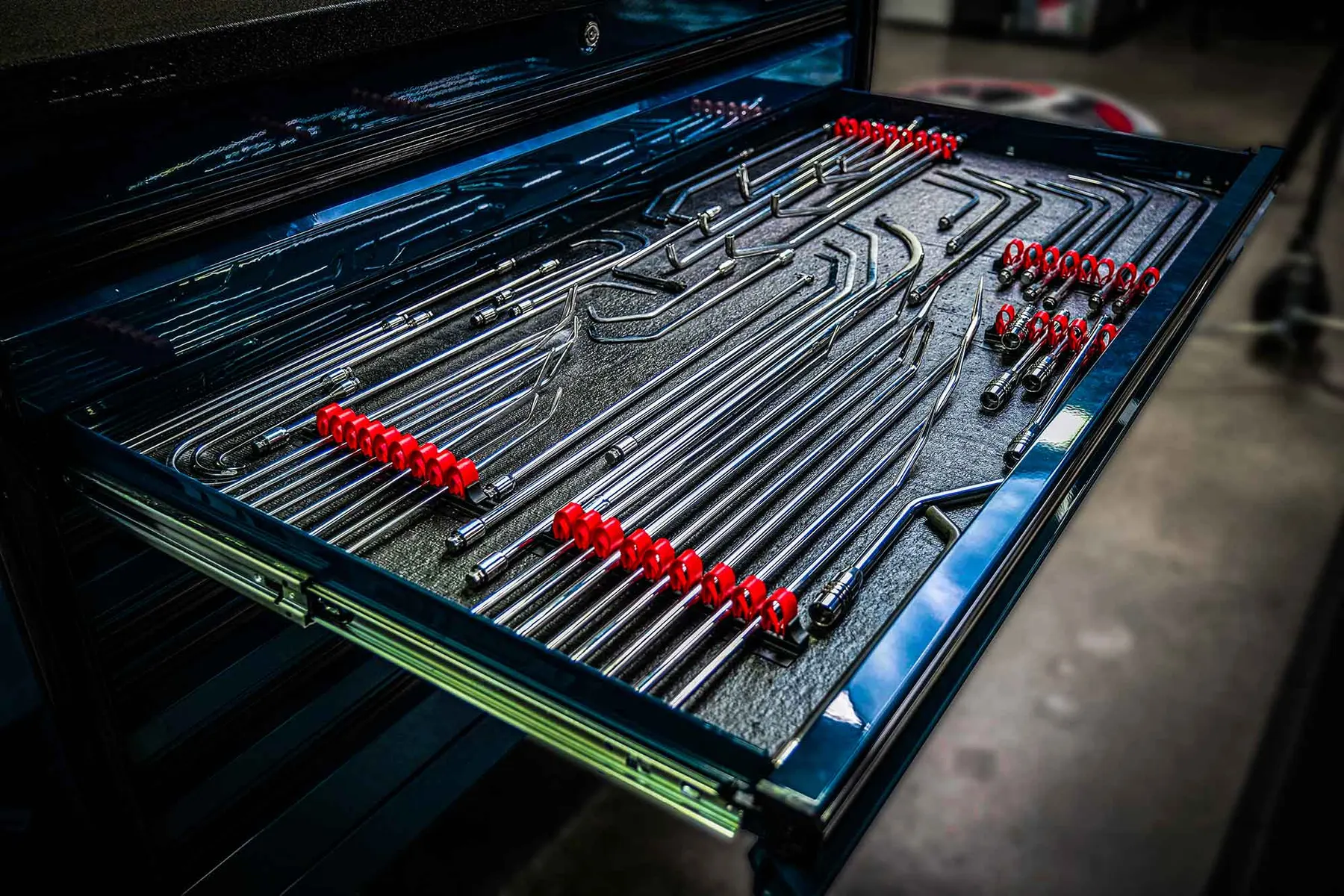
The tool wall. Soft tips, sharp tips, long rods, short rods. The light read decides which one starts the repair.
How do you push a dent out from behind the panel?
The technician gets behind the panel, places the tool tip precisely using the reflection light as a map, applies careful but forceful pressure to flex the dent outward, then releases, and the dent shrinks a little with every controlled cycle.
If the dent has access from behind, the repair runs from the backside. I get behind the panel and watch the reflection to determine exactly where my tool tip is placed. Then careful but forceful pressure, enough to flex the panel, which flexes the dent outward, and then release. As that pressure releases, the dent shrinks. Then the same thing again, a fraction over, and again, sometimes hundreds of times on a difficult dent.
The contact point of the tool has to be very precise, and this is the part you cannot do by feel. The reflection light is the map, the GPS for where the tool tip sits on the other side of the metal. It also shows where pressure needs to be released, because pushing is only half the cycle. Metal that comes up too far becomes a high spot, and high spots read worse than the dent did.
On sharp dents there is a move that sounds backwards but is deliberate. The metal gets overstretched on purpose, pushed slightly past level, and then a tap down tool brings the stress out and settles the center point back flat. Push, read, tap, read. The cycle repeats until the reflection runs clean and the dent looks perfect at all angles. That is the finish line, and there is no shortcut to it.
The tap down. High metal comes down with control, never with guesswork.
How does glue pulling repair a dent?
A plastic tab is bonded to the paint with hot glue, an apparatus lifts the center of the dent upward, and the technician releases the surrounding tension by tapping around the center, making the dent shallower with every controlled cycle.
Some dents offer no clean path behind the panel. Braced sections, double walls, certain quarters. This is how a professional pulls a dent out of a car when the backside is sealed. The pushing happens from the front, and the tool is the tab itself. A plastic tab goes on top of the panel with hot glue, the glue bonds to the paint, and the tab bonds to the glue. Then a slide hammer or a mini lifter pulls the center point of the dent upward.
Here is the difference between that sentence in our shop and the same sentence in a driveway. When the center does not come up all the way, and it usually does not on the first pull, the answer is not a harder pull. The answer is releasing pressure again, tapping around the surface area of the center, letting the metal around the dent relax its grip. Over time the center point gets more shallow, and the shallower it gets, the better the chance of bringing it up higher and smoother on the next cycle.
Pull, tap, read, pull again. Back and forth, patiently, until the panel is flat. The kit in the box store gives you the tab and the glue, and none of the read between pulls. Same physics, completely different outcome, which is why glue pulling finishes panels in a shop and leaves wavy doors in driveways.
A professional glue pull. The pull is thirty seconds. The read between pulls is the repair.
Can you repair a car dent yourself at home?
Our honest recommendation is no, unless you truly do not care about the outcome, because at best the dent will look different, not better, and attempts that go wrong cost more to repair than the original dent.
Now the question the search box actually asked. Should you do this yourself? Here is the answer I give people standing in the shop. Do not do it, unless you really do not care about the outcome. At best it will look different, not better. And if you care about the vehicle and you really want the dent fixed, why would you try it yourself?
The money logic people run in their head is backwards. The thinking goes, professional repair costs hundreds, the kit costs forty dollars. But the dents people attempt at home are our most routine repairs, and the attempts that go wrong become our longest ones. The panel arrives with the original dent still in it, plus high spots, plus trapped pressure that has to be reset before the real repair can even start. If you think it is expensive having us do it, wait until you try it yourself first.
There is one group this advice does not apply to, and it is not the weekend experimenter. It is the person who is genuinely drawn to this craft. If reading this process made you want to learn it for real, that path exists. Myke has trained technicians all over the world, and the online courses at denttrainer.com teach the actual skills, the light, the read, the controlled pressure. Learning the trade properly is a real option. Practicing on the car you drive is not that.
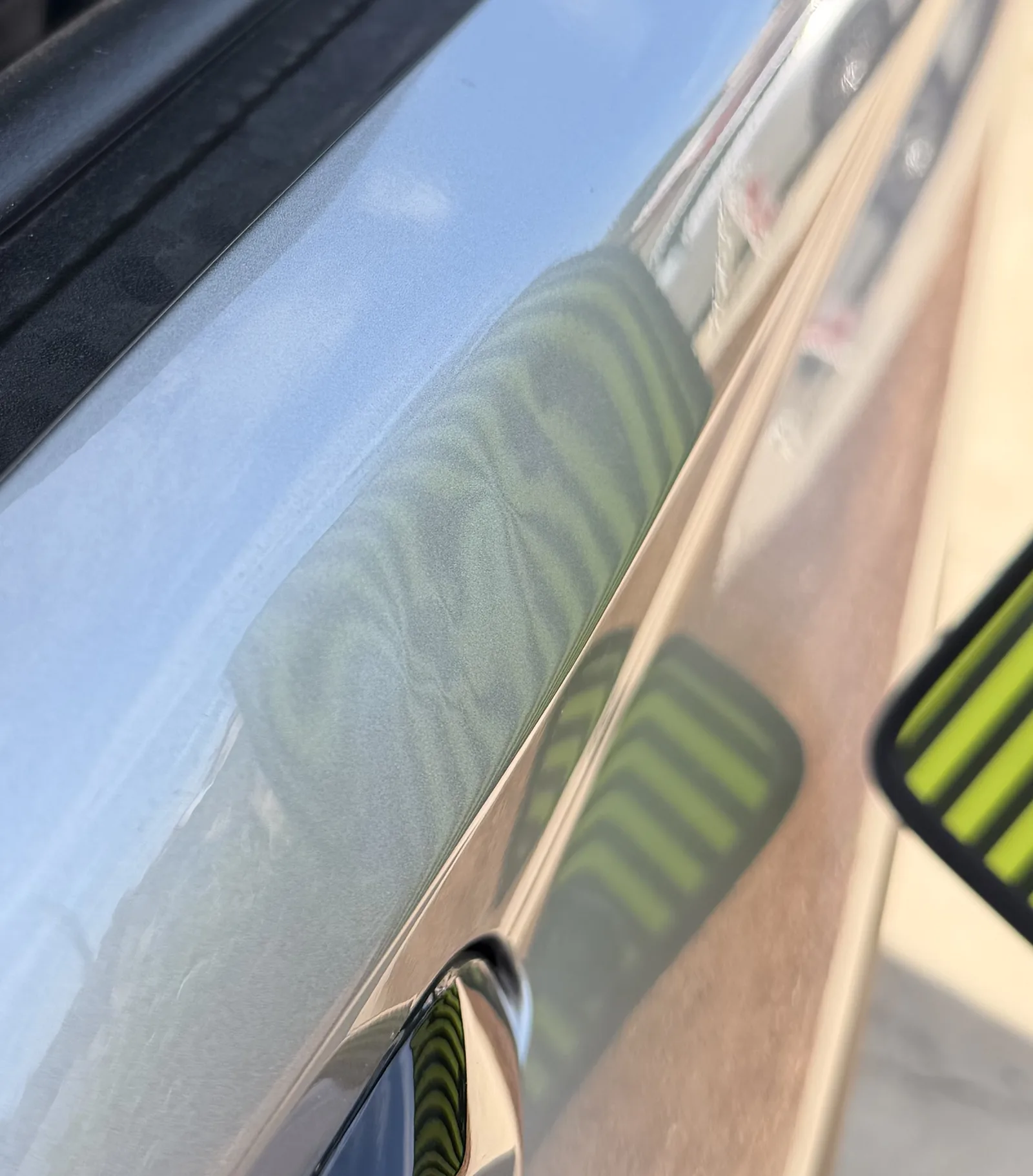
A customer attempt under our line board. Glue puller, then a screwdriver. Every bent stripe is metal that now has to be reset before the dent itself can be repaired.
Does hot water or a plunger really pop a dent out?
Hot water only helps a plastic bumper corner that was just pushed in, and a plunger occasionally releases a soft shallow dent in metal, but neither produces a repaired panel and both can make a sharp dent worse.
The internet's two favorite tricks deserve straight answers. Hot water first. It is not going to do anything unless you are pushing out a plastic corner bumper that literally just got pushed in. Fresh flex in plastic, warmed and pushed from behind, can return toward its molded shape. That is the entire lane. Over time plastic loses its memory and likes to stay where it sits, and at that point it takes a lot more than hot water. On metal panels, hot water does nothing at all. What actually works on plastic covers is on our bumper repair page, and the freezing version of this myth gets its own teardown in the dry ice myth.
The plunger is the more interesting one, and here is the honest version. It occasionally works on soft, shallow dents in metal, the big gentle oil-can type. I am not going to lie, people do get lucky. If different or slightly improved is an acceptable outcome for you on that exact kind of dent, it is your car and the decision stays yours.
The caveat is the part that fills our schedule. Consumers cannot reliably tell what is shallow and what is sharp, and that single misread is the whole risk. A plunger on a soft dish is a lottery ticket. The same plunger on a dent with a sharp point or a crease line jeopardizes the repair, because force applied blind to sharp metal moves it in ways that have to be undone later. If you are not certain which kind of dent you are looking at, that uncertainty is itself the answer.
What should you actually do about your dent?
Send two or three photos through the estimate form, get a real price and an honest read within minutes, and let the repair happen with the factory paint intact, usually the same day.
The right first move costs nothing and risks nothing. Photos. Two or three, from a slight angle rather than straight on, in open shade if you can manage it. Send them through the estimate form on our contact page and a real technician reads them within minutes, not a call center, and tells you exactly what the dent is, what it runs, and how long it takes.
Most everyday dents are finished the same day, many within an hour or two, at your home or office anywhere in San Diego County or south Orange County, or at the shop at 2120 W. Mission Rd. #240 in Escondido for the bigger and more complex work. The factory paint never gets touched, nothing lands on the vehicle history, and the repair is done when the dent looks perfect at all angles. What each type of dent runs, and why, is laid out in how much PDR costs.
And if the dent came with a story, a parking lot mystery, a shopping cart, a car door, the read is the same either way. The panel does not care how it happened. It only cares that whoever repairs it starts correctly, because how you start the dent is how you are going to finish it.
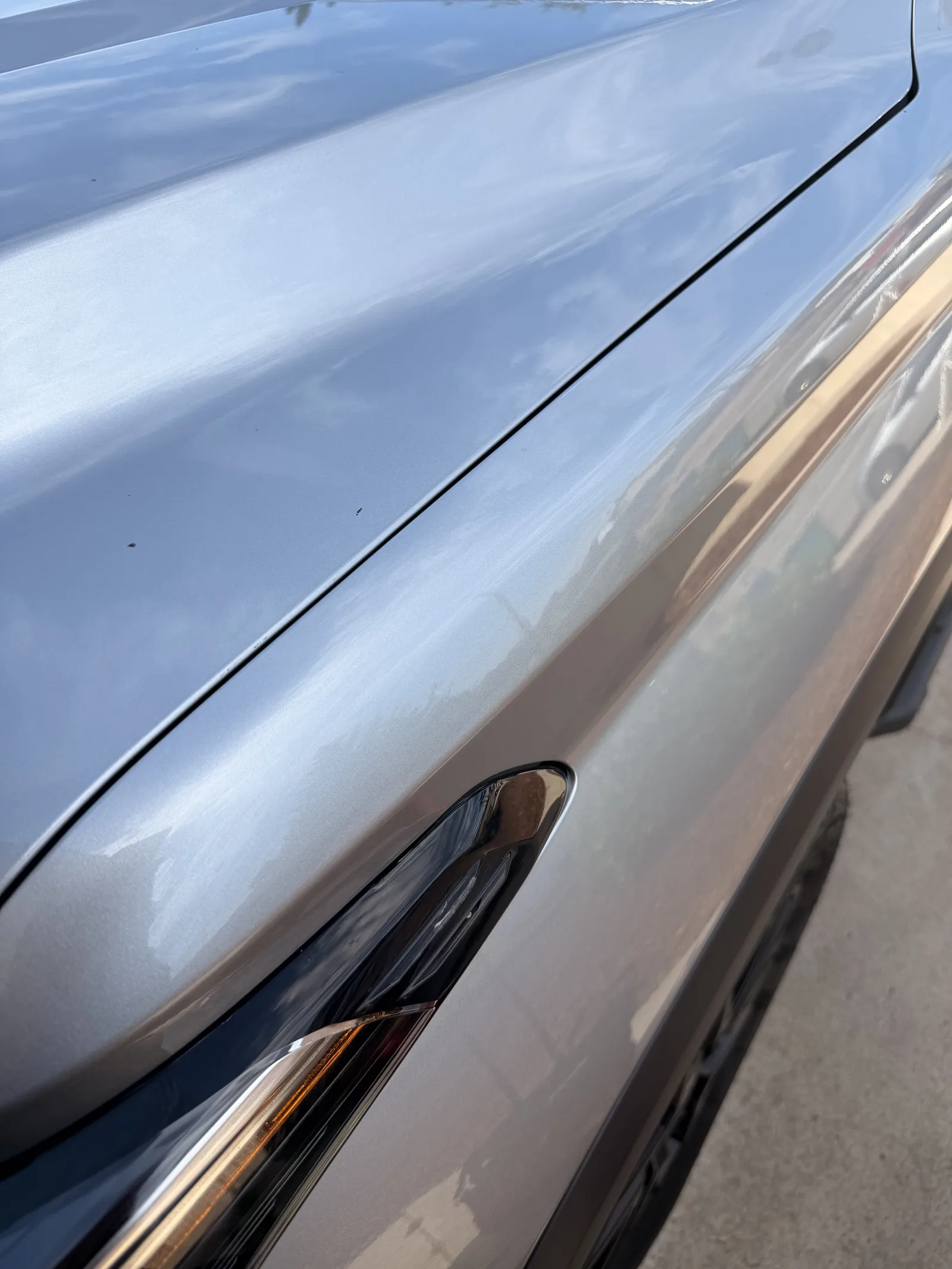
The finish that matters. The reflection clean and the dent gone, perfect at all angles.
Questions, Answered.
Can a dent be repaired without repainting?
Yes, when the paint is intact. Paintless dent repair moves the metal back to factory shape from behind the panel or with controlled pulls from the front, and the factory finish never gets touched. If the paint is cracked or chipped, the repair needs a paint plan, and we will say so straight from your photos.
How long does it take to repair a car dent?
Most everyday dents are done the same day, and standard door dings are usually finished within the hour. Larger or more complex damage can take longer, and the estimate tells you the honest timing before anything starts.
How much does it cost to repair a car dent?
At Dent Time, door dings run $197 to $250, medium dents $275 to $500, and creases $225 to $600. The final number depends on sharpness, location, access behind the panel, and paint condition, which is why photos get you a real price in minutes.
How do I know if my dent is shallow or sharp?
Honestly, most people cannot tell, and that is not an insult, it takes a trained eye under the right light. A soft dish with no visible point is usually shallow. Any dent with a distinct impact point, a line, or a fold is sharp. When in doubt, send photos before touching it.
Will a dent get worse if I wait to repair it?
With intact paint, no. Steel does not rust through an unbroken finish, and the dent does not grow on its own. The honest reasons to move sooner are lease returns, appraisals, and trade-ins, where every panel gets flagged.
Do dent repair kits from Amazon work?
Rarely to a finished panel. Even a shallow dent leaves a high spot behind a blind pull, and a high spot shows from farther away than the dent did. We wrote the full honest breakdown, including what the glue can do to your paint, in do dent pullers actually work.
Can every dent be fixed with paintless dent repair?
Most can, including many that look too big. The limits are cracked paint, torn metal, and badly stretched panel edges. Our team repairs everything from door dings to large complex dents, and the photo estimate tells you which side your dent is on.
Where can I learn to do PDR properly?
Through real training, not a kit. Myke has trained technicians worldwide since the 1990s, and his courses at denttrainer.com teach the light, the read, and the controlled pressure that make the craft work. It is a genuine career path for people who fall in love with the process.