Before You Decide

Is Paintless Dent Repair Worth It in San Diego?

And is Dent Time worth it over the cheapest quote you can find?

Almost everyone shops paintless dent repair as though the repair is a fixed thing and only the price moves. It is the other way around. Quotes on the same dent land within a couple of hundred dollars of each other. The finished panels are nowhere near that close, and the only thing deciding which one you end up with is whose hands were on it. So the honest question is not whether paintless dent repair is worth it. It is who you hand the keys to. No urgency, no sales pitch. Read it and decide for yourself.

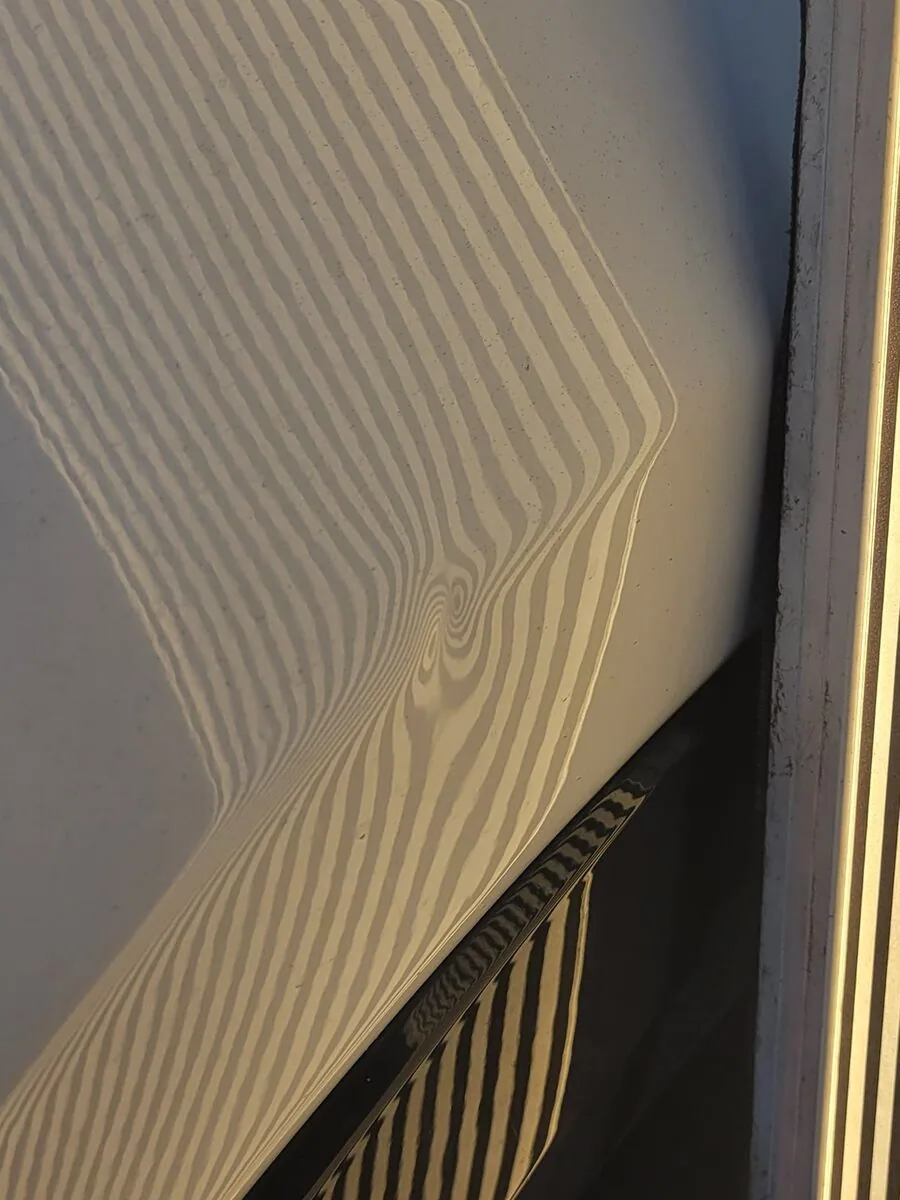
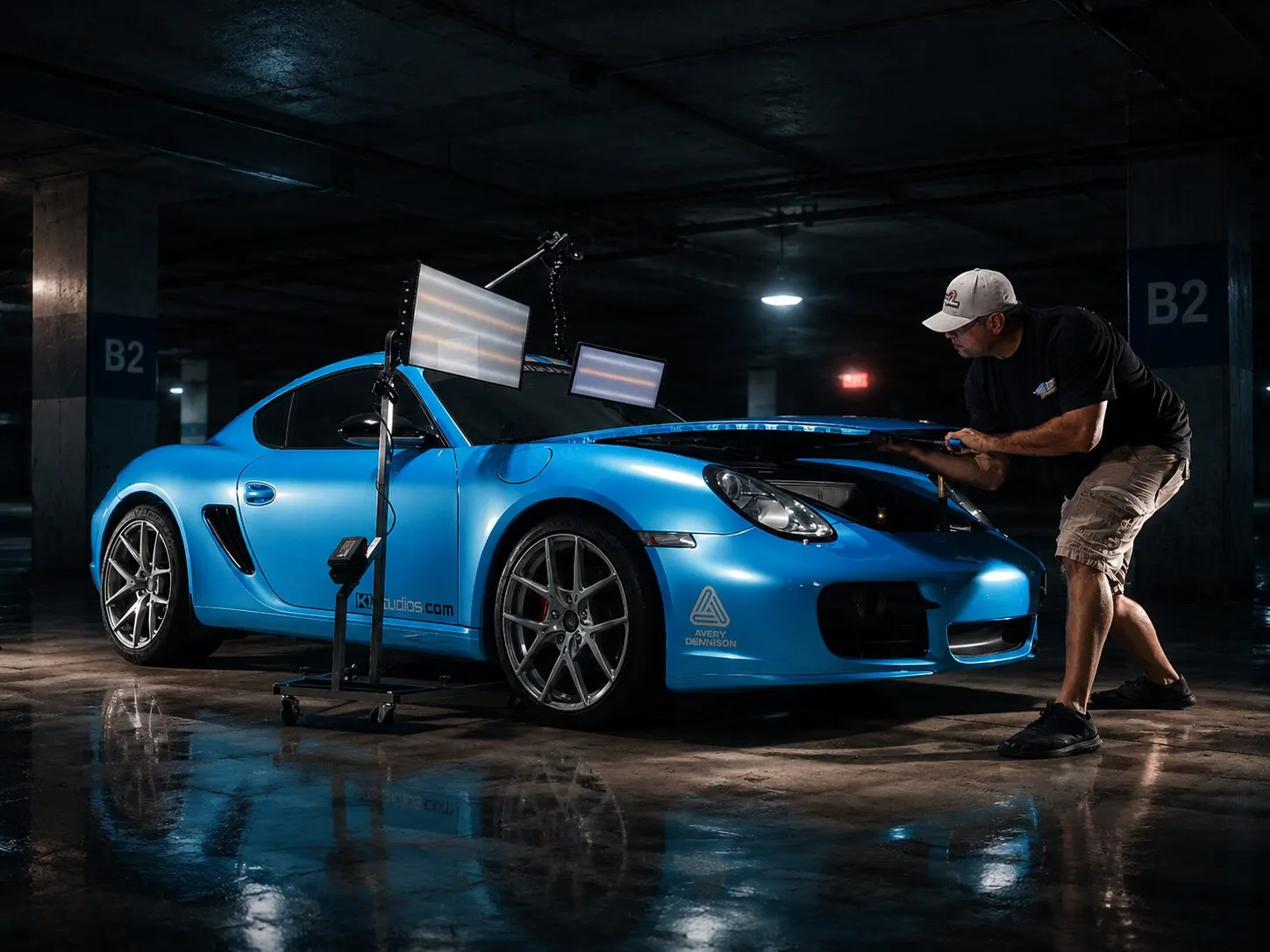
That is a crease, seen from the angle that shows it. The reflected lines are dead straight, and you can see exactly where the metal moves because the lines bend with it. The same panel looked at straight on, on the right, shows almost nothing. That is the difference between looking and seeing, and it is the whole page.

Start with the part nobody in this trade wants to say out loud. Nothing is going to happen to your dent. It will not get worse, it will not spread, and it will not cost more next year than it costs today. There is no clock on it. Anybody creating one is selling you something.

So the risk was never leaving it alone. The risk is the day you decide to fix it, because whoever you choose decides how good it turns out. Most people go looking for who is lowest instead of who is best, and the difference between those two does not show up until it is too late to undo.

That is the whole reason this page exists. Not to talk you into a repair. To make sure that when you do one, you are choosing on the thing that actually decides the result.

The Whole Picture

Four Ways a Dent Ends.

Same dent, four outcomes. Cost is one line in this table, and it is not the first one.

01

Leave It

Nothing happens. The dent will not get worse, it will not spread, and it will not cost more in a year than it costs today. Anyone telling you otherwise is selling urgency. If you want to live with it, live with it. The risk in this whole list is not the dent sitting there. It is what happens the day you finally decide to fix it.

The metal
Unchanged
The paint
Factory
Three years on
Exactly the same dent
02

The Body Shop

A body shop solves a dent with filler, sanding, primer, paint, and a blend into the panels beside it so the new color does not sit in a hard line. For genuinely broken paint, for metal stretched past saving, or for a severe dent sitting right on an edge with no way to reach the back of it, this is the correct answer and we will tell you so. What it costs you is the factory finish. That panel is refinished from then on, and refinished is something a paint gauge reads and a buyer asks about.

The metal
Filled and sanded
The paint
Refinished, blended
Three years on
On the Carfax, and in the value
03

The Lowest Bid PDR

The tools are the same. Reading the metal is not. A dent only has so much metal around it that can travel toward the center, and a technician who does not understand metal flow simply pushes. The panel runs out of metal to give, the push goes past where it should stop, and by the time they go to tap it down there is nothing left to stabilize it with. That is a stretched panel. It photographs fine. Then you park under the strip lights at the store and the reflection bends where it should run straight.

The metal
Stretched, nothing left to work with
The paint
At risk, sometimes cracked
Three years on
Usually has to come off the car
04

Paintless, Done Properly

The dent is fixed from behind the panel, the metal moved back to where it started in the order it went in. No filler goes on the car and no paint is sprayed. When it is finished the dent is gone. Not improved, not hard to find. Gone. And because nothing was added and nothing was covered, there is nothing about that panel to disclose to anybody later.

The metal
Returned to shape
The paint
Untouched, still factory
Three years on
Nothing to disclose

Every one of these is the right answer for some car on some day. Here is exactly when we send you to the second one.

The Real Comparison

It Is Rarely Us or a Body Shop.

Almost everyone assumes the choice is paintless repair against a body shop. For most dents it is not. The real choice is which paintless technician, and that is the comparison nobody puts in front of you.

Roughly 85 percent of the people quoting against us on a door ding are mobile technicians. Many are one person and one van. A good number have been doing this under five to eight years, and some started this year. From where you are standing they are indistinguishable. Same van, same before and after photos, same five stars, same promise. The only thing that visibly separates two quotes is the number at the bottom, so that is what people choose on.

There is nothing wrong with being new. Everyone was. The problem is that you cannot tell, and a dent gives you one attempt before the correction gets much harder.

And here is the part that makes the usual advice useless. Years in the trade do not settle it either. There are long time mobile technicians, the ones who read as seasoned veterans and carry a wall of five star reviews, who are still approaching a panel the way it was approached in 2005. The trade moved. The cars moved further. Aluminum, high strength steel and EV panels are not the steel that forgave a heavy hand twenty years ago, and a method that worked then can quietly wreck one of them now.

So the two things you can actually see, how long they have been doing it and how many stars they have, are the two that tell you the least. Experience only counts if what they do has changed since they learned it.

The reviews are worth understanding rather than dismissing. They are real, and the people who left them meant them. But a review measures how somebody felt about their experience, not what the metal ended up doing. Most people have never seen a dent finished to the last five percent, so they have nothing to compare theirs to. The dent they could see is gone, the technician was pleasant, the price was fair, and five stars is an honest reflection of all three.

None of that is the customer's fault. Nobody ever showed them where to stand or what to look for, which is exactly what the section further down does. A wall of five stars tells you people were happy. It does not tell you the panel was right.

And that includes ours. We have a lot of reviews and we are glad to have them, but do not take them as proof either. Go and look at the panel.

And to be plain about where we sit: we are mobile too. Dent Time started as mobile repair and that is where the name came from. The Escondido shop was added to it, not swapped in for it. So none of this is mobile against a shop. It is about whether the person at your car is fixing today's panel or the one they were trained on.
A Driveway in San Diego

Same board, same standard, somebody else's driveway. Mobile was never the shortcut.

Use This On Anybody, Including Us

Three Questions Before You Hand Over the Keys.

Since you cannot tell them apart by looking, tell them apart by listening. You do not need to know how to fix a dent to know whether somebody does.

How are you going to attack this dent?

A technician who has already looked the panel over will tell you where they are getting in, what they are moving first, and what the hard part is. A vague answer is an answer.

Are you going to drill any holes?

Drilling is faster for the technician and permanent for your car. Ask outright. If the answer is yes, ask where, and ask what happens to that hole afterwards.

Why is it this price?

Ask it about a high number and a low one. Both should have a reason behind them that makes sense to you, and if the explanation does not hold together, that is worth more than the number itself.

None of this is about picking us. Ask three shops and the answers will sort themselves out in front of you.

Why You Ask About Drilling

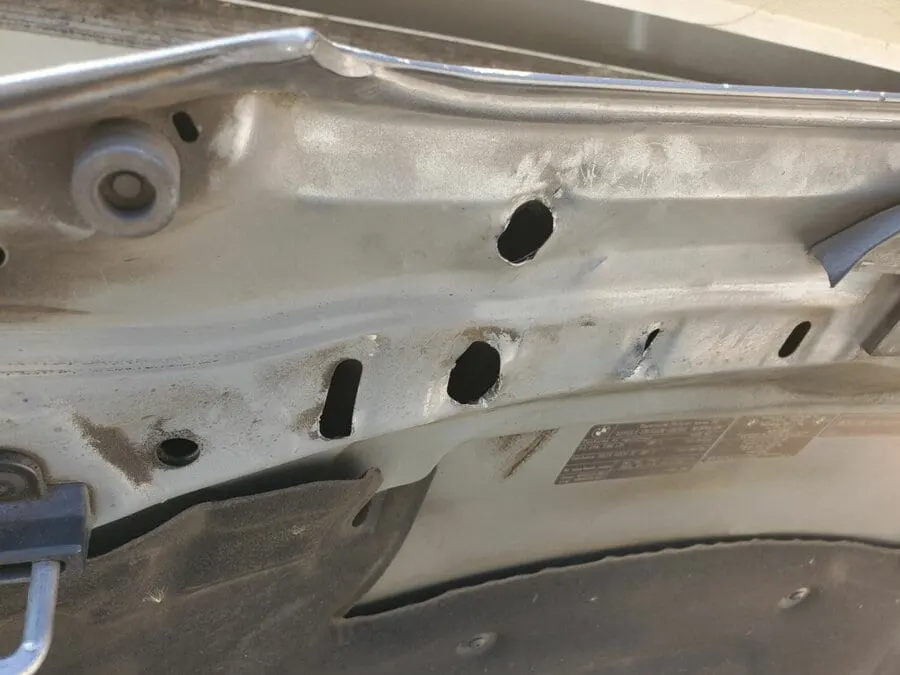
The underside of a hood somebody else worked on. Those holes are permanent, and nobody who owns this car will ever see them.

Why PDR Skill Matters More Than Price

The Dent Was Fixable. The Repair Wasn't.

The most common question San Diego drivers ask after a bad experience is: how was I supposed to know? The answer is always visible, if you know what to look for. Poor PDR leaves metal that was pushed with the wrong tools, clearcoat stressed or cracked from sharp contact, and in some cases holes drilled where none belonged. None of that can be undone by another technician. Every car in this section was dent-repairable before the first shop touched it. This is what to look for before you hand your car to anyone.

Multiple unnecessary holes drilled through a car panel by an inexperienced PDR technician, leaving open rust points

Unnecessary Holes Drilled

Multiple holes drilled through the panel where none were needed, then left open, unsealed, unprotected. Every one of those openings is now a rust point working inward. The structure is compromised.

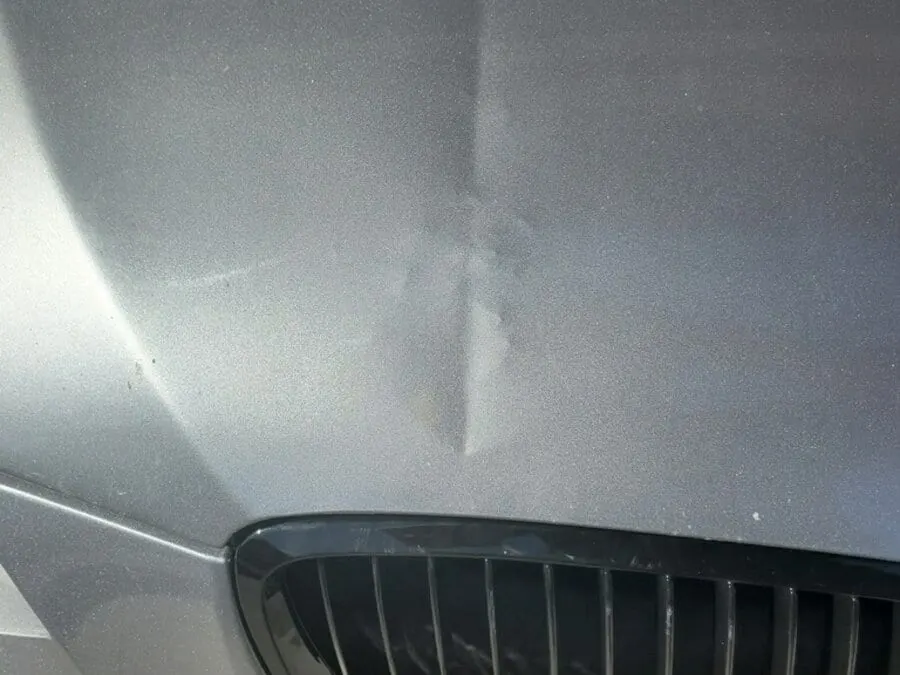
BMW hood with clearcoat stressed and high spots from sharp PDR tool pushed with too much force

Sharp Tool Damage on a BMW Hood

Done by a technician who called himself experienced. A sharp tool pushed with too much force created high spots across the hood and stressed the paint at every contact point. Once the paint is broken from underneath, PDR is no longer an option. The panel needs a full respray.

Car door with paint broken from underneath and flaking away after aggressive pushing with non-professional PDR tools

Non-Professional Tools, Paint Broken From Underneath

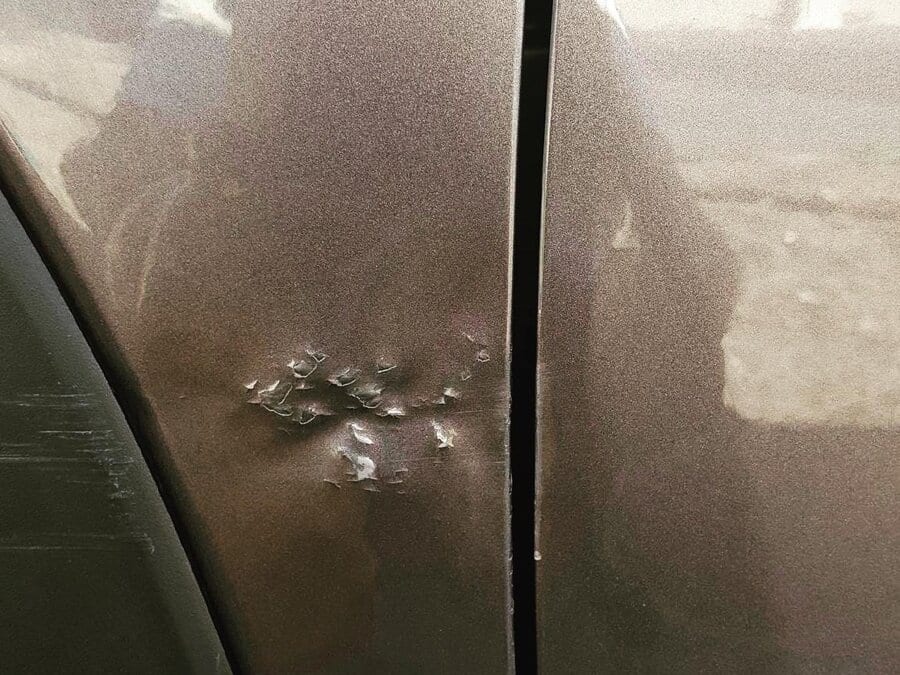
Aggressive pushing with the wrong tools poked the metal up from underneath across the panel. Each raised point broke the paint surface from below. There is no pushing these back down. The factory finish is gone.

Vehicle panel with parking lot mobile PDR filler failing and lifting the factory paint

Parking Lot "Fix" Now Needs a Body Shop

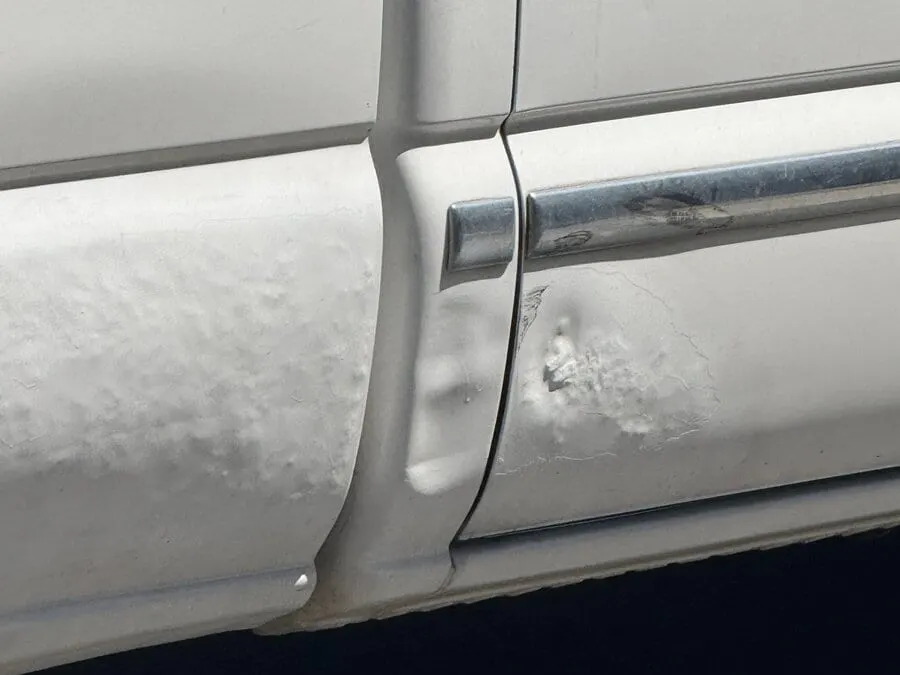
A mobile company in a Walmart parking lot told the owner it would wash away by tomorrow. It didn't. What they applied bonded to the paint and lifted it, leaving the panel in worse shape than the original dent. This car now needs new panels and collision work that could have been avoided entirely.

Every panel above was dent-repairable before the first technician touched it. The damage in these photos was not caused by the original impact, it was caused by the repair. That distinction matters, because it changes what you are actually deciding. The dent is not the risk. The technician is.

Myke Toledo · Dent Time
Why the Technician Is Everything

Choosing PDR Is Not Like Choosing a Gallon of Milk.

When you buy a gallon of milk, every gallon at every store is the same product. Choosing the one that costs less makes sense. PDR is not that. Two technicians looking at the same dent will make completely different decisions about access, pressure, and where to stop. One of those decisions preserves your factory finish. The other one does not.

Thirty-five years in this trade is not a marketing number. It is the count of dents, panels, and metal types that live in a technician's hands as muscle memory. You cannot buy that experience at a lower price point. You can only find it or not find it.

The tool does not read the metal. The technician does.

35Years Reading Metal
Started at Dent Man in 1991. Dent Time founded 2001. No shortcut to this kind of pattern recognition.
0Paint Used, On Any Repair
Paintless means paintless. If paint enters the conversation, something went wrong before the repair started.
10k+Repairs Completed
Door dings, deep creases, body line damage, hail, aluminum panels. A shop that only does this.
500+Five-Star Reviews
Unprompted. No reputation service. Clients who came in skeptical and left with nothing to say except the truth.
Learn This Once, Use It Forever

How to Actually Look at a Finished Repair.

Most people never see a bad repair, because nobody taught them where to stand. It takes about twenty seconds.

Here is the thing almost nobody realises. You are not looking at the paint. You are looking at something else reflected in it. A panel is a mirror, and the test is simple: find a straight line against the panel in the reflection and see whether it stays straight as it crosses the repair.

  1. Never look at it straight on

    Facing the panel square is the one angle that hides everything. It is also the angle every phone photo is taken from, which is why a repair can look perfect in a picture and not in person.

  2. Get your eye down to the panel

    Crouch until your eye is level with the height the dent was at, and look along the panel rather than at it, almost parallel to the surface. From there the paint stops being a colour and starts being a mirror.

  3. Give yourself a straight line to read

    The easiest way is to ask. "Would you mind putting your board back up and moving it further back while I look across the panel?" That board exists to throw a straight line of light onto the paint, and any technician who is proud of the repair will do it without hesitating.

    If the light is already packed away, use what is around you. A painted parking line, a light pole, the edge of a building, a door frame. Anything with a long hard straight edge. Move your head until you can see that edge reflected in the panel, running across the spot where the dent was.

  4. Watch the line, not the paint

    Follow that reflected edge as it travels over the repair. If it stays straight, the metal is straight. If it bows, ripples, kinks, or stretches as it passes, the metal is doing the same thing. The reflection is coming off the shape underneath, so the paint cannot cover for it.

  5. Then check it from the other side

    Same low angle, other direction. Work that looks clean from one end will often give itself away from the other, and that is exactly the check a technician runs on their own repair before calling it finished.

  6. What a repair that stopped early looks like

    High spots. Waves. Pock marks, divots, unevenness. The dent is out, but the surface around it never came back flat, and the reflected line wanders across it instead of running clean.

Do it under the right light. Garage lighting, shop lights, or the long strip lights over a parking lot are what reveal a panel. Bright direct sun is the worst place to check, because it washes the reflection out and hides the very thing you are trying to see.

A line board reflected in a car door before repair. The straight lines twist and knot where the dent is.
Before. Watch the lines, not the paint.
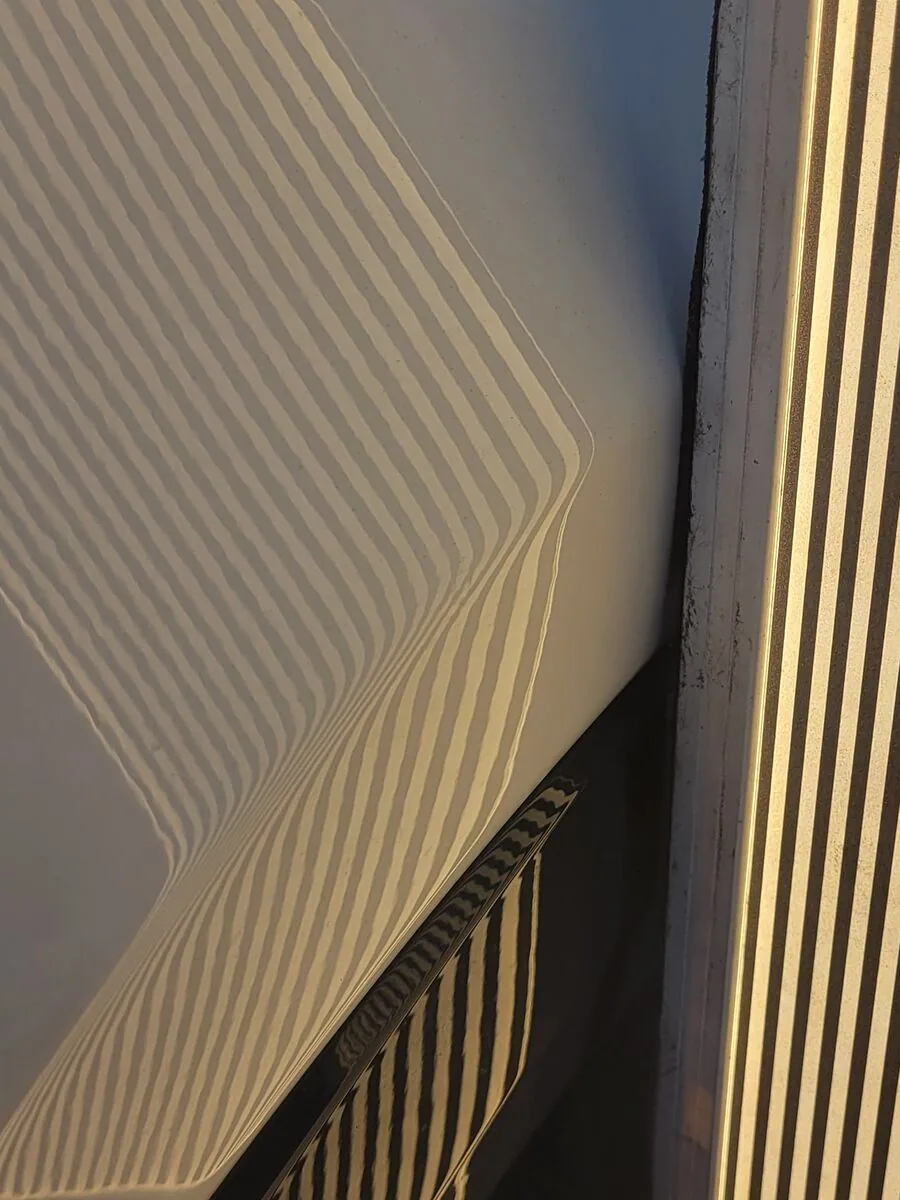
The same door after repair. The reflected lines run straight and evenly across the panel with no distortion.
After. Same board, same angle.
Same panel, same board, same position. This is the check, and it is the only one that matters.

Run this on our work. Run it on anybody's. A shop that has done the last five percent has nothing to lose by you knowing how to look, and one that stopped at ninety has everything to lose.

Where the Money Actually Goes

Refinement Time, and How Many Angles It Gets Read From.

Paintless repair has no undo, and the panel does not care what you paid. Getting a dent most of the way out is the part that looks impressive on video. It is also the fast part. The difference between a repair that is close and a repair that is finished lives entirely in the refinement at the end, and that refinement is where nearly all of the hours go.

Which is why the same dent can carry two honest prices. A premium repair and a practical repair are not different jobs, they are different amounts of refinement time. When a dent is more advanced, both numbers go up, because the time and the experience the panel demands go up with it.

Said plainly, and it is the whole business in one sentence: our practical repair is generally where the trade stops and calls it premium. Most stop at eighty or ninety percent. The last ten is the part you keep looking at for the next five years.

This is also why bringing stretched metal back is one of the hardest things in this trade. There are deeper methods for saving a panel that has gone that way, and they are not learned in a weekend. When it cannot be saved on the car it comes off the car, and it is almost always a hood or a door, which is a long way from the afternoon job it started as. Even a repair that never gets overstretched is difficult, because those methods are brought in the whole way through specifically so it never does. The skill is not in the pushing. It is in knowing when to stop and what to reach for instead.

So if you have been handed exactly one number and a yes or no, that is worth questioning. Not because the number is wrong, but because on most dents there is more than one honest way to approach it and you should be shown both.

The Last Five Percent

This is what the hours actually go into. Not the part that looks impressive, the part that decides whether you keep noticing it.

The Honest Part

When We Send You Somewhere Else.

Paintless repair is not the answer to everything, and the cases where it is not are specific:

Most of it comes down to two things: where the dent is, and what the back of that panel looks like. When several of those land together, a severe dent on an edge, aluminum, no backside access, paint already broken, that is body shop work and we say so on the photos rather than after we have your car.

Outside of those, a dent with the paint still intact is generally something we can get to. Some panels are far more involved than others, and that is a large part of why the shop exists alongside the mobile work, for people who care what the result actually looks like.

We are not in business to be the lowest number. We are here for people who want the best repair the panel can give, and for people working to a budget who still want to be happy with what they end up with. On larger dents that means real options at different standards, not one number and a yes or no.

When It Is Not Ours

An edge, with filler already letting go. Nothing behind this panel can be reached, and no amount of skill from the back brings it back.

Why one dent costs more than another

Sharpness rather than size, where it sits on the panel, what is behind it, and whether the metal is steel or aluminum. Those four move a price far more than the width of the dent does.

See the real ranges
The Part That Is Not on the Estimate

Every Repair Has Two Prices. Most People Count One.

People measure the pocketbook. Almost nobody measures the time, and the time is where a body shop repair really costs you. Drop the car off, wait through teardown, filler, primer, paint, cure, blend and reassembly, arrange something else to drive in the middle of it, then go back and collect it. That is days out of your life for a dent, and none of it appears on the estimate you were comparing.

Then there is the part that outlives the repair. That panel is refinished from then on. It affects what the car is worth when you sell it or hand it back, and it goes on the Carfax where the next owner reads it.

Insurance is worth understanding before you reach for it. Once a claim is opened it can land on the vehicle record whether or not you go ahead with the repair, and insurers can reprice a policy after one. We are not going to tell you what yours will do, because we do not have your policy in front of us. We will tell you it is worth being certain before you open one, and that a paintless repair paid out of pocket leaves no claim to record.

So the intention here is narrow and it is the whole job: save the factory finish, and save your time. Somebody who does this properly gives you both back. That is what you are actually choosing between, and it was never really the number at the bottom of the quote.

Straight Answers

What People Actually Ask.

Is paintless dent repair worth it?

Yes, when the paint is intact. Paintless repair returns the metal to shape without filler or paint, so the panel keeps the finish it left the factory with. The comparison that matters is not the price against zero. It is against a refinished panel that shows on a paint meter for the life of the car.

Why is paintless dent repair expensive?

It is skilled hand work with no shortcut and no undo. The technician fixes it by moving the metal back in the reverse order it went in, sometimes over hours, watching the panel through a light board, and one push too far cannot be taken back. What you are paying for is the person, not the tool. Prices start at $197 for a door ding and move with the sharpness of the dent, its position on the panel, what sits behind it, and the metal itself.

Is paintless dent repair cheaper than a body shop?

It usually costs less, but price is the smaller part of it. A body shop fills, sands, primes, paints and blends into the neighbouring panels, which takes days rather than hours and leaves that panel refinished for the life of the car, on the Carfax and in its value. Paintless repair adds nothing to the vehicle and is usually same day. One leaves you a repaired panel, the other leaves you the original one and your week back.

Does paintless dent repair damage the paint?

Done correctly, no. The factory finish is flexible enough to move with the metal when the metal is moved gradually and in the right order. Damage comes from forcing it: too much pressure in one place, or a glue pull left on too long. That is a technique problem, not a limitation of the method.

Can a badly repaired dent be fixed again?

Sometimes, and it costs more than the first attempt would have. Metal that has been stretched has to be brought back down before anything else can happen, and stretched metal is the hardest thing in this trade to correct. Drilled holes and cracked clear coat do not come back at all.

How can I tell if a dent repair was done well?

You are not looking at the paint, you are looking at something straight reflected in it. Never look at the panel straight on, because that angle hides everything. Crouch until your eye is level with where the dent was and look along the panel rather than at it. Find a painted parking line, a pole, or a door frame reflected in the paint, then keep changing your angle until you have seen the panel from several of them. Follow that straight edge as it crosses the repair. If it stays straight the metal is straight, and if it bows, ripples or kinks then so does the metal. Check both directions, and do it under garage lighting, shop lights or parking lot strip lights rather than direct sun, which washes the reflection out.

How do I know if my dent can be repaired without paint?

Send photos. Shoot the damage straight on and again at about 45 degrees so the light rakes across the panel and shows the shape. Myke reads every set himself and tells you plainly whether it is paintless work, paint work, or both. If it is not our job, he says so.

The Escondido Shop
  • Monday to Friday8:30am to 4:00pm
  • SaturdayBy appointment
  • SundayClosed

2120 W. Mission Rd. #240, Escondido, CA 92029. Walk in during the week, or text ahead so somebody is ready for you.

Estimates
  • Days and eveningsWell past shop hours
  • Sent after hoursAnswered by 8:30am next business day
  • Mobile serviceSan Diego County and South Orange County

Estimates are done from photos rather than at a counter, so they are not tied to the shop being open. Send yours whenever it suits you.

No Pressure, No Pitch

Send the photos and find out.

Straight on and at 45 degrees. Myke reads every set himself and tells you what it is, including when it is not our job.

Get a photo estimate