
BMW Paintless Dent Repair: How I Restored the Body Without Repainting
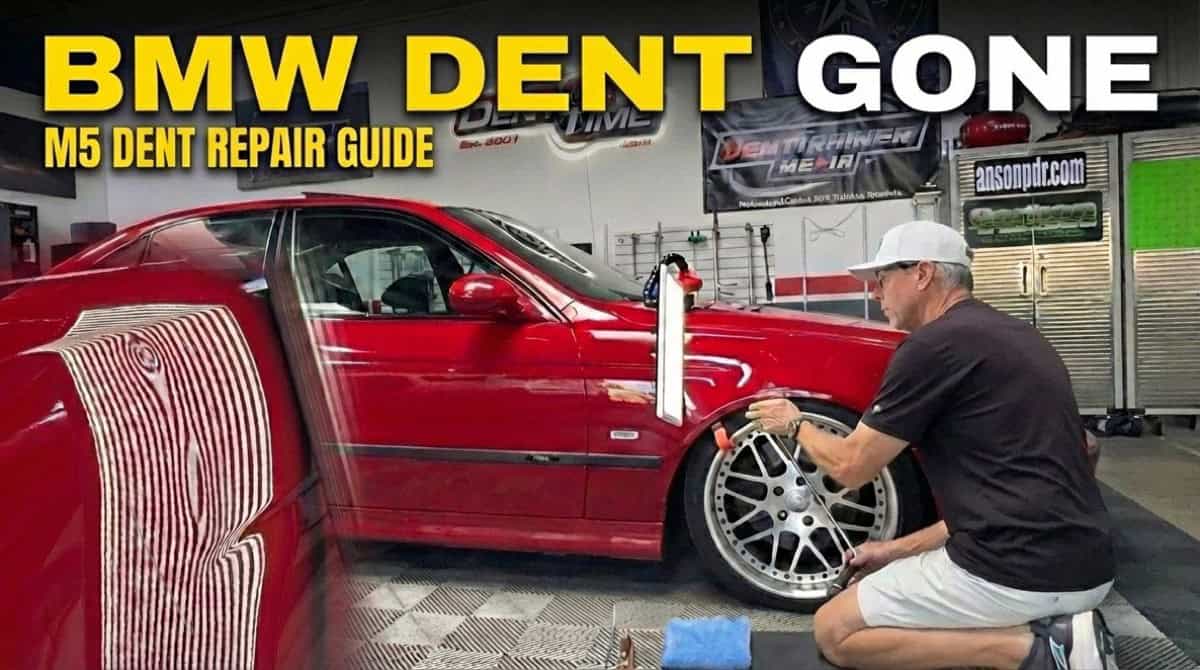
When you own a BMW M5, you don’t think about door dings. You think about 600 horsepower, precise handling, and the satisfaction of owning one of the most capable sedans ever built. But reality has a way of showing up uninvited. This 2017 BMW M5 came into our Escondido shop with two dents on the front fender, and the owner had one non negotiable demand: fix it without repainting.
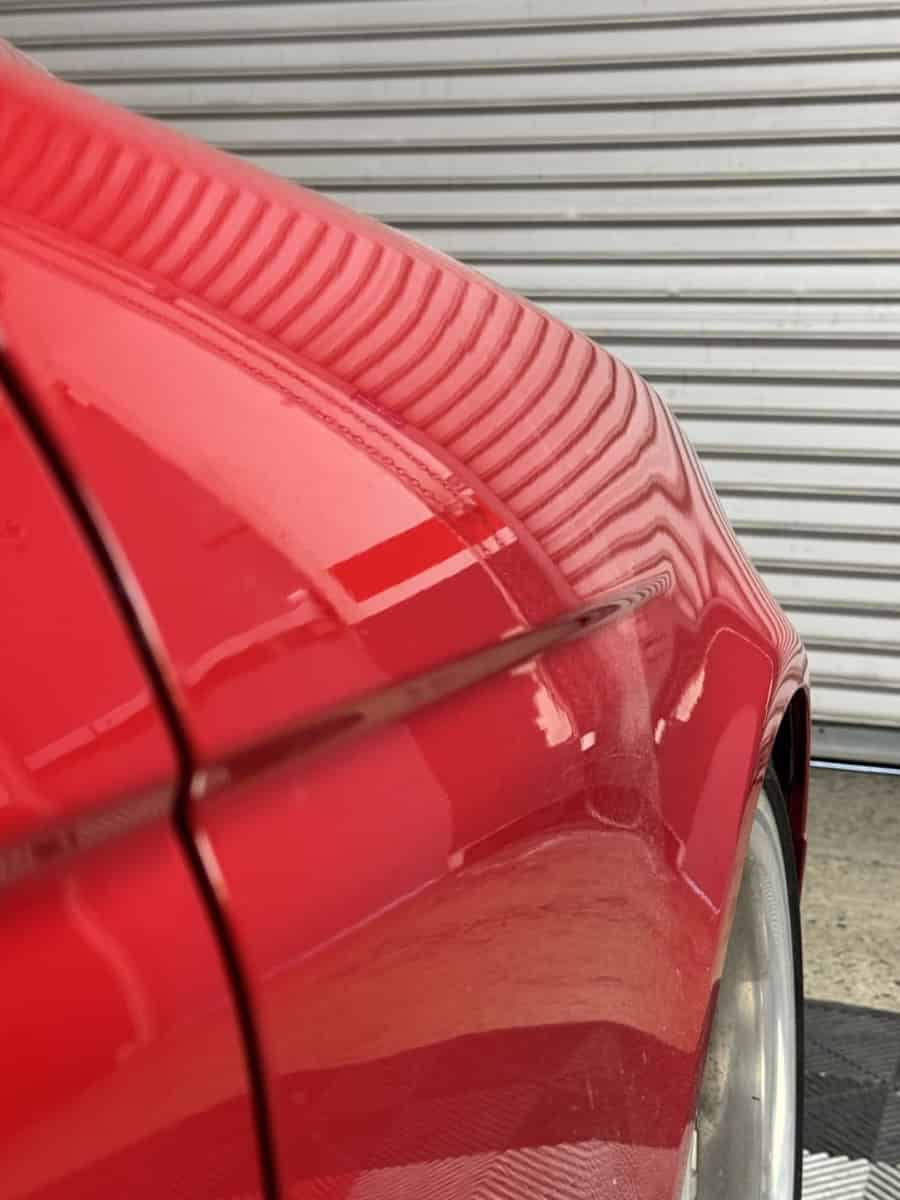
The damage looked straightforward. One 2 inch crease and one smaller 1 inch sharp dent. But BMW’s engineering choices made this more complex than it appeared. The M5’s front fender is steel, not aluminum like some higher panels on this model. Access was workable near the body line, though narrow in spots. This is exactly the type of repair where experience separates professional PDR from guesswork.
The Two-Dent Challenge on One Panel
Most people think a dent is a dent. They’re not. These two dents behaved completely differently:
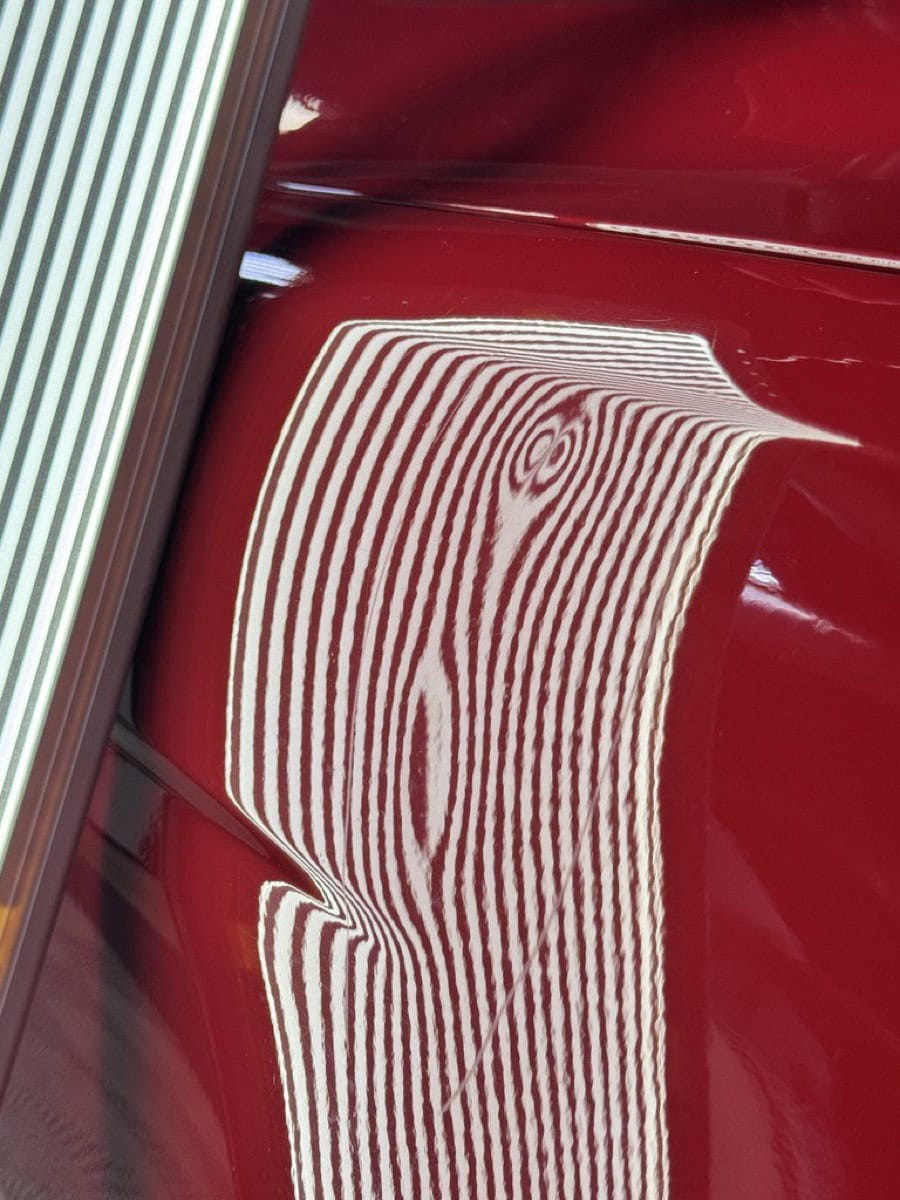
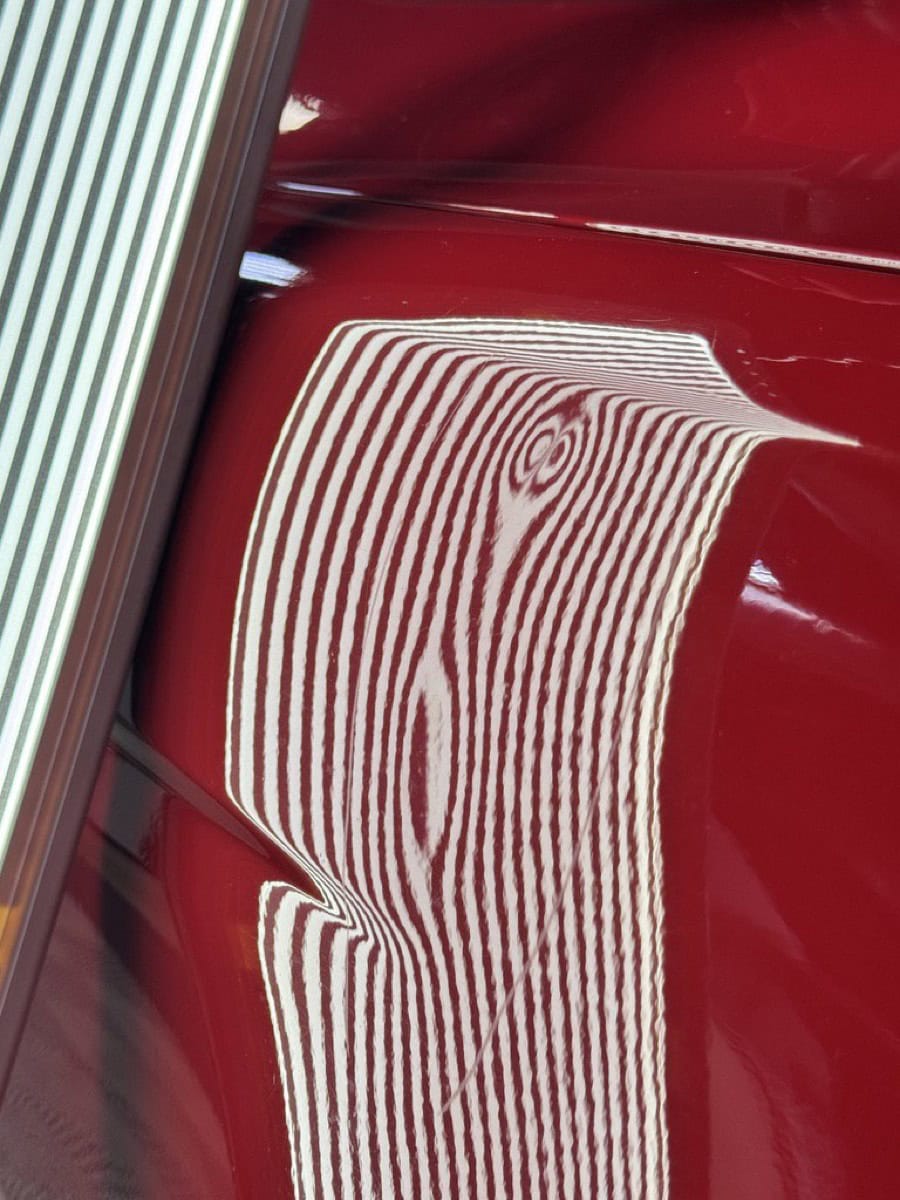
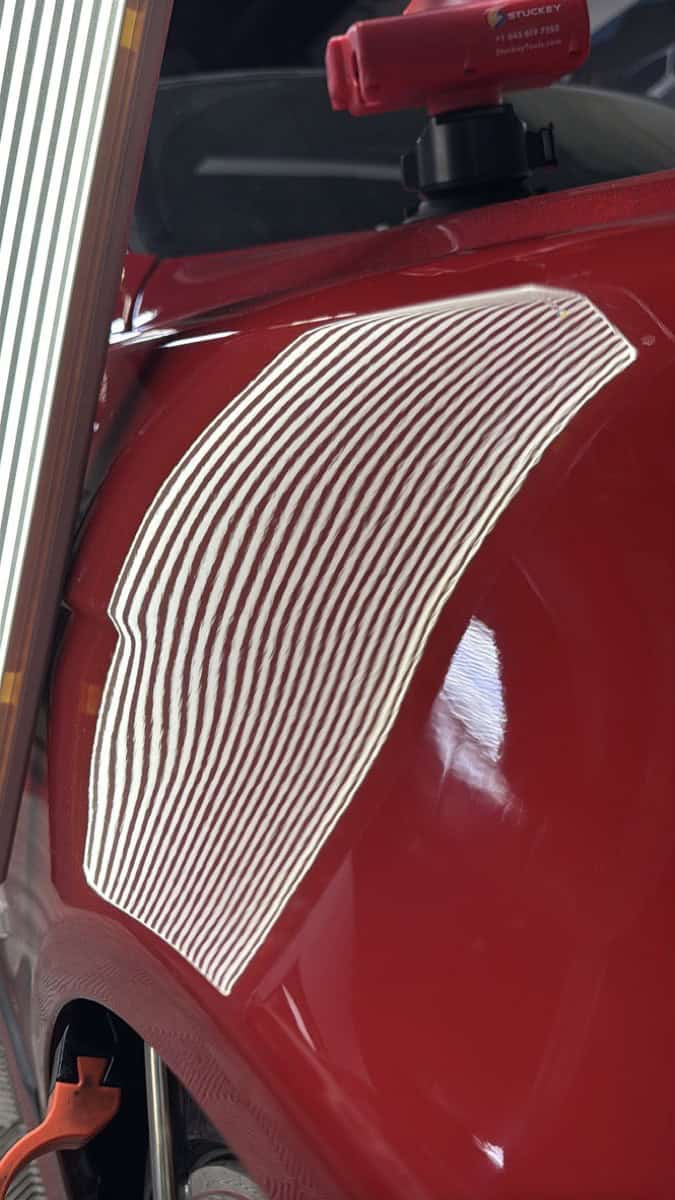
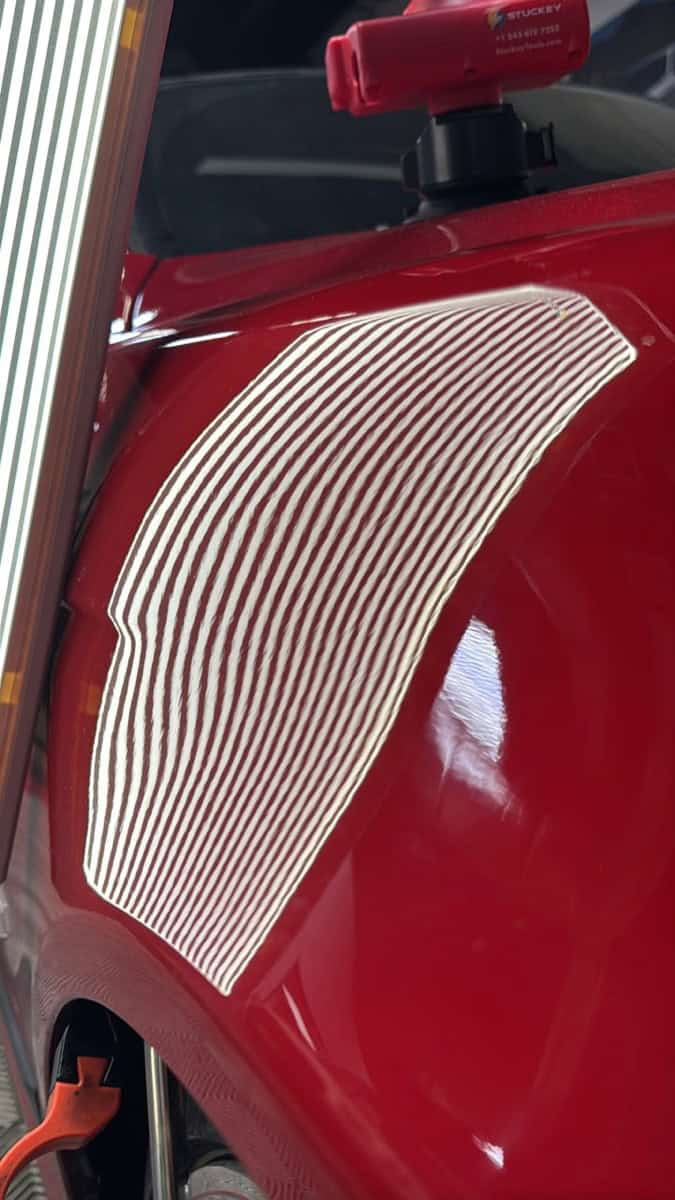
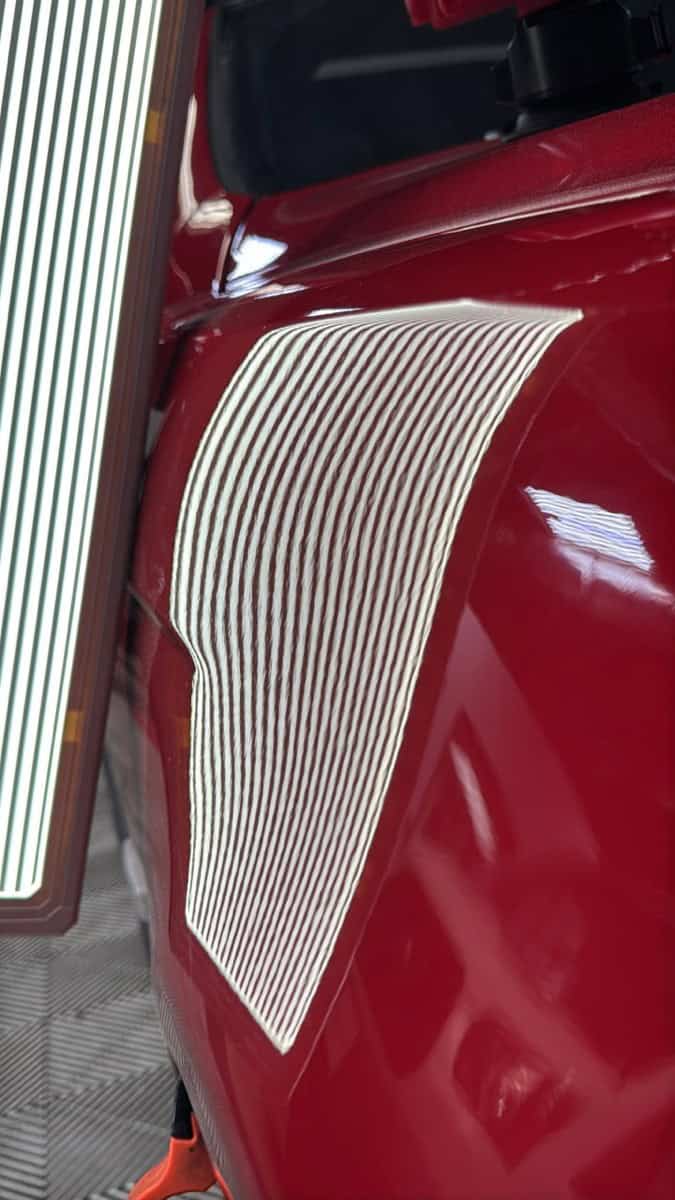
The 2 inch crease looked like a folded piece of paper. Under the reflection board, it showed a classic crease pattern: darker in the center with distortion lines running perpendicular. Creases stretch metal along a line, which means they don’t respond to normal pushing techniques. You can’t just pop them out from behind.
The 1 inch sharp dent appeared round at first glance, but halfway through the repair it revealed its true identity: a smaller, sharper crease with an “owl’s eye” ring around it. This is what technicians call a false friend. It masquerades as simple damage until you start working it.
Both dents were in the same general area of the fender, which meant I had to manage the repair sequence carefully. Push too aggressively on one and you can create highs that complicate the other.
How PDR Works on BMW Fenders
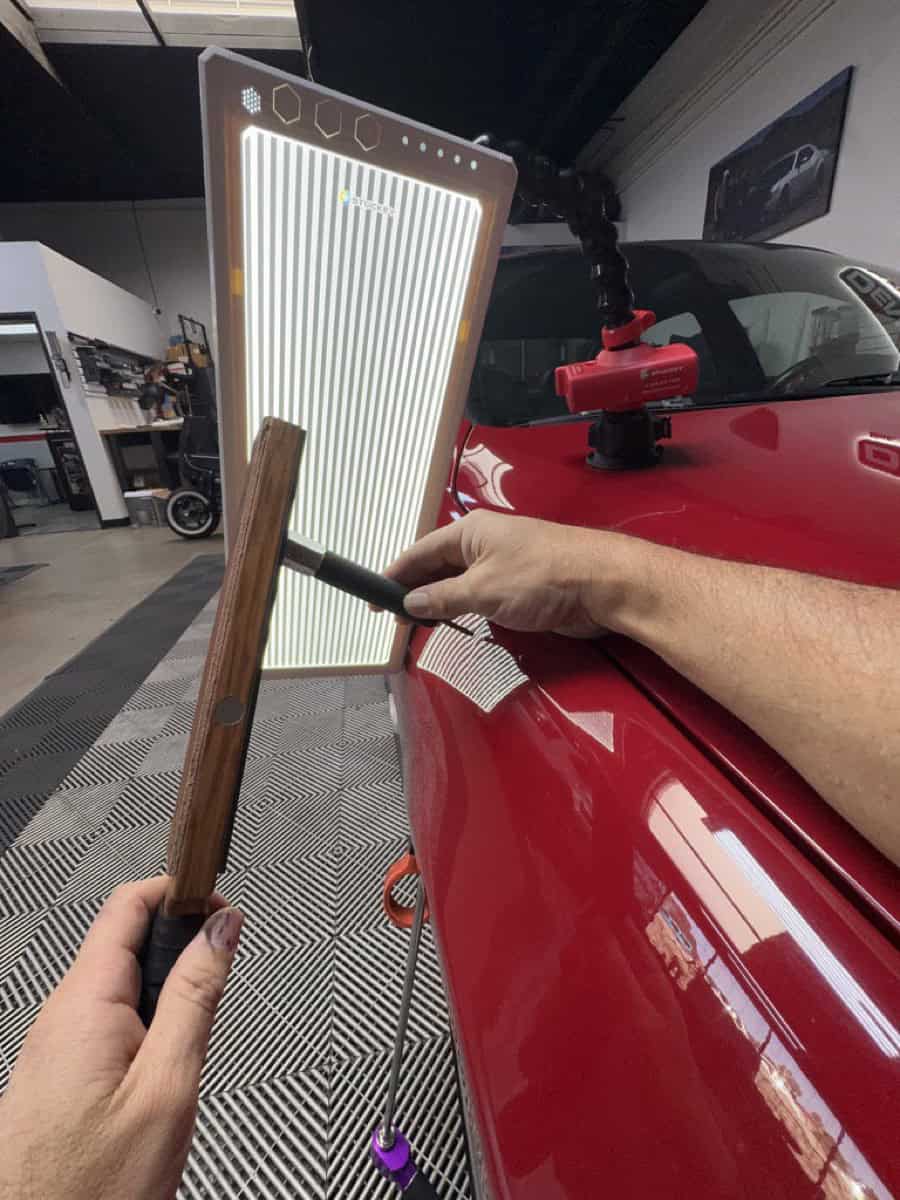
The process started with panel access. I pulled down the fender liner, just enough to wedge it open without damaging the plastic, and that gave me perfect access behind the damage. No drilling, no invasive procedures, no compromise to the factory seal.
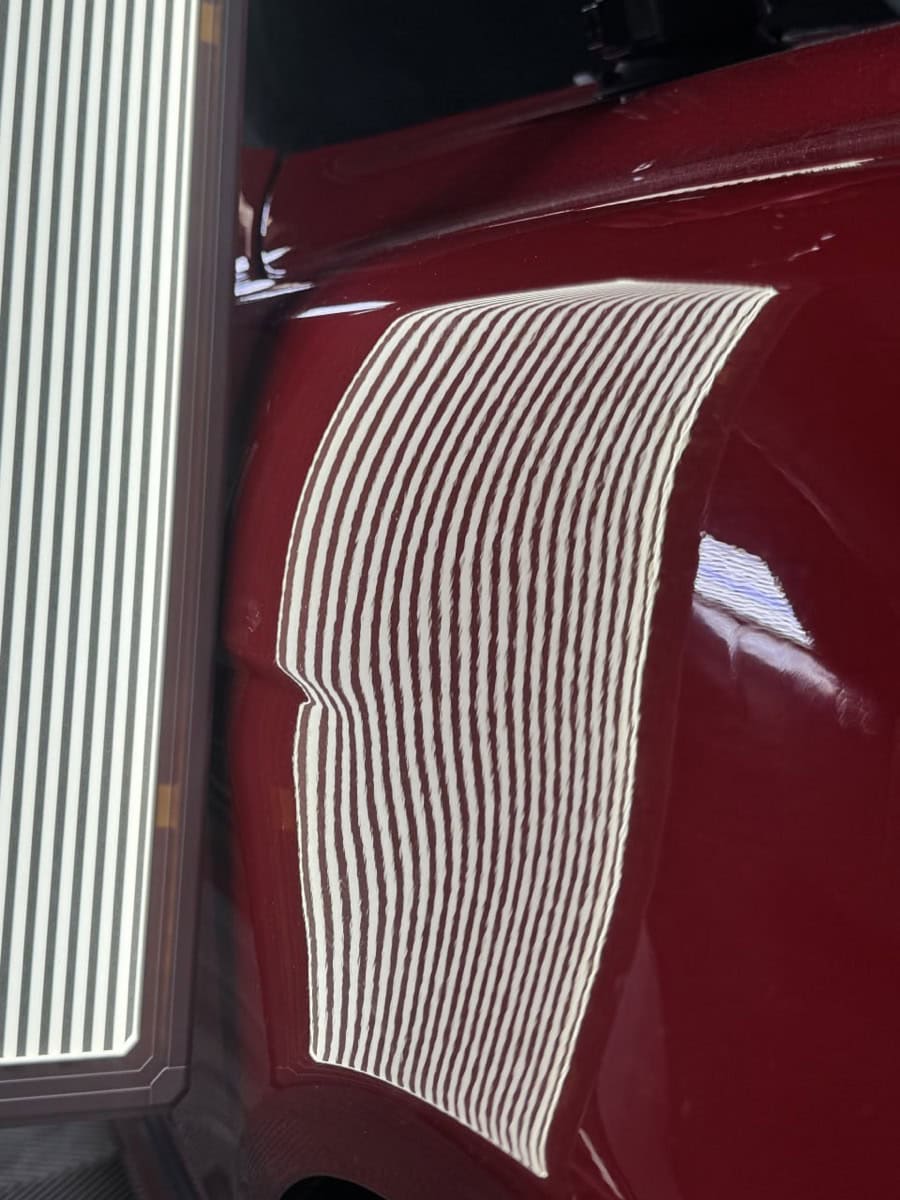
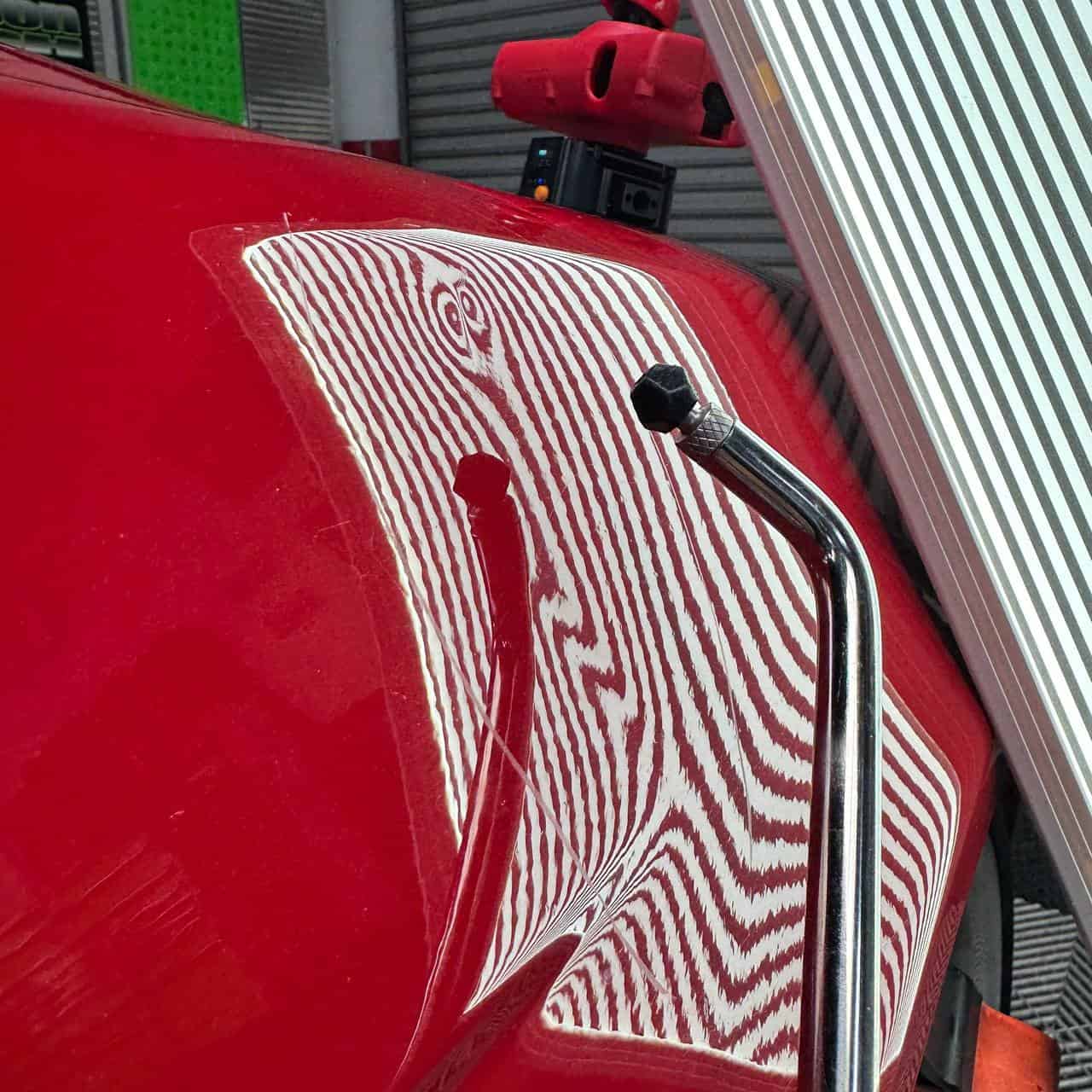
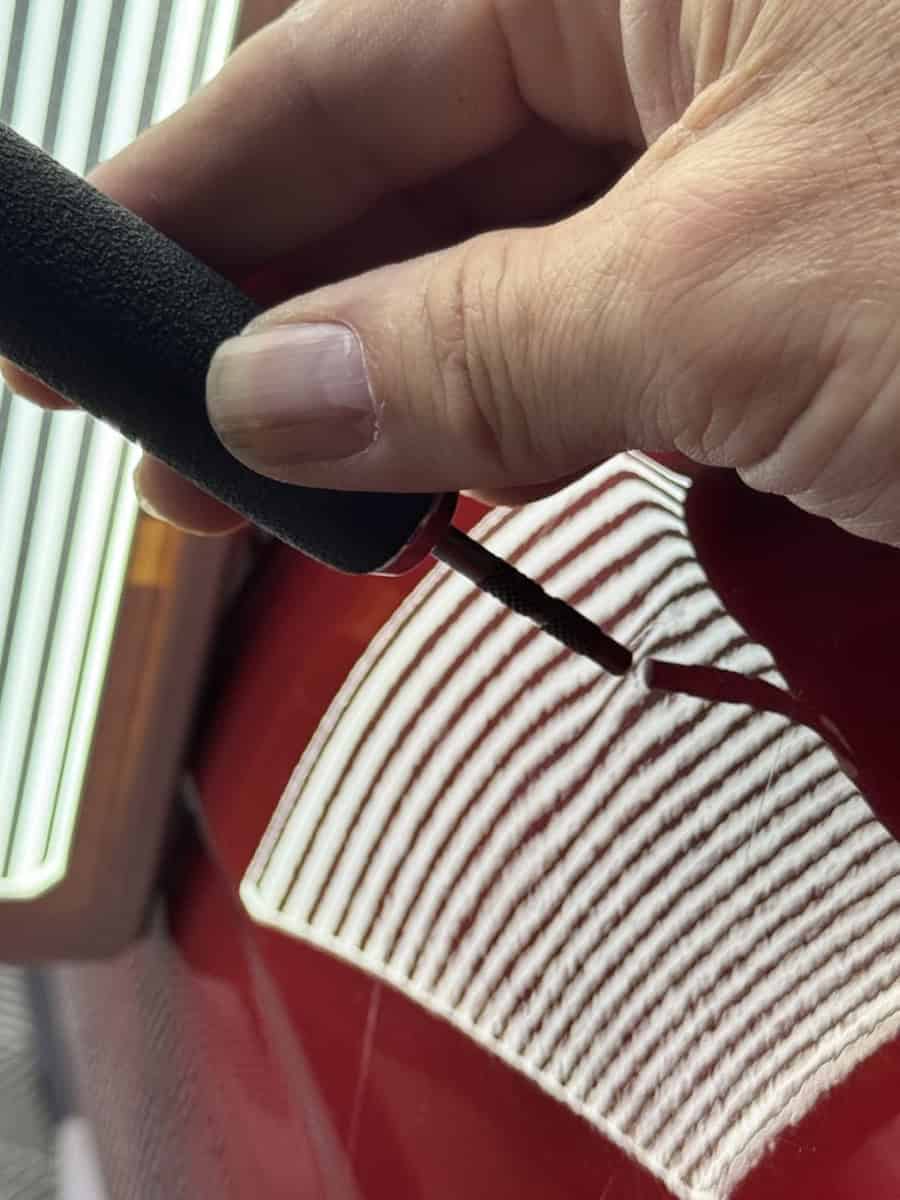
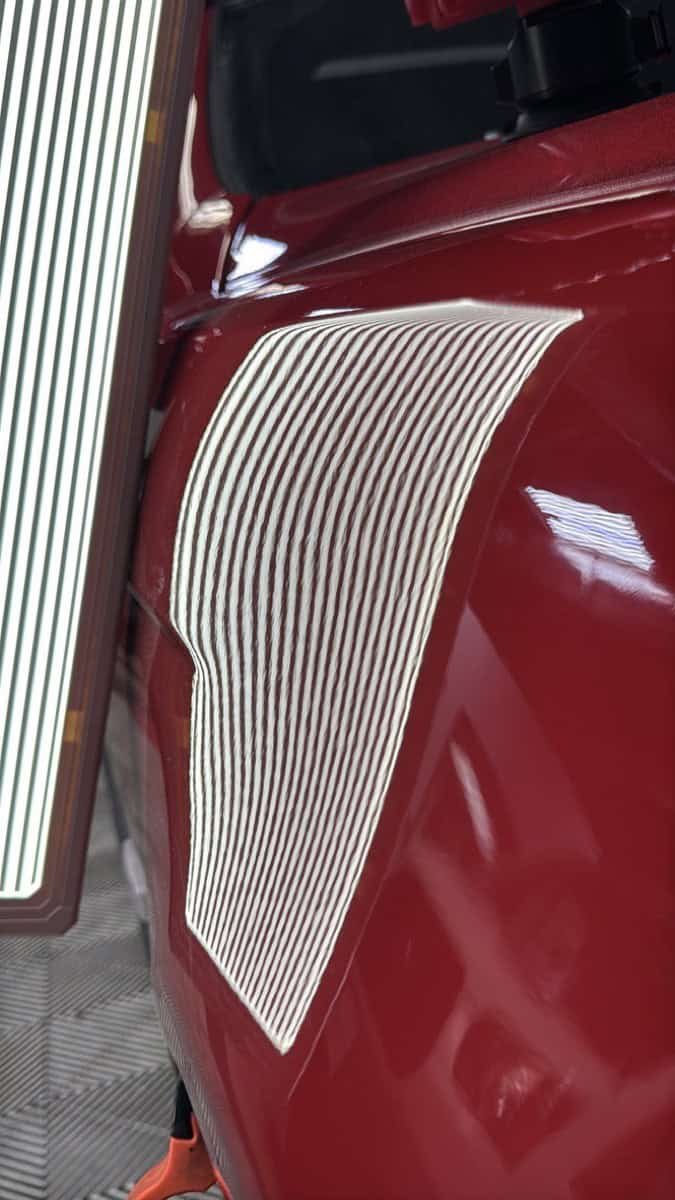
The reflection board became my GPS. Those curved white lines reflecting on the red paint told me exactly where metal was low and where it was high. In PDR, you are not guessing. You are reading light patterns that reveal distortion invisible to the naked eye.
Tool Selection: The Dice Tip Difference
For the creases, I used a combination of rod tips with different geometries:
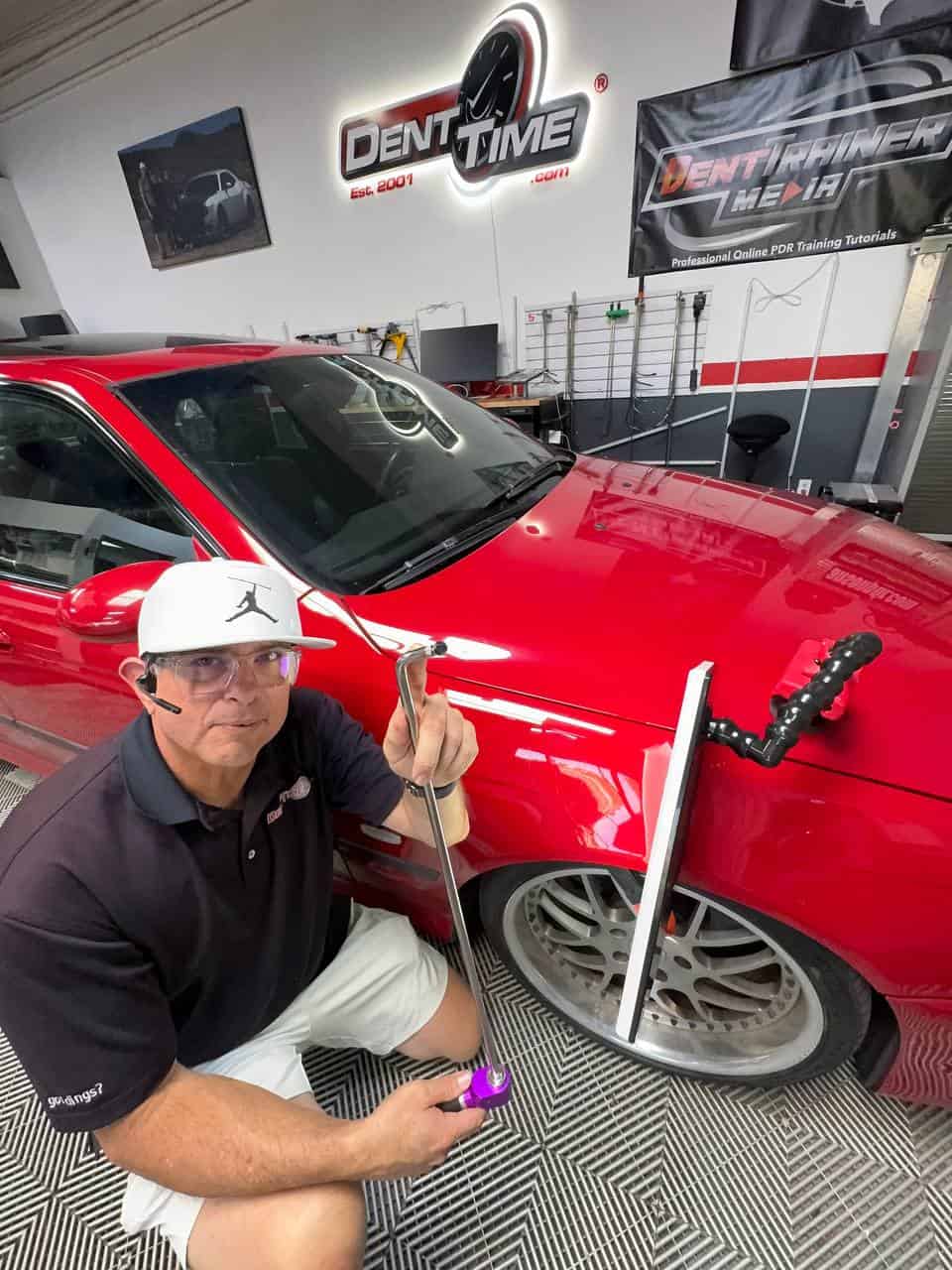
The dice tip, octagon shaped with eight flat faces, was my primary tool for the larger crease. The flat surfaces distribute force more evenly than round tips, giving me softer, more controlled pushes. The pattern prevents slipping, which means each push transfers energy into moving metal instead of skidding across the surface. This reduces the risk of creating unwanted high spots.
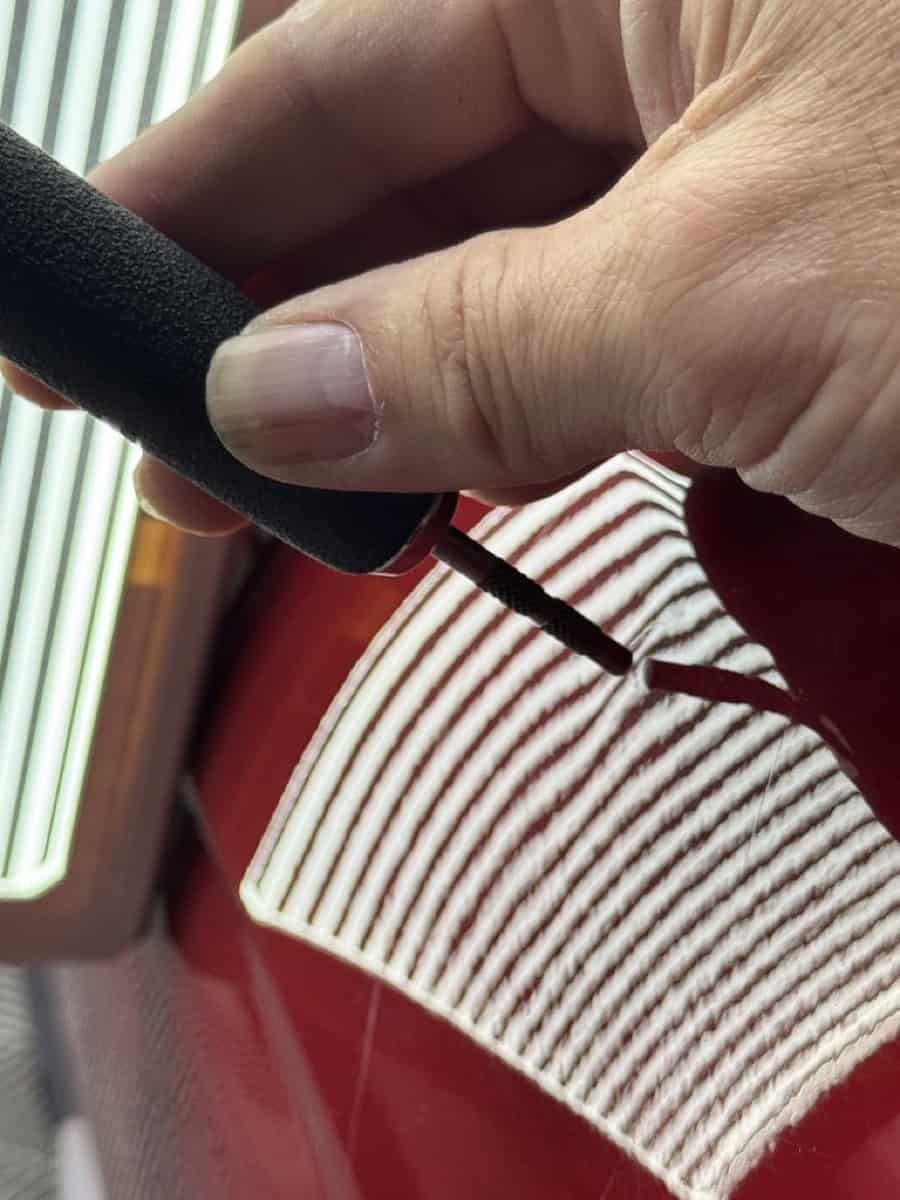
The sharper tip came into play for the pit, the deepest center point of the smaller dent. Once the dice tip brought the general area up, I switched to a more focused tool to work the detail. Precision matters here. Push too hard and you crack paint. Push too soft and you get nowhere.
The rounder tip handled the shallow areas around the edges, blending the repair back to the original panel shape.
But the tool nobody talks about is the VIP 2.0 tap down. This steel tipped knockdown tool releases pressure during repair. Think of it as resetting the dent to make it more manageable. When you bring up a section, tension builds in the metal. A few careful taps with the knockdown releases that tension, lowers any micro highs, and lets you continue the repair clean.
If you’re not experienced, that steel tip can damage clearcoat. It’s a professional tool that requires professional hands.
Reading the Metal: When the Dent Reveals Itself
The reflection board showed me something interesting on the smaller dent. At first it looked like a standard round depression. But as I worked the center up with the dice tip, the “owl’s eye” appeared. That ring around the dent tells you there’s a sharp crease hiding underneath.
This happens because creases stretch metal in a line. The center seems deep and isolated, but as you relieve pressure from the surrounding area, the true geometry reveals itself. I had to stop midway through and use the knockdown to release tension around the edges, opening up the center so it became more shallow and easier to manage.
Without that mid repair adjustment, reading the light lines, recognizing the pattern change, knowing when to tap down instead of push up, I would have risked overworking the metal or cracking the paint.
The Body Shop Alternative
If this M5 owner had taken the traditional route, the body shop would have:
1. Sanded the factory paint off the entire fender 2. Applied Bondo or filler to smooth the damage 3. Sprayed primer, base coat, and clear coat 4. Baked it in a booth 5. Blended the color into adjacent panels
Timeline: 3 to 5 days. Cost: $800 to $1,500 plus. And the result? A repainted panel that shows up on CarFax and reduces resale value by 25% or more.
BMW owners understand something critical: you only get one factory finish. Once it’s sanded and repainted, it’s never the same. The color match is never perfect. The orange peel texture differs. And when you go to sell, that CarFax report whispers to every potential buyer: “This car had body work.”
The Real Value: Factory Paint Preserved
This repair took a bit over an hour. The cost was $325. But the real value? The factory paint remains untouched. The CarFax stays clean. And the BMW’s resale value is protected.
The M5 owner wasn’t looking for the cheapest fix. They wanted their car back to factory condition without a single grain of clear coat disturbed. That is what PDR delivers.
Every repair teaches something. This one reminded me why the reflection board matters so much. Those light lines don’t lie. They show you exactly what the metal is doing, even when your eyes can’t see it. The dice tip worked because it distributed force evenly. The tap down was essential because creases hold tension that has to be released gradually. And stopping midway through to reassess, that kept the paint safe.
At the end of the day, the car looked like the dents were never there. That is the goal. Not fast. Not cheap. Just right.
Real Results: Before and After Paintless Dent Repair
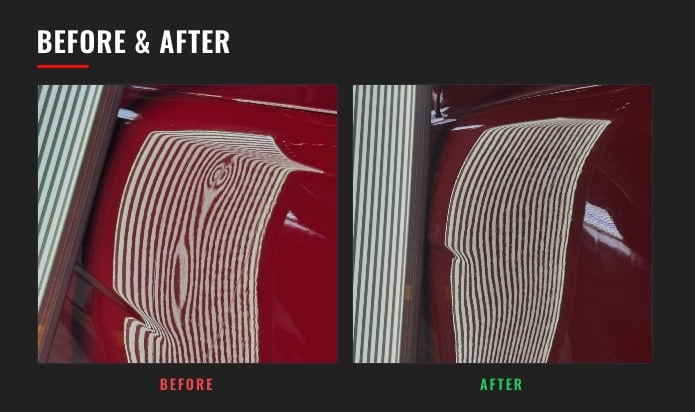
The photos show exactly what changed. The before side displays the damaged fender with distorted reflection lines. Those bent and broken patterns are clear evidence of where metal has been pushed in. The after side shows the same panel with reflection lines running straight and true, following the natural curve of the fender exactly as BMW intended.
The repair took a bit over an hour and cost $325. The factory paint remains untouched. The CarFax stays clean. And the resale value is preserved. The repair is invisible because we never removed anything. We worked from behind, massaged the metal back to shape, and left the factory paint exactly as it was when the M5 rolled off the assembly line.
Photo Gallery: Complete Repair Process
[GALLERY_PLACEHOLDER]
Repair Gallery
When to Choose PDR for Your BMW
If you have dents, creases, or door dings on your BMW and the paint isn't cracked or chipped, PDR is almost certainly your best option. This applies to:
- Door dings from parking lots
- Creases from minor impacts
- Hail damage (if paint is intact)
- Shopping cart dents
- Minor collision damage
Why BMW Owners in San Diego Choose Dent Time
We understand BMW engineering. We know which panels are aluminum, which are steel, and how to access each one without invasive procedures. Our Escondido shop serves all of San Diego County with mobile service available for straightforward repairs.
With 35 years of PDR experience and specialized training for modern BMW construction, including aluminum work and high voltage EV safety, we've repaired hundreds of BMWs without a single factory paint finish compromised.
Ready to Restore Your BMW?
Text photos of your damage to (858) 408-6200 or visit our Escondido shop at 2120 W. Mission Rd. #240. We'll assess your damage, explain your options, and give you an honest recommendation, even if that means referring you elsewhere.
Most repairs take 1 to 3 hours. All preserve your factory paint. And every one is backed by our satisfaction guarantee.
Location: 2120 W. Mission Rd. #240, Escondido, CA 92029
Service Area: All of San Diego County including La Jolla, Del Mar, Carlsbad, San Marcos, Vista, Oceanside, Chula Vista, and surrounding areas.
Questions? Call or text (858) 408-6200
— Myke Toledo, Dent Time (35 years PDR experience, San Diego)
Frequently Asked Questions About BMW PDR
Can PDR fix creases on BMW body lines?
Yes, but creases require specialized technique. Unlike round dents that respond to pushing from behind, creases stretch metal along a line and need precise tool selection, controlled force, and often glue pulling or knockdown work to release tension. BMW's sharp body lines make this more challenging than other vehicles, but experienced PDR technicians can restore them without painting.
How much does BMW dent repair cost in San Diego?
BMW dent repair typically ranges from $197 to $350 for 1 to 2 dents. The exact cost depends on several factors: depth of the damage, location on the panel, access difficulty, and whether the panel is steel or aluminum. Aluminum repairs cost 40 to 50% more than steel due to specialized heat management and technique requirements. Complex damage involving body lines or multiple panels may exceed $600. All estimates include preserving your factory paint and avoiding CarFax reports.
Will PDR void my BMW warranty?
No. Paintless dent repair is non-invasive and does not affect your BMW warranty. Unlike body shop repairs that require sanding, filling, and repainting, PDR works by massaging metal from behind using specialized tools. Your factory paint remains untouched, and there is no structural alteration to the vehicle.
Get Your Free PDR Estimate
Text us photos of your dent — a technician replies within minutes.
858-408-6200Dent Time — Escondido PDR Shop & Mobile Service — Since 1991