
The PDR Learning Curve: What Actually Happens Week by Week (And Month by Month)

# The PDR Learning Curve: What Actually Happens Week by Week (And Month by Month)
The Question Everyone Asks, But Nobody Answers Honestly
“How long until I can fix dents for money?”
I get this question every week. And most PDR schools lie about the answer. They’ll tell you “5 days” or “2 weeks” or whatever fits their sales pitch.
Here’s the truth: You’ll touch your first dent on day one of training. You’ll get paid for your first real repair somewhere between month 3 and month 6. You’ll feel genuinely confident around month 12. And you’ll still be learning new things five years later.
The timeline isn’t a straight line. It’s a curve with distinct phases, each with its own frustrations and breakthroughs. Understanding what happens in each phase keeps you from quitting when it gets hard — or from taking customer jobs before you’re ready.
Phase 1: The Awkward Beginnings (Training Days 1-10)
What’s happening: Your hands don’t do what your brain wants.
You can see the dent. You understand the concept. But when you push that tool against the backside of the panel, nothing happens. Or worse — something happens, but it’s not what you intended.
This is the coordination phase. You’re building the neuromuscular pathways that let you apply precise pressure through a tool you can’t see, to move metal you can barely feel. It’s frustrating because the gap between understanding and doing is massive.
The breakthrough moment: Usually around day 3-5, you make your first intentional movement. The dent gets slightly smaller, and you did it on purpose. That’s when the learning curve starts to bend upward.
Why training length matters here: In a 1-week program, you’re just leaving when this phase ends. You haven’t had time to consolidate the skill. In a 2-week program, you get a few days to reinforce it. In a 4-week program, this foundation is solid before you move on.
Phase 2: Learning to See (Training Days 5-20)
What’s happening: Your eyes start working.
PDR isn’t about pushing hard — it’s about pushing the right spot. And finding that spot requires reading reflections, orange peel, and tension patterns that are invisible to normal people.
This phase is exhausting mentally. You’re staring at line board reflections for hours, training your brain to interpret what it’s seeing. At first, it’s just blurry lines. Then you start noticing patterns. Then you can map a dent before you touch it.
The breakthrough moment: When you can close your eyes, picture the damage, and know exactly where to start. This usually clicks somewhere between week 2 and week 4 of training.
Common trap: Thinking you can see it when you can’t. This is where having an experienced instructor matters — they catch you when you’re wrong before you develop bad habits.
Phase 3: The Grind (Months 2-6 After Training)
What’s happening: You’re fixing real dents, but slowly and inconsistently.
This is where most people quit. Training is over. The structured feedback is gone. You’re working on practice panels or friend’s cars, and every dent feels like a battle.
You finish a repair, think it’s perfect, come back the next day and see a wave you missed. Or you push too hard and create a high spot that takes hours to fix. The mistakes are humbling.
The reality: Your 50th dent will take half as long as your 10th dent. But dent 10 feels impossible when you’re in it.
What separates the people who make it: They keep working through the frustration. They find a mentor or community to check their work. They don’t take customer jobs they’re not ready for.
Income at this phase: Maybe $1,000-$3,000/month doing discounted or free work while you build speed.
Phase 4: Professional Competency (Months 6-18)
What’s happening: Speed and pattern recognition kick in.
You start seeing similar damage types and knowing the approach immediately. “Oh, this is a door ding on a body line with bracing behind it — I need X tool and I’ll start here.”
Your hands catch up to your eyes. The pushing becomes automatic, and you can focus on the nuances — the last 10% that separates decent from excellent work.
You’re also learning the business side: quoting accurately, managing customer expectations, building a reputation. The technical skills got you here, but the soft skills determine whether you stay.
Income at this phase: $5,000-$10,000/month depending on your market and hustle.
Phase 5: The Long Game (Year 2 and Beyond)
What’s happening: You’re a working pro, but mastery is still ahead.
You’ve fixed hundreds or thousands of dents. You can handle 85-90% of what comes through the door confidently. The repairs that took 4 hours now take 90 minutes.
But the learning doesn’t stop. Complex aluminum panels. Sharp creases on styling lines. Hail damage patterns. These require years of accumulated experience and pattern recognition.
The masters I know: They’ve all been doing this 10+ years. They can walk up to a dent and know exactly how it’ll behave before touching it. That’s not training — that’s time and repetition.
Income at this phase: $8,000-$20,000+/month, depending on specialization and market.
The Training Decision: Where You Start Affects How Fast You Climb
Your starting point determines how quickly you move through these phases:
| Starting Point | Phase 1 Duration | Time to Paid Work | Time to Competency |
|---|---|---|---|
| No formal training | 6-12 months | 12-18 months | 3-4 years |
| 1-week course | 3-6 months | 6-12 months | 2-3 years |
| 2-week intensive | 2-4 months | 3-6 months | 12-18 months |
| 4-week foundation | 1-2 months | 2-4 months | 8-12 months |
What this means: A longer initial training doesn’t eliminate the phases — it accelerates you through them. You still have to put in the reps, but you start with better fundamentals and fewer bad habits to unlearn.
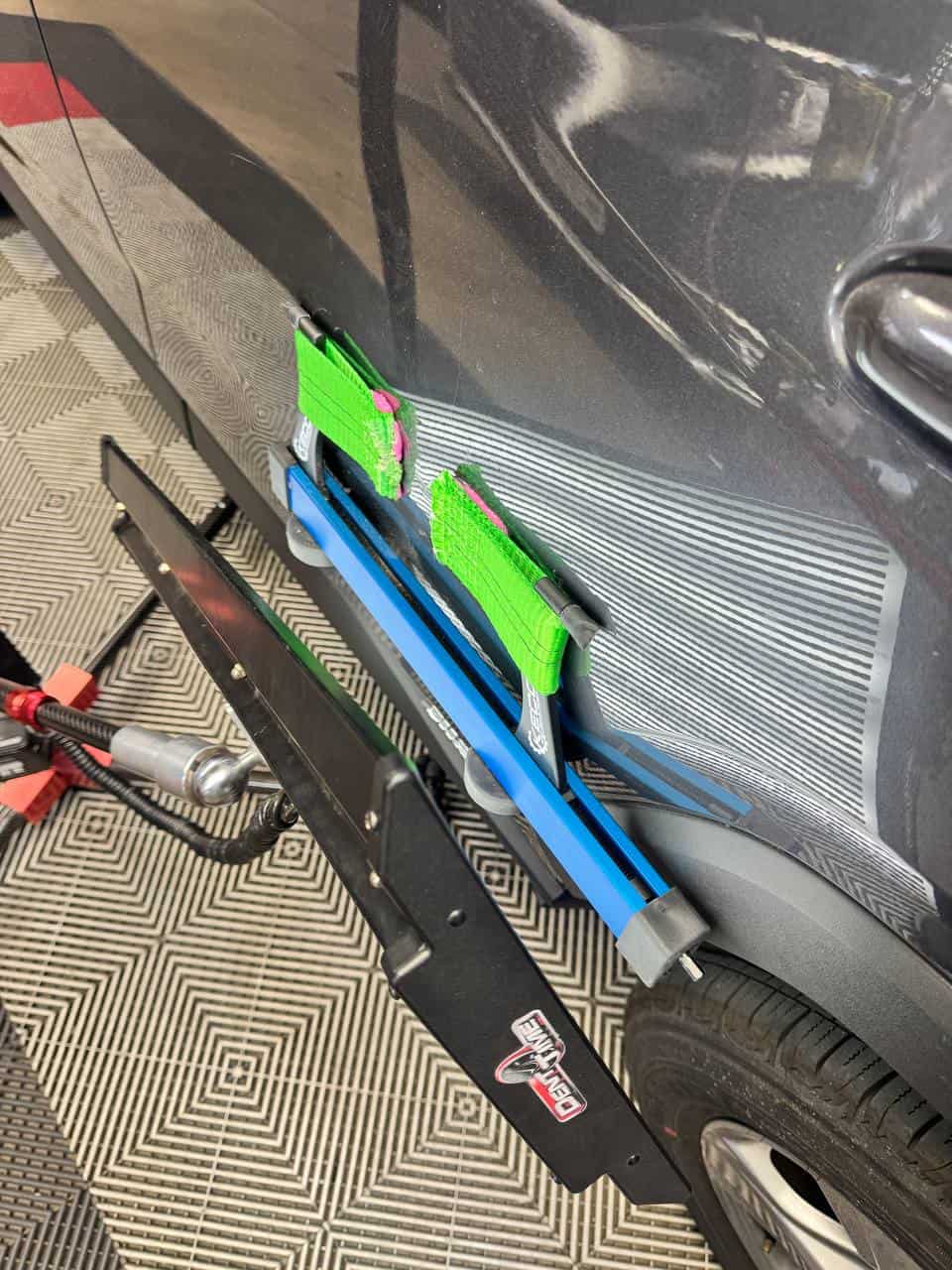
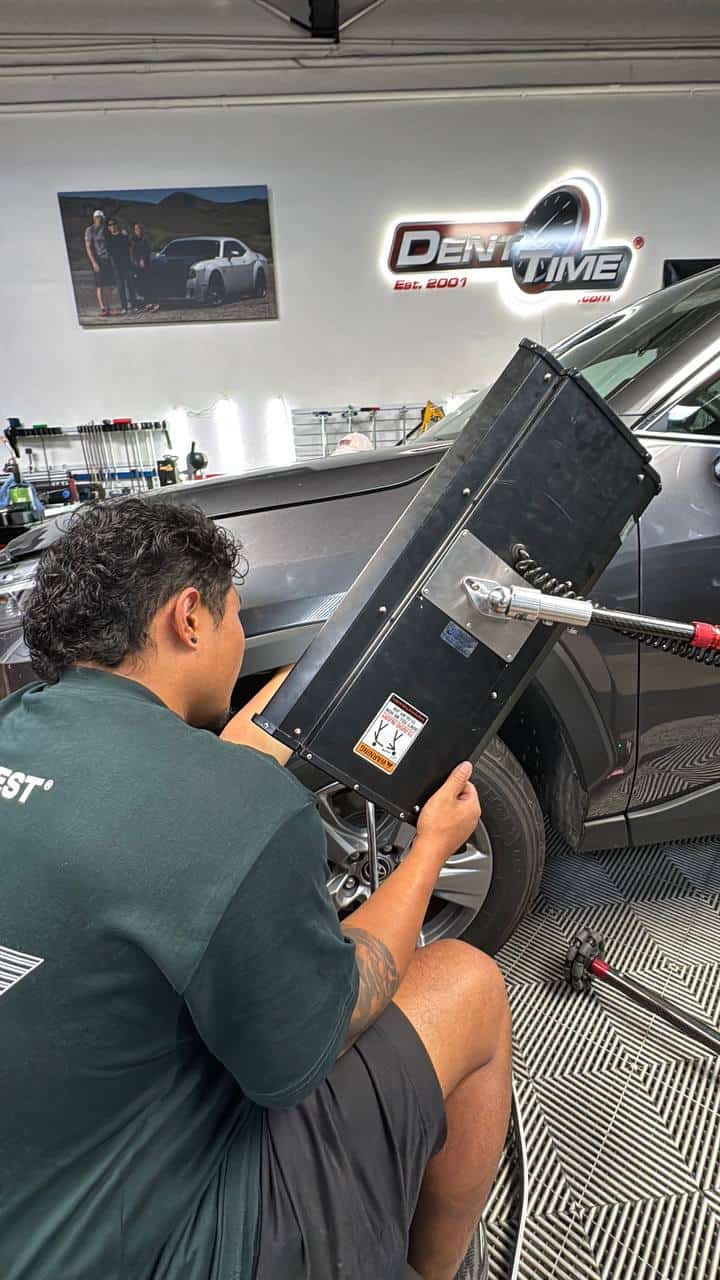
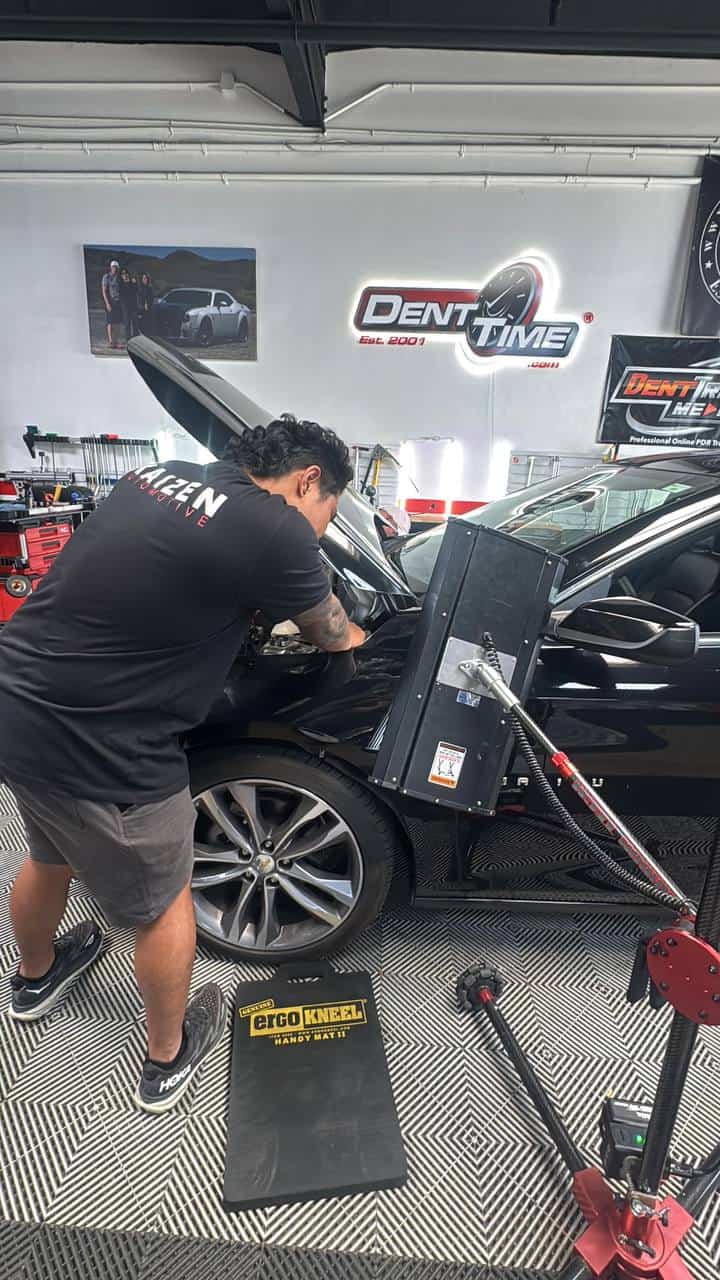
Repair Gallery

The Honest Math on Training ROI
Let's say you choose a 4-week program over a 2-week program. The upfront investment is higher (more time, potentially more money). But you reach professional competency 4-6 months faster.
At $6,000/month average income once you're competent, that's $24,000-$36,000 in additional earnings in your first year alone.
The question isn't whether training is worth it — it's which starting point makes sense for your life situation.
Which Training Path Fits Your Situation?
Choose the 4-week foundation if:
- You can take a month off from current obligations
- You want the strongest possible start
- You're planning to go full-time quickly
- You have savings to cover the learning phase
- Two weeks is all you can manage right now
- You understand you'll need more self-directed practice after
- You're planning to start part-time and build gradually
- You're already a working tech adding PDR to your skills
- You just want to understand the basics before committing
- You don't expect to work independently afterward
The Bottom Line
PDR is a skill that rewards patience more than talent. The people who succeed aren't necessarily the naturals — they're the ones who keep showing up through the awkward phase, the grind phase, and the slow improvement phase.
Training gives you a head start. But the timeline is ultimately determined by how many dents you touch in your first year.
My advice: Choose the longest training program your life allows. Then plan to practice 20-30 hours per week for the first 6 months. That's the combination that produces working techs.
Want to talk through whether PDR training makes sense for your specific timeline? Book a free 15-minute consultation — no pitch, just an honest conversation about where you are and what path fits.
— Myke Toledo, Dent Time 35 years in PDR. Trained hundreds of techs. Still learning.
Frequently Asked Questions About PDR Training
Related: 2-Week PDR Training Program | 4-Week PDR Training Program | PDR Training: Is It Worth the Investment?
Get Your Free PDR Estimate
Text us photos of your dent — a technician replies within minutes.
858-408-6200Dent Time — Escondido PDR Shop & Mobile Service — Since 1991