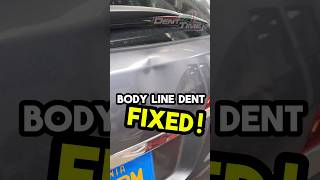
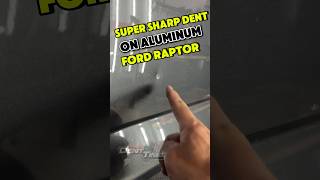
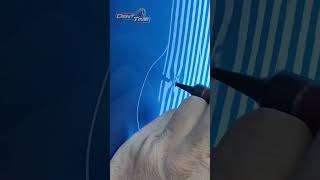
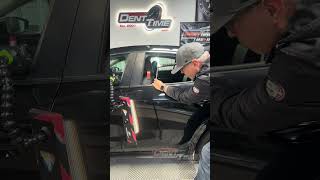
Bumper Dent, Paint Intact
$250 to $300
1 to 2 hours
Plastic has memory. Controlled heat and pressure from behind bring the shape back, and nothing is refinished, so color never enters the price.
No body shop. No repaint. No Carfax record. Factory finish restored the right way. Text a few photos and we tell you exactly what it costs.
Real Dent Time repairs, shot in Escondido and across San Diego County, sped up and cut down. A repair like this runs hours, and some run days. The edit is not hiding the work. It is the only way to show you hours of it. Drag to browse.
Ask anything about your dent, pricing, or booking. Talk or type. A real answer in seconds, any language, any time.

One craftsman. One standard. Since 2001.
Dent Time isn't a chain. It isn't a volume shop. It's a small, deliberate practice in Escondido where Myke Toledo has been reading dented metal since 1991, and where every vehicle that comes through the door gets the same answer to the same question: what does it actually take to make this right?
Myke came up in PDR at his family's shop in the early '90s and opened Dent Time with his wife Mary in 2001. Not to scale, but to do the work well. Twenty-five years later, the shop still runs on the same principle: no car leaves unless it would leave clean from a dealer's showroom floor.
That standard starts before a single tool touches the panel. Myke evaluates the damage himself. Depth, location, metal composition, paint age. Then he tells you exactly what's achievable. If PDR isn't the right call, he'll say so. If a more economical path exists, you'll hear about it. The estimate you get is the one we can stand behind, not the one that wins the job.
"Paintless dent repair is a one-way street. The first tech either fixes it right or takes the option away from everyone who comes after."
Your OEM paint stays on the panel. No matching, no blending, no aftermarket clear coat. The surface that left the factory is the surface you keep. Protecting what the car came with is the whole point.
Paintless repair doesn't generate an insurance claim or a body shop record. When you sell, trade, or hand the car down, its history reads exactly like it should. Resale value stays intact.
Before a single tool comes out, Myke evaluates the damage himself. Panel metal, dent depth, paint age, access points. You get a real answer, not a pitch. If PDR isn't the right call, he'll tell you that first.
Text photos to the shop and get an honest estimate back within minutes, not "later today." Most repairs are completed the day you drop off. Getting your time back is part of the service.
If the result isn't right when you pick the car up, no charge is applied. No warranties, no asterisks, no small print. Dents done right don't come back, and we stake the invoice on it.
From a single door ding to hail across every panel. Same craft, same factory-finish result, every time.
Door dings, body dents, creases. Restored without touching the factory paint.
Learn More Act FastA storm leaves dozens of impacts. We work each one. Insurance handled directly.
Learn More Electric CarsDents and door dings on any EV, Tesla to Rivian. Aluminum bodies a specialty.
Learn More Major DamageThe body shop says new panel. We look at the paint first.
Learn More Mobile ServiceScuffs, scrapes, and curb rash blended back to factory color. Mobile at your home or office.
Learn More Learn the CraftHands-on paintless dent repair training from a tech in the trade since 1991. Two students max.
Learn MoreThree lines of work, one standard. Paintless dent repair, bumper repair, and the training that keeps the craft alive.
01 · Paintless Dent Repair
Metal reshaped from behind the panel. Your OEM paint stays untouched. No matching, no blending, no body shop record. The most precise repair method in the industry, performed by a craftsman who's been reading metal since 1991.
02 · Bumper Repair
Plastic scuffs, cracks, and impact damage restored to factory appearance. Faster and cleaner than replacement. Your original bumper, factory painted, brought back to new condition without disturbing surrounding panels.
03 · PDR Training
Myke has trained technicians throughout Southern California. One-on-one instruction: tool technique, light reading, metal behavior, and the business side of running a real PDR practice. No classroom. Just the car and the light.
Most scuffs, curb rash and corner scrapes are repaired and refinished at your home or office, in a few hours, without the bumper ever coming off the car. A body shop will quote you a full repaint because that is what a body shop does. It is rarely what the damage actually needs.
Is the paint broken, or just marked? Run a fingernail across it. If your nail glides over and the mark smears, it is sitting in the clear coat and it polishes out. If the nail catches, the color layer is open and that panel needs refinishing. Those are two completely different jobs at two completely different prices, and you are entitled to know which one you have before anybody quotes you.
Plastic also has memory. A bumper pushed in without the paint breaking often comes back to shape with controlled heat and pressure from behind, and nothing gets refinished at all. Color never enters the price on those.
Mobile across San Diego County and the south end of Orange County. Larger or structural damage routes to the Escondido shop, and we tell you that before anything is booked.
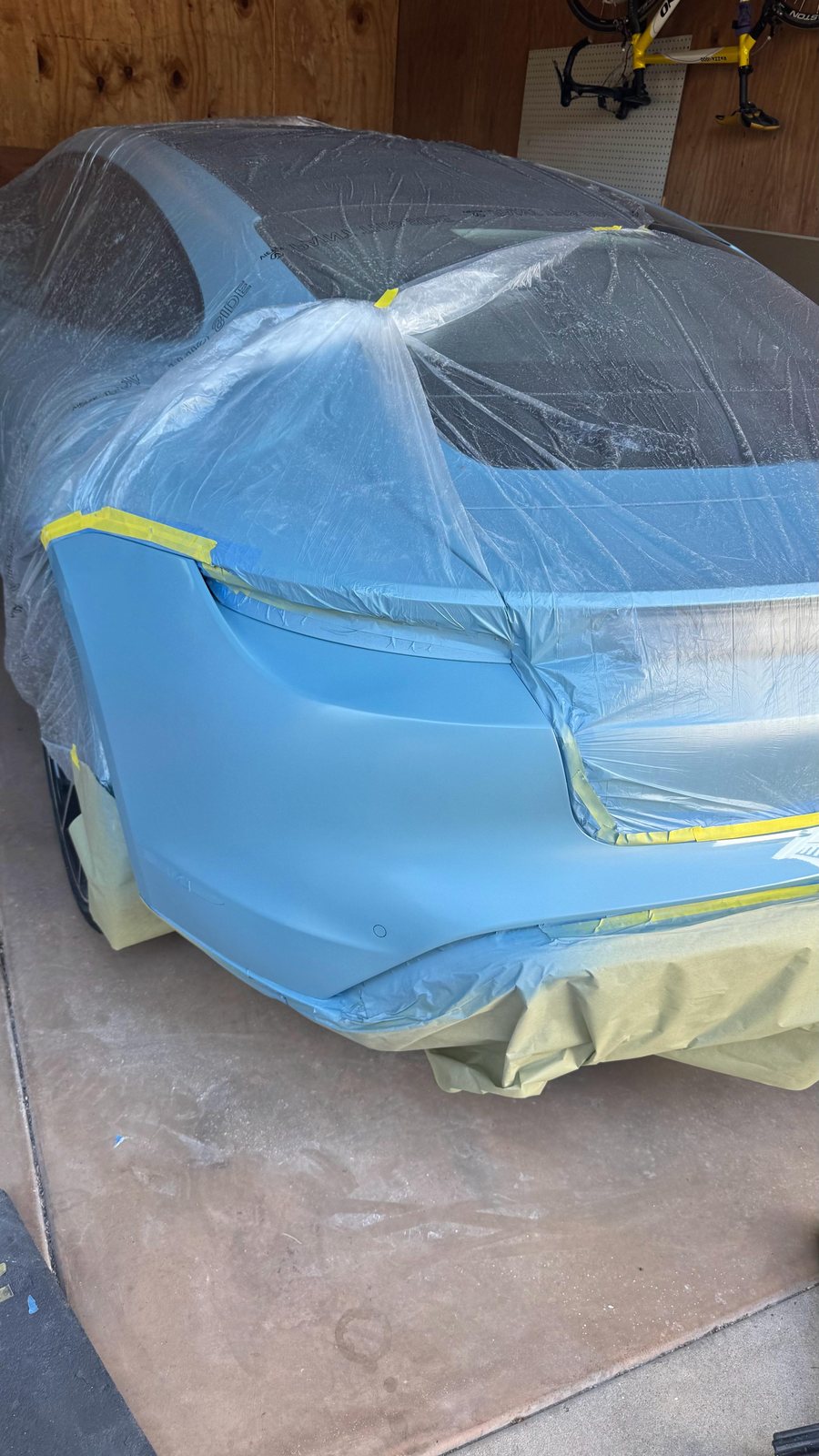 Masked and refinished at the customer's location, San Diego
 Plastic has memory. Controlled heat and pressure from behind bring the shape back, and nothing is refinished, so color never enters the price.
The most common bumper job there is. Price follows the color, the depth, and whether the plastic is punctured or torn. A tri-coat finish takes more stages than a flat color.
Larger damage, cracks bonded from behind, or a full bumper refinish. Structure comes back first, then color.
These are real ranges from real jobs, not a menu. What moves the number is the color, how deep it goes, and whether the plastic is torn or punctured. A tri-coat finish takes more stages than a flat color. Send photos and you get a preliminary range back, confirmed once a technician sees it.
PDR is a hand skill, not a product. Here is what happens between your photos and your keys back.
A body shop sands the panel, fills it, and repaints. That means a panel that no longer matches your factory paint. Even a near-perfect color match is still a match, not the original.
PDR works from behind the panel. The metal is massaged back without ever touching the paint. No Carfax record. No permanent change. Factory finish.
The original paint stays on the car, identical to every panel.
PDR is never reported. Body work lowers resale value. PDR does not.
Most people have never actually thought through what happens when a body shop fixes a dent. They sand the panel, work in filler, respray the area, and hope the color comes close enough. The result can look fine, even great, but the original factory finish is gone. And there is a Carfax entry attached to your vehicle record that every future buyer will see.
PDR works from a completely different premise. The metal that was shaped at the factory is still there. Myke accesses it from behind the panel and works it back, not to an approximation, but to its original position. No filler. No paint. No record. The dent is gone, and nothing else about your car changed. That distinction matters more than most people realize until the moment they are selling.
Get a Free Assessment| PDR (Dent Time) | Body Shop | |
|---|---|---|
| Paint Disturbed | ✓ Never | ✗ Always |
| Carfax Record | ✓ None | ✗ Likely |
| Factory Finish | ✓ 100% preserved | ✗ Resprayed |
| Turnaround | ✓ Same day | ✗ Days to weeks |
| Resale Value | ✓ Fully protected | ✗ Often reduced |
| Result Quality | ✓ Factory-perfect | Depends on match |
Paintless dent repair has no licensing body. Anyone can buy a set of rods, call themselves a technician, and the work looks finished on the day. It shows up later, under garage lighting or against a painted parking line, long after they stopped answering. Every panel below came to us after somebody else worked on it.
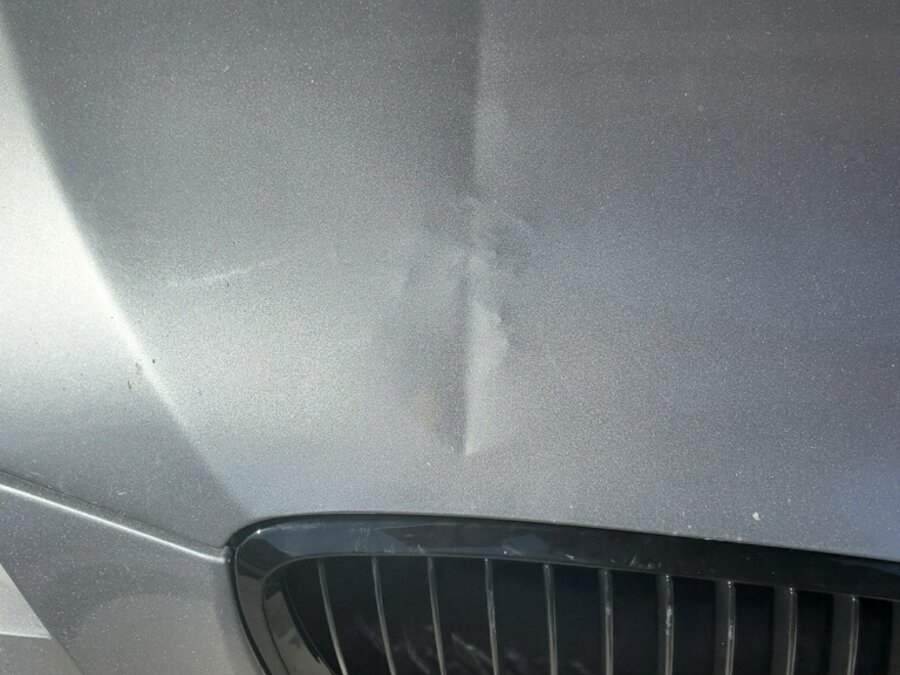
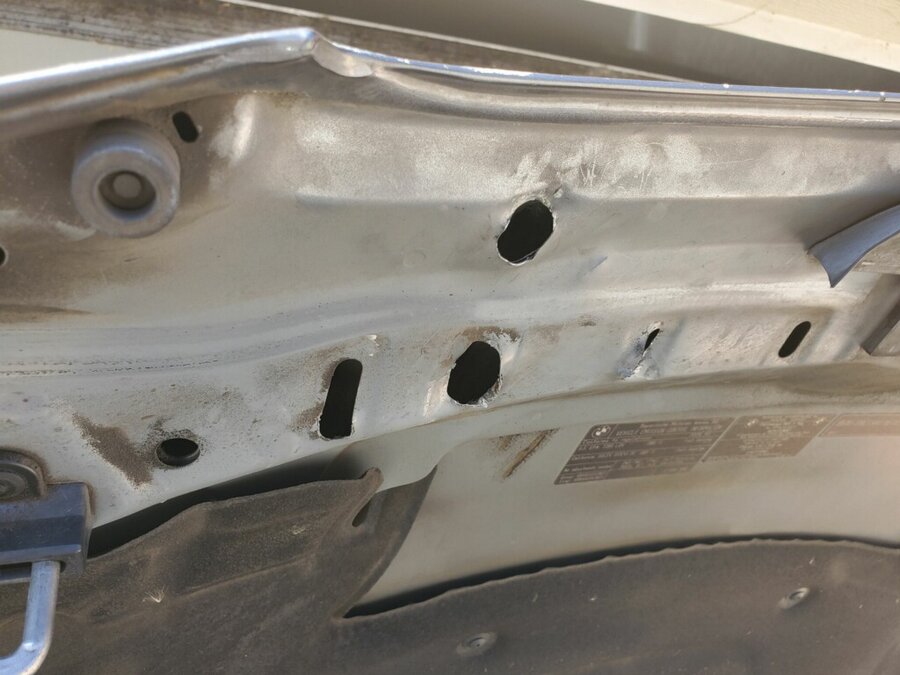
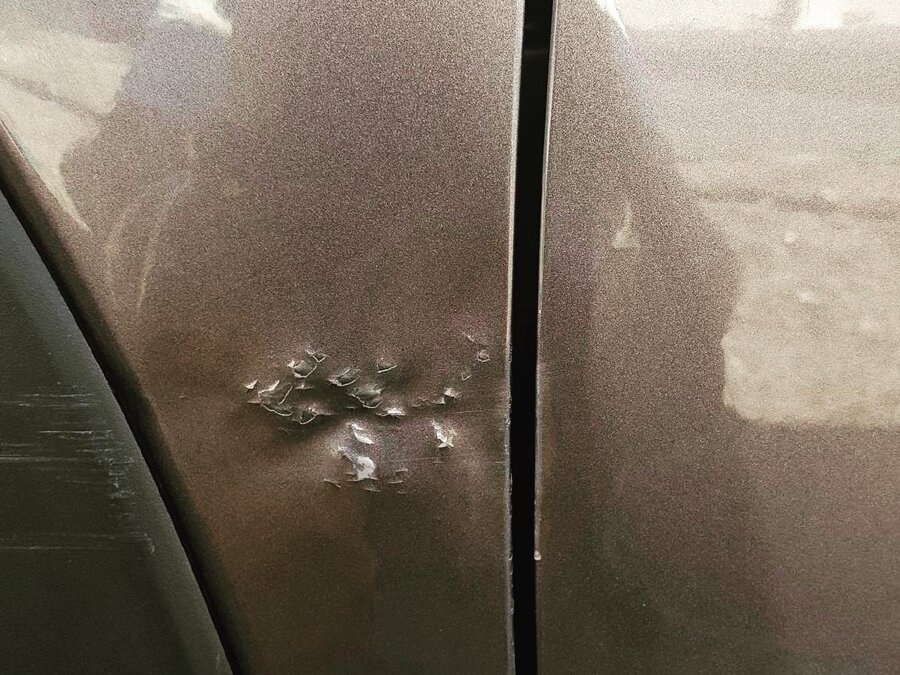
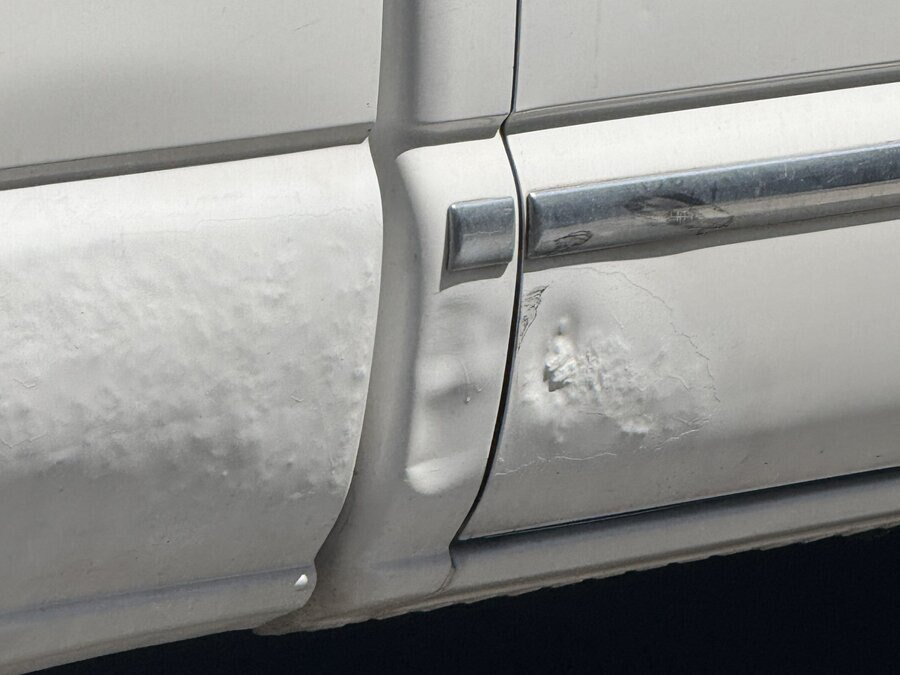
A cracked finish or a stretched panel is permanent. Knowing what to look for costs you nothing.
See How to Spot a Bad RepairA car door is not one panel. It is a thin outer skin over an inner frame, with a reinforced impact beam, a window track and regulator, wiring, and a speaker packed behind it. A door ding on the open skin is a clean paintless dent repair. The same dent sitting over the impact beam or behind the regulator has to be reached from the back, and that is what changes the work and the price.
It is why two door dings that look identical from the outside can be two different repairs. One is massaged out from behind in minutes with the factory finish untouched. The other needs the door panel, and sometimes the glass, removed and reinstalled first to reach the metal. Neither is a flat rate, because the honest number depends on what sits behind that exact spot.
So we read the panel before we quote. The price reflects the real door dent repair, not a number pulled to win the call. Either way it stays paintless, with no filler and no repaint, the factory paint kept, and nothing on the Carfax. See exactly what drives the price.
This is why we give a preliminary price range, never an exact quote sight unseen. An exact cost before anyone sees what is behind the damaged panel would be a guess, and a guess is where surprise charges come from. You get an honest range from your photos up front, then the firm number once the panel is seen in person. No bait, no upsell, just the real cost when it can actually be known.
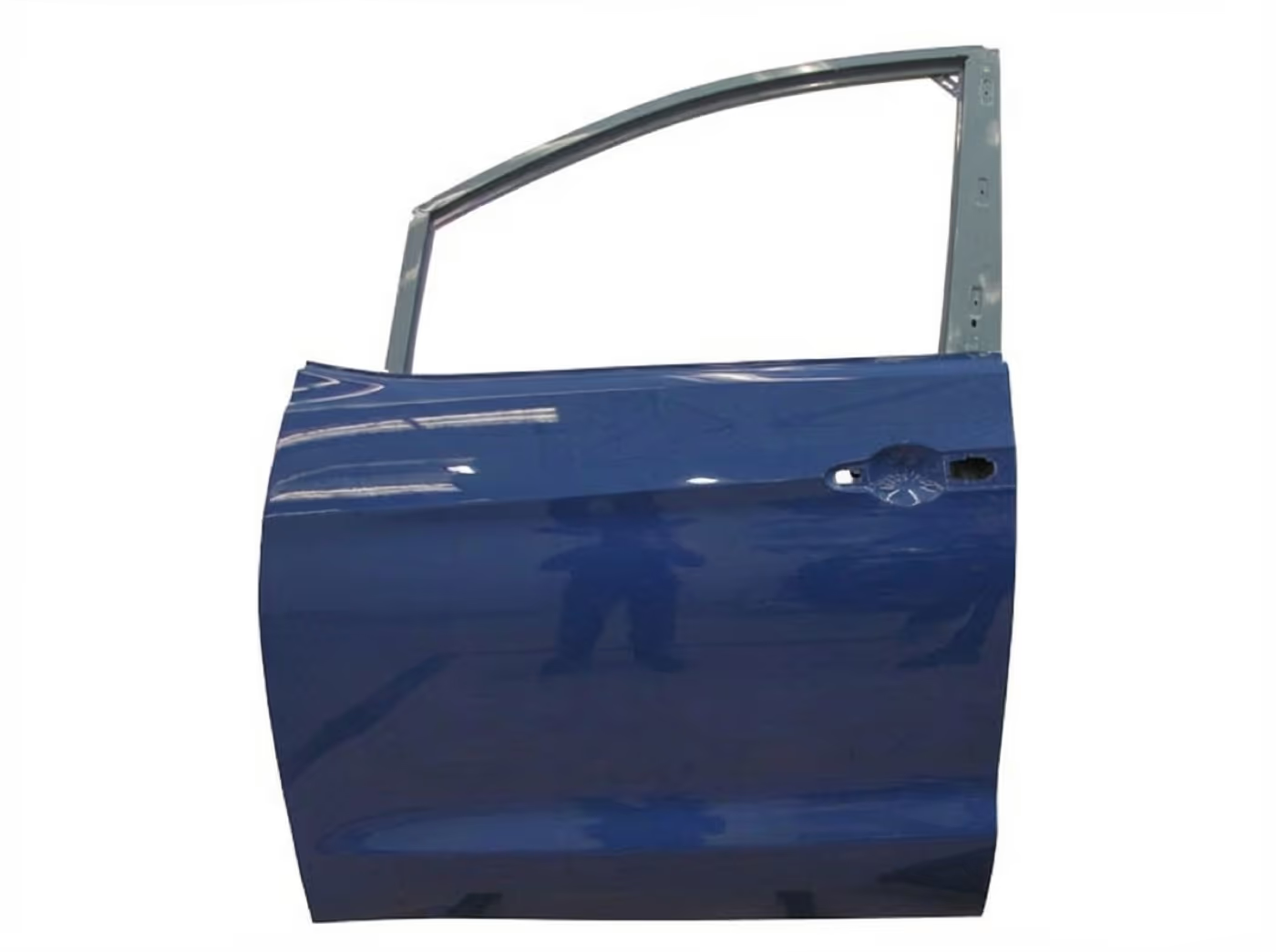
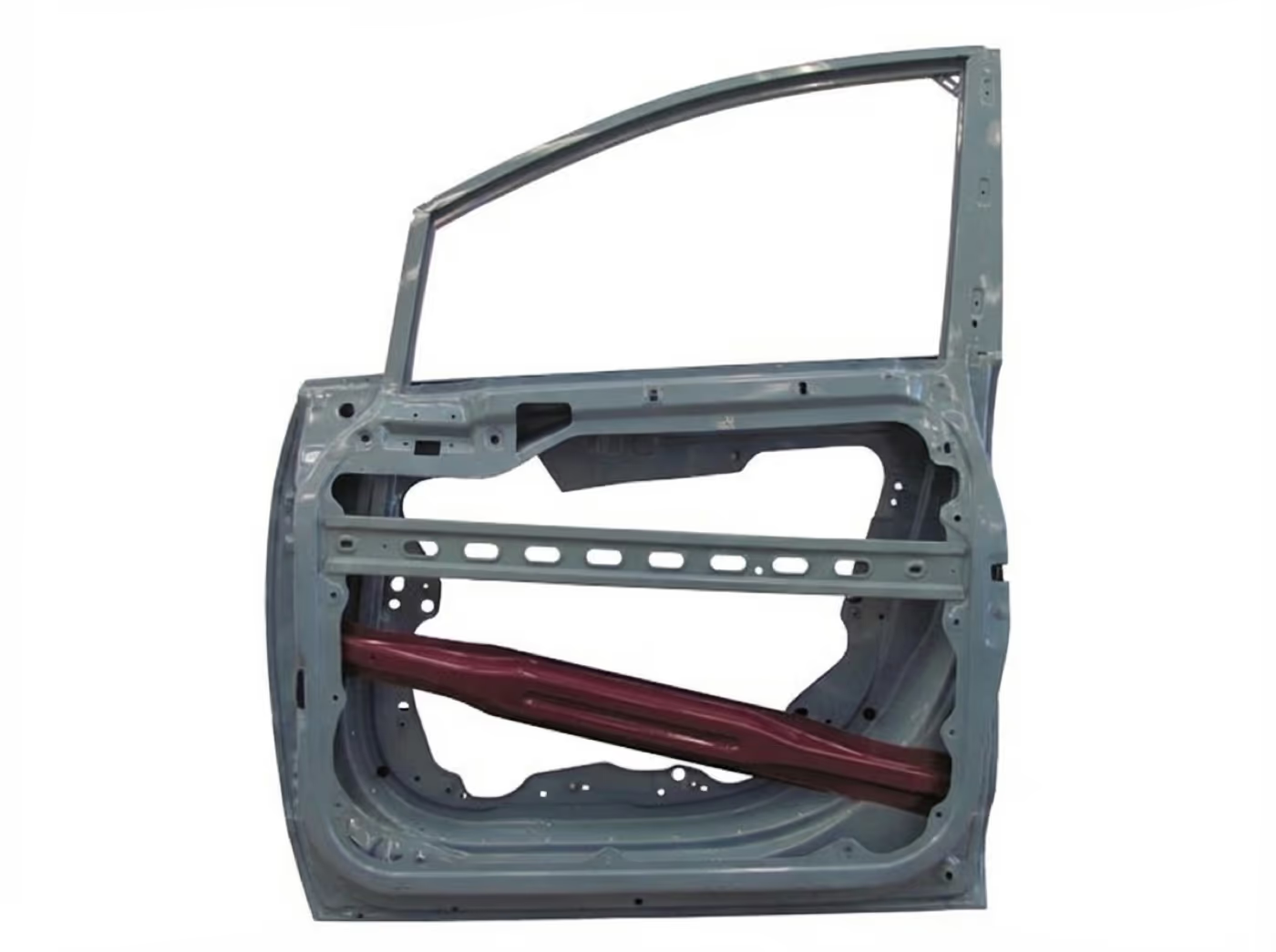
The same door, inside and out. What you can't see is exactly what sets the price.
Your dent may not be on a door, and that changes very little. Hoods, fenders, quarter panels and tailgates all have structure behind them too: braces, reinforcement bars, brackets, wiring, and on a hood the whole underframe. Some spots on your car are wide open from behind and take minutes. Others sit directly over a brace and have to be reached a harder way, or reached after something comes off first. That is the single biggest reason two dents that look the same are not the same price.
Four steps from your first photo to keys back. No guesswork, no pressure.
Drag the handle to reveal the repair. These aren't filtered photos. This is the standard.
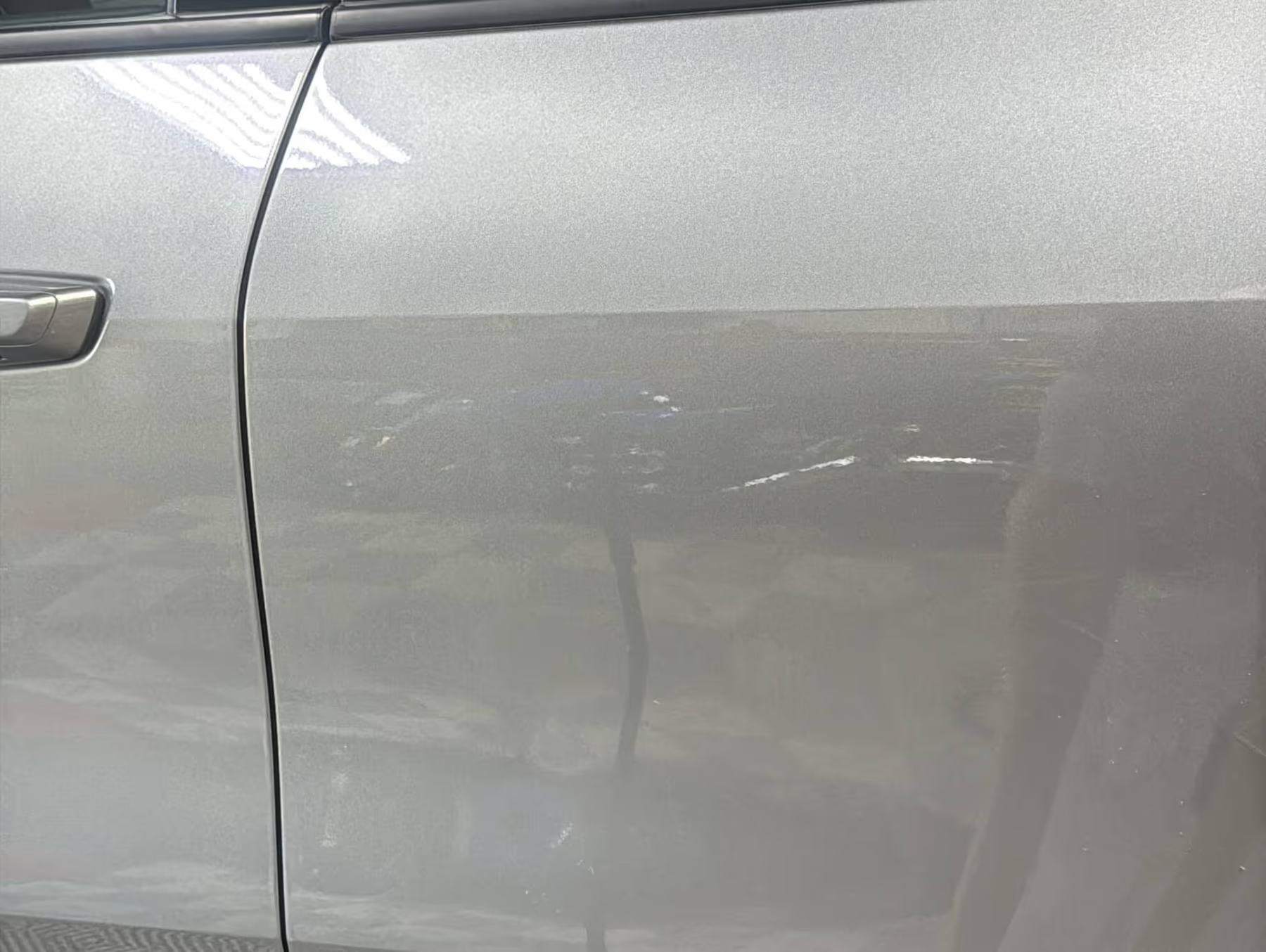
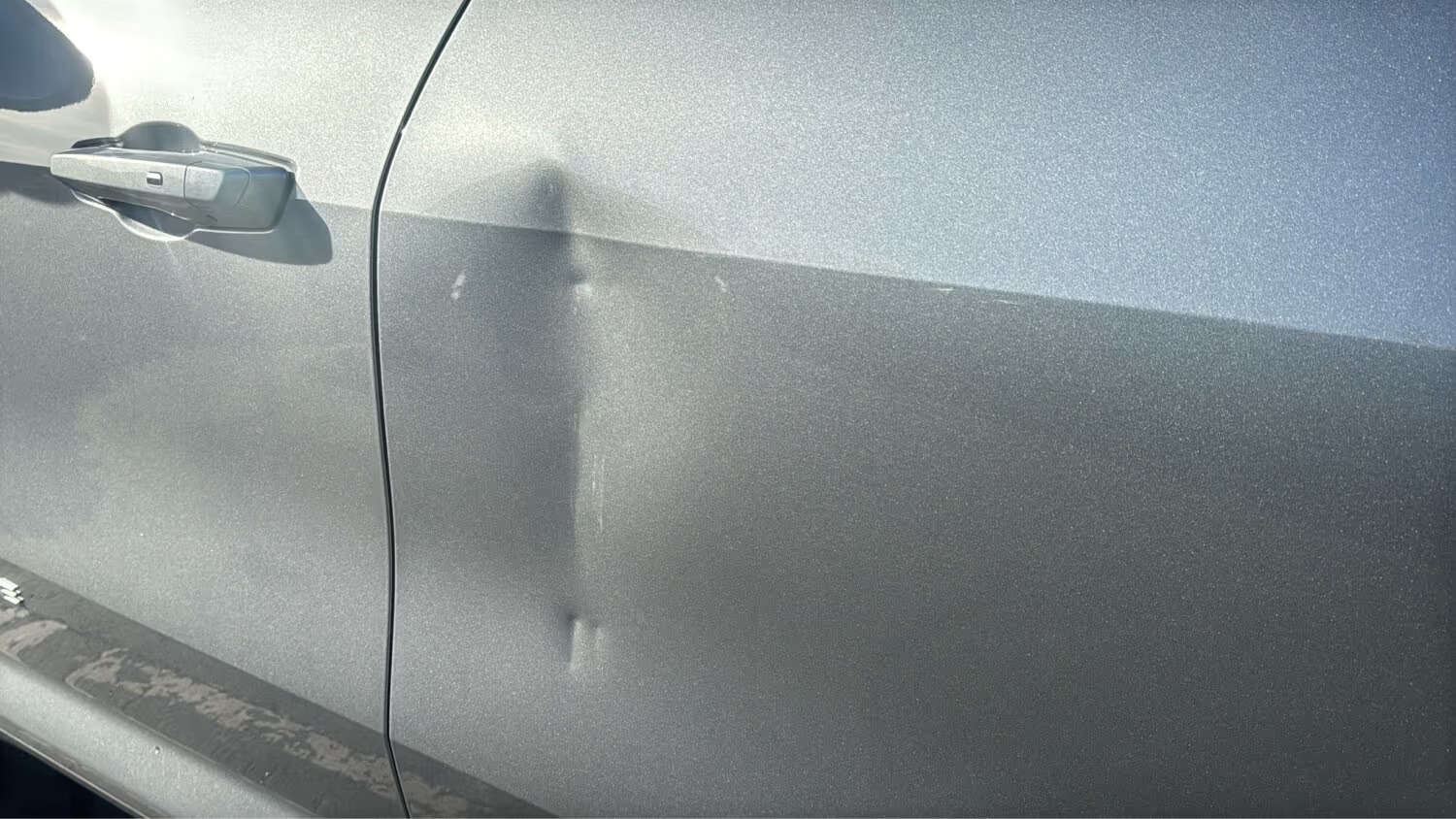
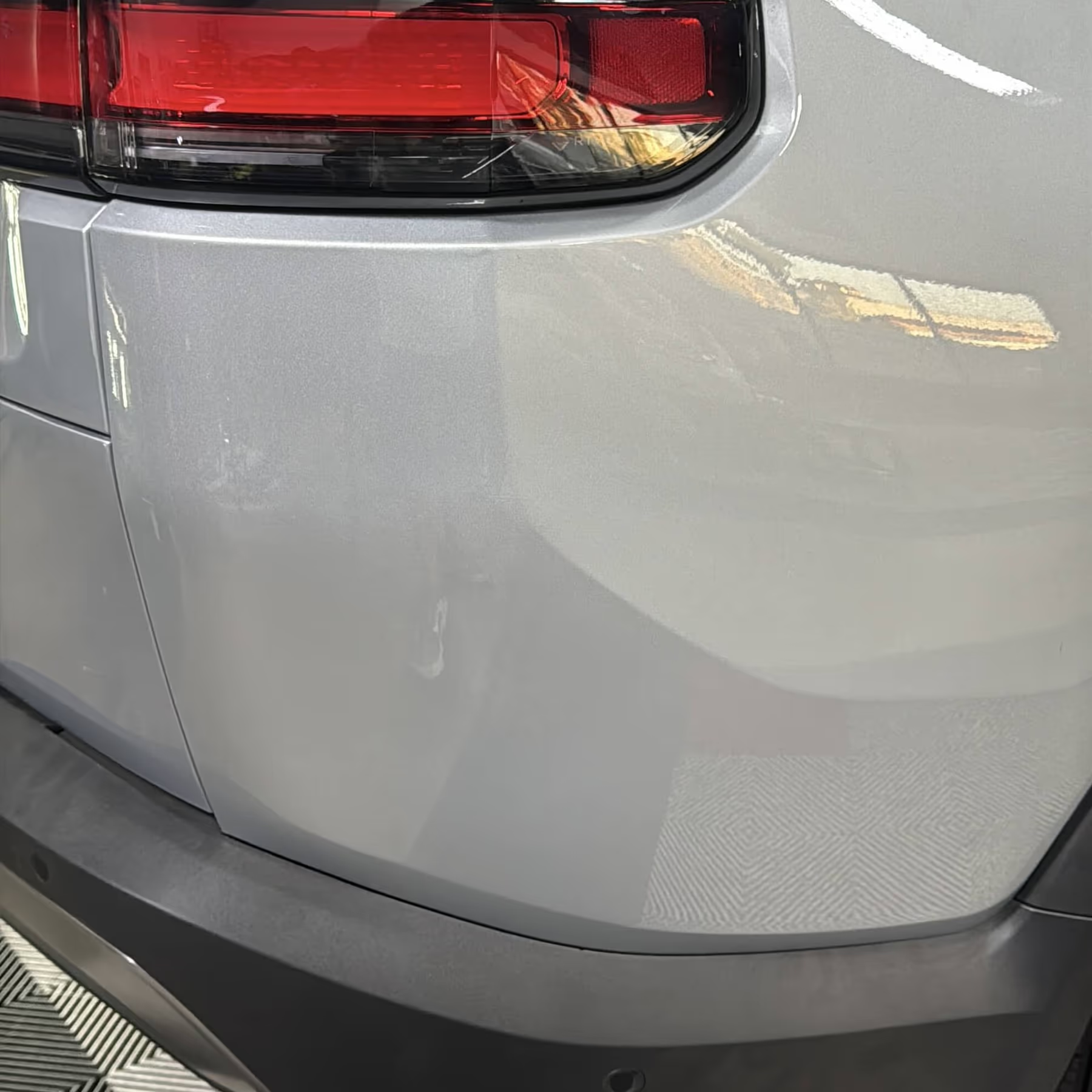
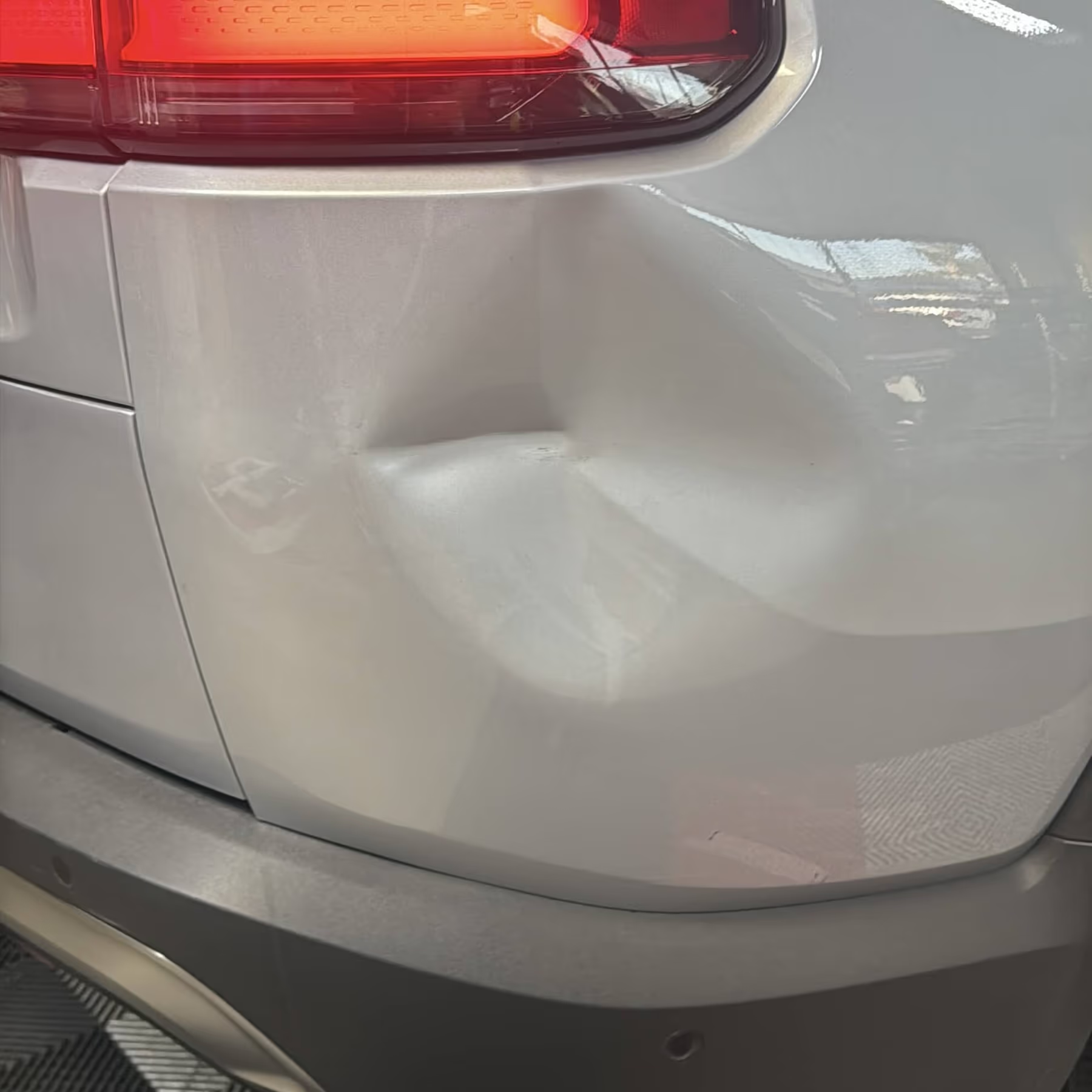
Most paintless dent repair jobs in San Diego land in these ranges. Your exact price is free and comes back in minutes after you text a photo. You approve the number before a tool touches the car.
A clean ding or small body dent, massaged out with the factory paint untouched.
Deeper or wider damage on a door, fender, or quarter panel. Same flawless finish.
A line dent along the body. Worked out section by section without breaking the paint.
The body shop says new panel. We look at the paint first and often save it.
Priced by the storm and the panel count, usually $1,500 to $8,000 or more. This is the one repair where insurance usually makes sense. We work every panel, keep the factory finish, and handle the claim with your insurer directly.
Every price depends on the dent depth, where it sits on the panel, and the access behind it. Panel material matters too. High-strength steel and aluminum take more skill and time. Most repairs also come in two finish levels, so the result fits your vehicle and your budget.
Complete satisfaction or no charge applied. Factory finish. No Carfax record. Your written quote is free and confirmed in person before any work begins.
Answer four quick questions for a preliminary range. Your exact price is confirmed in minutes after a photo review.
Set the size, where it sits, and the metal. The estimated range and the reason update live, the same way a real quote does.
A small dent on a flat panel, in standard steel. Flat panel, standard steel, clean access. This is base price.
A range, not a final price. Text two photos and you get the real number, usually within minutes.
Send clear photos of the damage, a few angles in good natural light, to the booking link or to 858-408-6200. Myke personally reviews every submission and responds with an honest assessment, usually within minutes. No automated quotes, no guessing from descriptions alone.
PDR is ideal for dents where the paint is not cracked or broken: door dings, parking lot impacts, body panel creases, hail damage, and shopping cart hits. If the paint is compromised or the metal is stretched beyond what PDR can address, Myke will tell you that upfront and point you in the right direction.
No. PDR does not generate an insurance claim or body shop record, so there's nothing to report on Carfax or similar vehicle history reports. Your factory paint stays intact, which is a significant factor in resale value. A body shop repair, even a good one, shows up. PDR doesn't.
Most repairs are completed the same day. Smaller repairs can be done in under an hour. Larger jobs like multi-panel hail damage may take a full day. Myke will give you an accurate time estimate when you schedule, and he'll let you know if anything changes.
If you're not completely satisfied with the result, no charge is applied. That's not a marketing line. It's the standard Dent Time has operated on since 2001. A repair done right doesn't come back, and a result you're not happy with isn't a result Myke is happy with either.
Yes. Myke regularly works on high-end vehicles: exotics, collector cars, and luxury imports, where factory paint preservation is especially critical. The standard of care is the same regardless of the vehicle, but the attention to detail matters most when the stakes are highest.
Don't let a dent follow you around. Text a few photos and we give you a real, specific estimate. Most come back the same day.
 Rated Since 1991
 We just texted .
Send two or three photos from different angles and Myke gets your preliminary estimate moving.