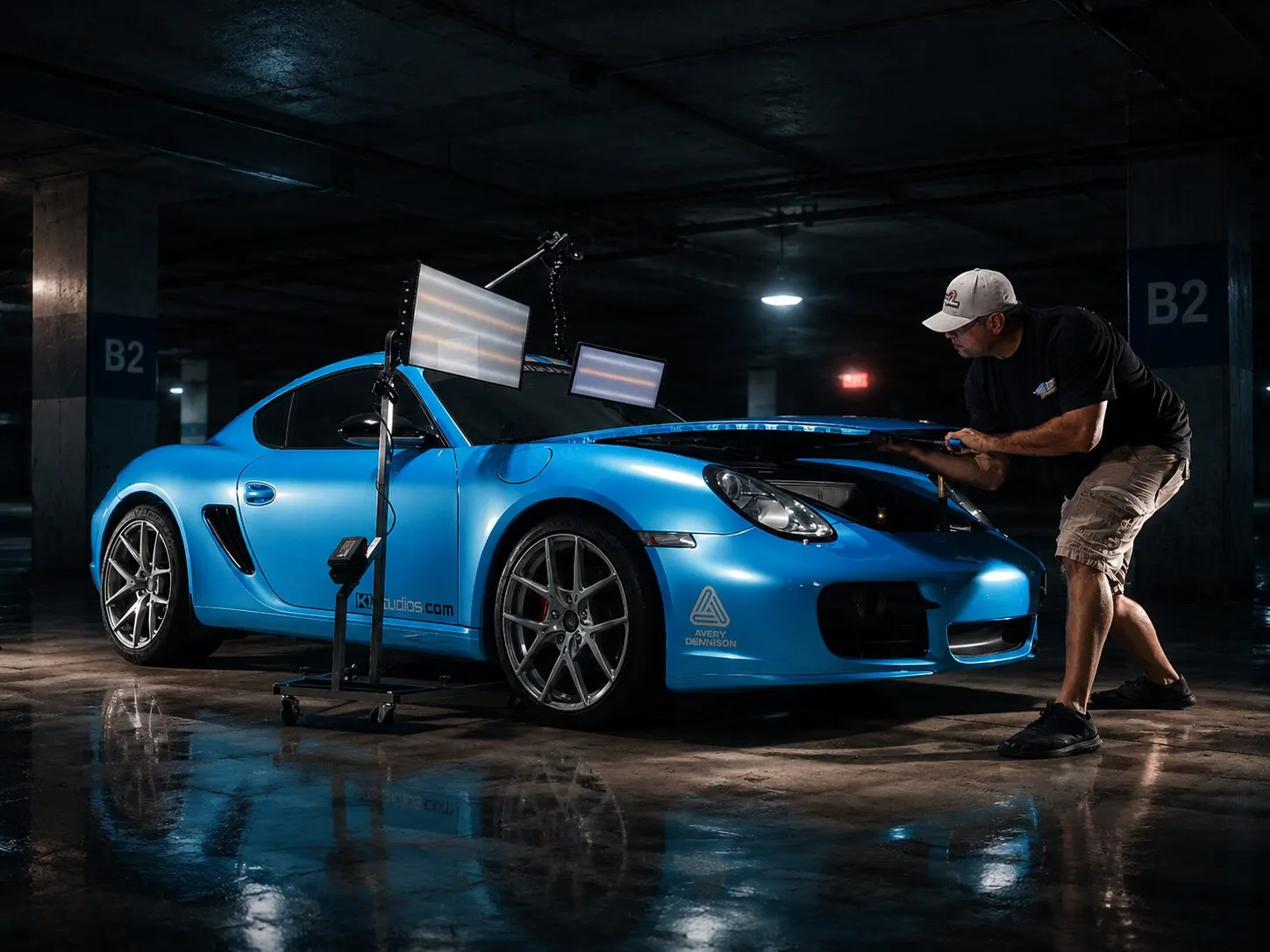
Everyone else, we save you the money. Paintless dent repair is considered one of the hardest trades in any industry to learn. Roughly nine of every ten people who reach out are not ready yet, and Myke tells them. Before you send tuition to any school, including this one, read what follows.
2 students maxReal dents, real field workTaught personally by Myke
Watch Before You Read
Meet the Instructor at the Panel.
Full teaching videos, not clips. Start with the honest one about whether this trade is even for you. Tap WATCH and the whole page becomes the theater, sound on.
Drag or use the arrows · tap watch for full screen
Dent Time · Real Instruction
Loading the Repair
0:00 / 0:00
Gone.
Yours Next?
Hours, not weeks. Never touched the paint. Two photos get you a real price in minutes.
Who Is Actually Teaching You, and What Have They Actually Built?
Somewhere in the last twenty years, PDR training became a business a person runs when they cannot quite run a PDR business. Part of it is what the trade calls a puppy mill. Training mills running students through on a schedule, backyard courses, and Myke has heard of one being taught out of a barn. An "instructor" who never built a successful full time PDR shop of their own, and a monitor playing videos in the back. But the operations worth more caution are the polished ones. A sales team, a financing partner, and a brochure that promises the works. Nobody on that phone call has ever finished a dent, and not one of them is measured on whether you succeed. They are measured on whether you enroll. The tuition looks the same on the receipt. The outcome is not.
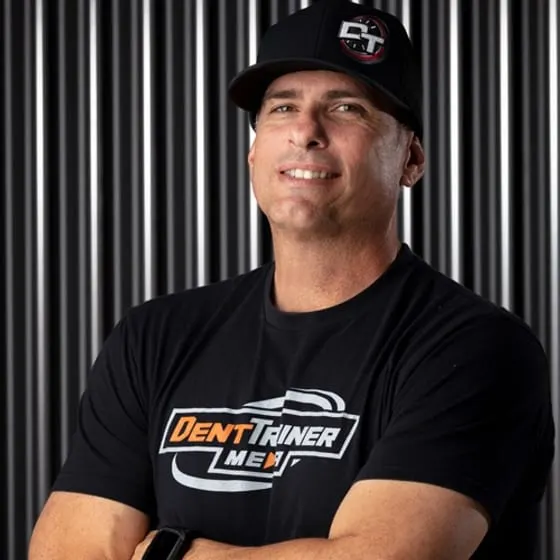
Myke Toledo has been repairing dents since 1991 and has run Dent Time as a working shop since 2001 with his wife Mary. Every day he teaches, that same shop is repairing paying customers' vehicles. The standard you learn is the standard that gets paid. Before you send money to anyone in this industry, apply the tells below to them, and then apply them to us.
01
They have no successful PDR business of their own
An instructor who cannot make a full time living doing PDR is not the person to teach you how to. Ask what shop they run, what customers they serve, and whether that shop would stay open if the training revenue stopped. If the answer is "the training IS the business," your research already answered the question.
02
A salesperson standing between you and the instructor
Somebody whose income depends on your enrollment will answer every question the right way, because answering them the right way is the job. That is not a conversation, it is a close. Ask to speak with the person who will actually be standing at your panel, before you pay. If they cannot get you fifteen minutes with that person now, think about how available they will be after the money clears.
03
Twenty five students, one instructor, in the back watching videos
Myke walked into a competitor's school once to buy tools and saw it himself. 25 students in one room, one to two weeks total. He asked, "Who in the heck is going to learn that fast?" Then wondered if he was the one being unrealistic. He was not.
04
Generic correction instead of diagnosis
The tell in the training bay: "push harder," "tap higher," "you're not pushing hard enough." Real instruction identifies what the student is doing wrong, individually. Maybe they are staring at the orange peel too hard, not switching tool tips when it matters, not changing the reflection angle. A real instructor sees the detail the student cannot see yet, names it, and corrects it before frustration takes over.
05
A tool package bundled into tuition on day one
You need quality tools eventually. You do not need thousands of dollars of them shoved in your hand before you have earned the right to choose them. Roughly 75 percent of pre-training tool buyers buy the wrong ones. The right order is learn the tools, then buy the right five. Not the other way around.
06
Income promises without a learning curve
A school that leads with six figures and hides the six to twelve month consistency curve is selling the dream, not the trade. The honest schools show you the curve. That includes ours.
07
No consultation, no readiness check, just a payment link
The mills route you to financing before they route you to a conversation. A serious program starts with a phone call whose purpose is figuring out if you should even train right now, not whether you can afford to.
Most people do not get a second chance. They do not have the financial ability to do that. That is why picking the wrong school is close to final, and why the honest question is not "which school is cheapest," it is "which instructor will actually see me at the panel."
Myke Toledo
A Working Shop, Not a Classroom Prop
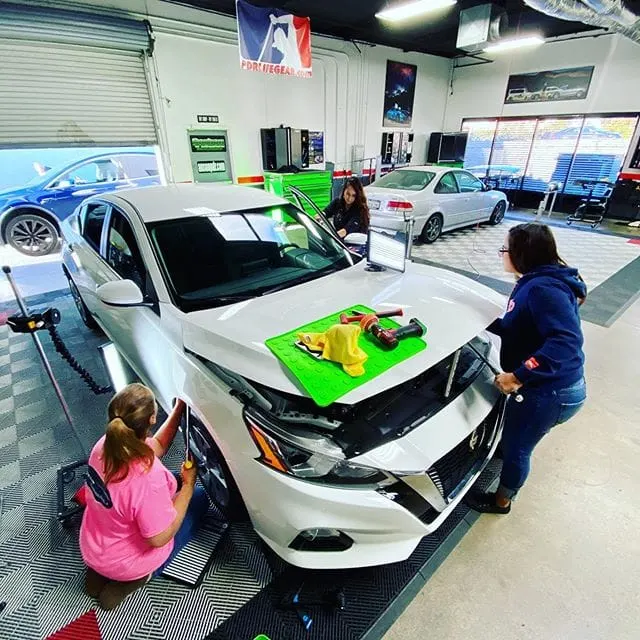
You train inside the same shop that repairs customer vehicles six days a week.
The Wall Every Real Student Hits
How Long Does It Really Take to Learn Paintless Dent Repair?
The mechanics answer is boring. The honest one is this: where your tool tip lives, you learn in an hour or two. What the light on the panel is telling you takes about two weeks to get comfortable with, because your brain and your eyes are having a debate. They are not on the same page yet.
Three variables are firing at once: where the reflection board is, what the orange peel is doing to the reflection, and how your hand is moving between the two. The orange peel on real customer paint is a visual language you have literally never seen before. That debate takes time to resolve, and no one, in any trade, resolves it in three days.
The honest curve past the wall: six to twelve months of steady work before everyday door dings feel routine. Three years to feel comfortable across the whole trade. Some students hit it faster, and every one of them paid for it in seat time, dedication, and family time. The floor for the outliers is not a shortcut.
Before · The WhorlAfter · Lines Fold Clean
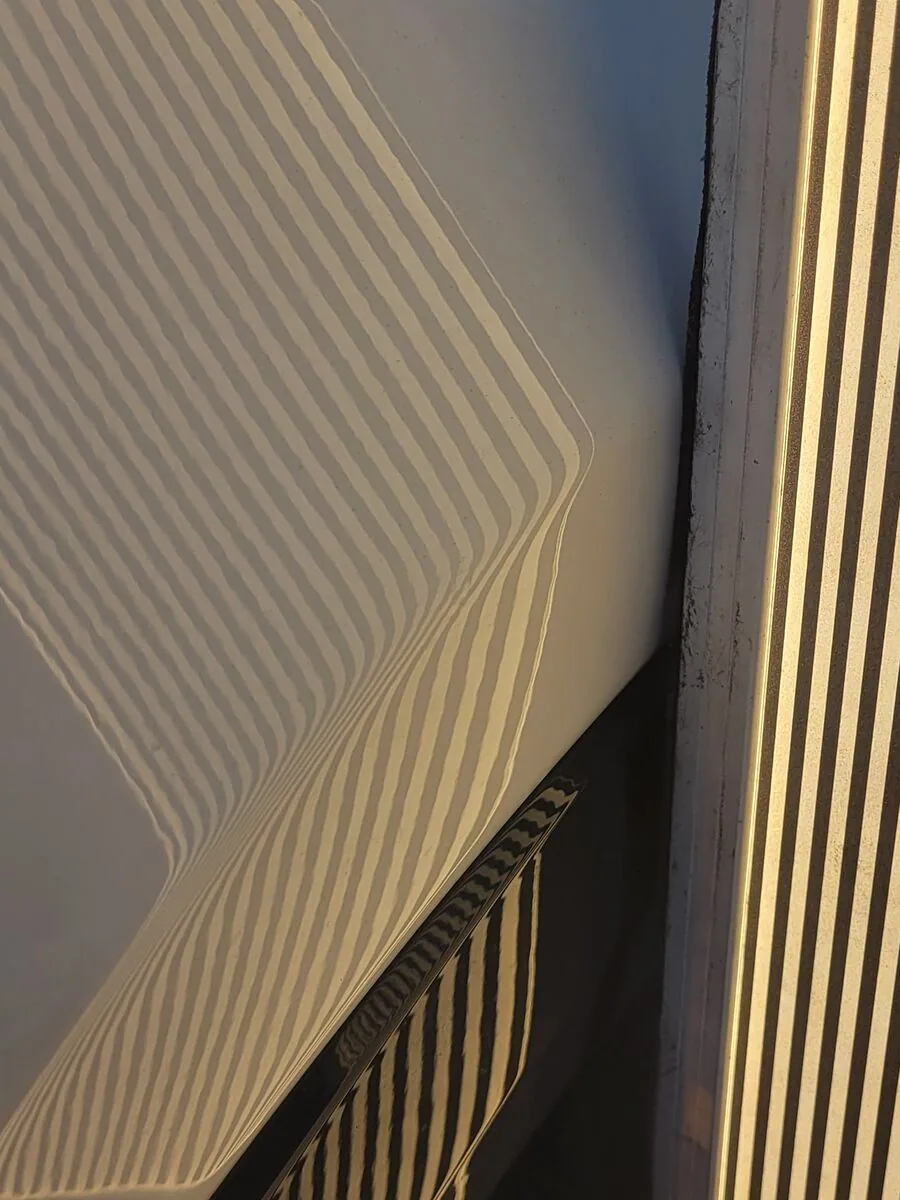
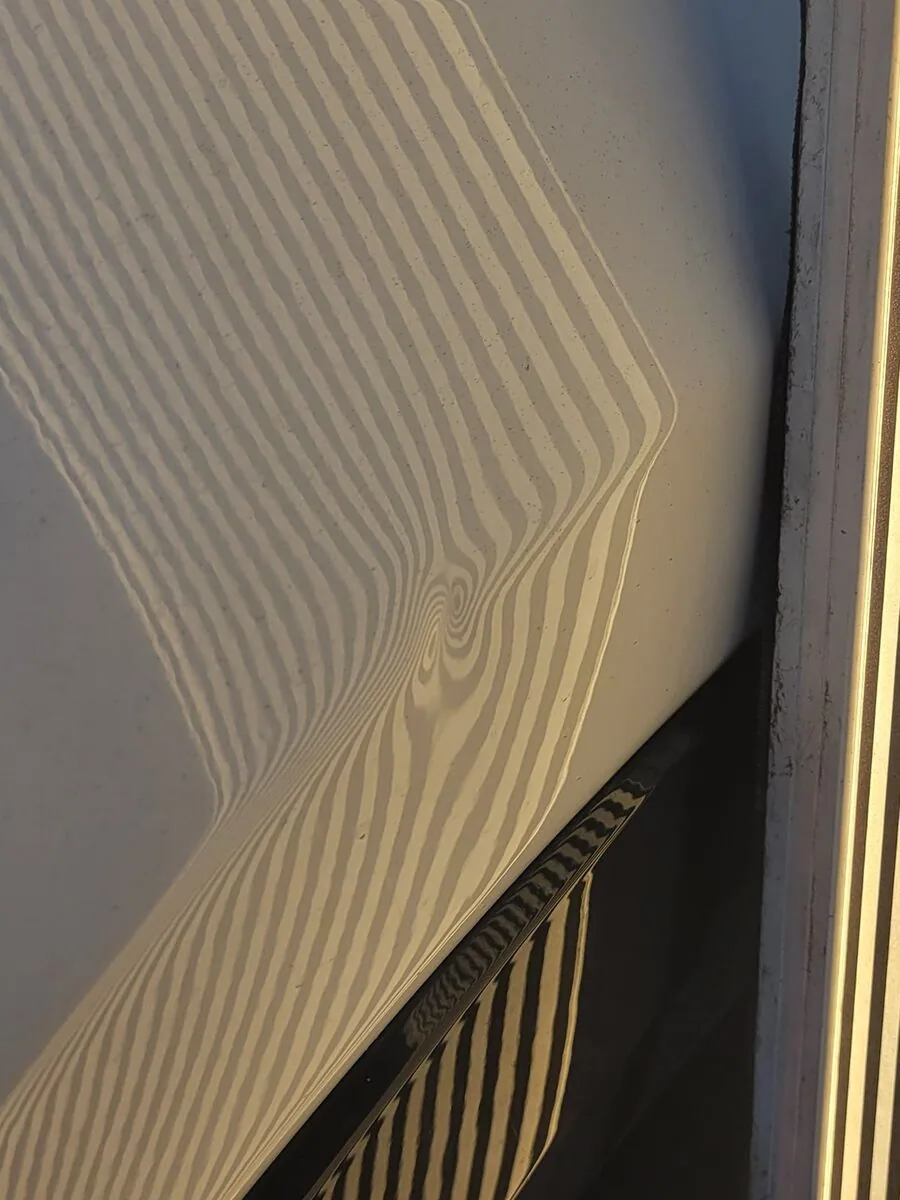
Drag it. The lines do not lie. Where the metal drops, the reflection winds itself into a tight whorl, and that whorl is the dent telling you exactly where its low point is. Pull it back correctly and the lines fold along the body line with nothing left to find. Learning to see that, and to trust it over what your fingers think they feel, is the two weeks.
The brain and the eyes are having a debate. They are not on the same page yet. That is the invisible obstacle nobody names, and it is the reason panel forever schools graduate students who never actually adjusted.
Myke Toledo
The Ratio That Reframes Everything
95 Percent of Training Is Spent on the Last 5 Percent of the Repair.
Anyone can move metal. Making the metal go back invisibly is the trade. The last 5 to 10 percent of a dent is where the whole hierarchy of skill lives, and it is where 95 percent of your training time will honestly go.
95%Of Your Training Hourson the last 5%Of Every Dent
Three variables have to synchronize simultaneously in that final 5 percent: push pressure, tap-down pressure, and board movement. Too hard, too soft, too close, too far. Miss one and the dent moves without improving. The trap is making the dent different, not better.
The wall in the last 5 percent is not strength. It is confidence. The instructor's job is diagnostic: read what the student is doing wrong quickly, name it, and get them off the frustration boat and onto the concentration one. Every year Myke teaches, he sees that wall faster. His experience is what shortens the time you spend at it.
Are you making the dent better, or just making it different? That is the question a real instructor is asking on your behalf, until you learn to ask it on your own.
Myke Toledo
Two Paths, One Standard
2 Weeks or 4 Weeks?
Both are hands-on. Both are capped at two students. Both are taught personally by Myke. The difference is how far down the road you are when you leave.
2-Week Course
The Foundation
The fundamentals done right: reading the board, positioning, tool control, and the beginnings of real repairs.
Board and light reading, body positioning, tap-downs
Glue pulling, crown recognition, light creases, body lines
Finishing technique from day one, the skill that decides everything
Best for a serious head start or adding PDR to an existing auto trade
A 2 or 3 day weekend course is a movie on fast forward. You will know what it was technically about without understanding the plot or the details, and you will not have time to build a single good habit. That is why Dent Time does not offer weekend courses. If that is the budget, spend it on denttrainer.com instead and build a real foundation self-paced.
Your Turn at the Panel
Two seats maximum means the hours on the tool are yours, on real metal, under a real board.
The Third Path · Train From Anywhere
Online PDR Training at Dent Trainer.
Myke founded Dent Trainer, the world's largest library of online paintless dent repair training tutorials. Basic, intermediate, and advanced lessons, quick-tip videos, eBooks, and manuals, all self-paced, all from the same instructor who teaches the hands-on courses.
Hundreds of PDR techs have learned strictly from Dent Trainer. It is a slower journey than in-person, and it is still real progress. Students use it three ways: before a course, to arrive already speaking the language. After a course, to review technique for years. And from anywhere in the world when travel to Escondido is not possible yet.
Basic to AdvancedThe largest online PDR tutorial library in the world
Self-PacedYour schedule, your speed, from any country
eBooks + ManualsQuick-tip videos and references included
Lower RiskWhere Myke sends students who are not ready to fly out yet
Founder, Dent Time · Founder, Dent Trainer Media · Instructor
The online library and the hands-on courses come from the same person. Myke Toledo has been in paintless dent repair since 1991, founded Dent Time in 2001 with his wife Mary, and has trained technicians from around the world in person since 2001. In 2013 he built Dent Trainer Media, the first online PDR training platform, so the students who cannot fly to Escondido yet still learn from the same instruction, and so the ones who do come keep it for years afterward.
19911991Repairing dents, without a break
20012001Training PDR technicians in person
20122012PDR Person of the Year
20132013Founded Dent Trainer, the first online PDR training
20212021Lifetime Achievement Award
400K+400K+YouTube subscribers on the Dent Time channel
The Consultation Isn't a Sales Call. It's a Readiness Check.
Roughly nine of every ten people who reach out about training are not ready. Not because they cannot afford it. Because their head is not in a place where the training can land. Anything unresolved at home surfaces during the course. Family conflict, a divorce mid-way through, personal problems the student is carrying. It corrodes the learning curve, and no tuition rescues it.
Myke will tell you if it is not the right time. He will redirect you to denttrainer.com and mean it, because a lower-risk online start is honest progress and it is where hundreds of techs have begun their careers. Turning someone away is not rejection. It is timing.
The 15-minute call runs as long as it needs to. No hard cutoff. No enrollment counselor. It is one honest conversation between the person who might teach you and the person deciding whether to be taught.
It is not here to see if you could afford it. It is here to see if you can mentally afford it. And leave those personal problems at home. I bet nobody has actually told you that. They just want to take your money and train you regardless of where your mindset is at.
Myke Toledo
Half of your income lives here. The other half lives on your website, your Google profile, and your discipline.
The Number No School Wants to Publish
What Do PDR Technicians Actually Earn?
The honest first-year range is $20,000 to $60,000. The spread is not decided by skill. It is decided by what Myke calls head trash, and by how hard you work on the business behind the tool.
Half of your business, or more, happens off the panel. Your website, Google Business Profile, YouTube, social, and now AI leverage on top. The students Myke has trained who cleared $100,000 in year one did not do it because they were the best at PDR. They did it because they were the best at promoting themselves and understood their client avatar.
The right question is not "how much can I make." It is "how much am I willing to sacrifice, and refuse to treat this like a hobby." Money follows passion and discipline. It does not lead them.
Curious what the tools actually cost before you spend a dollar on them? Read the tools of the trade first. Three to five tools in a beginner's hands will build a better technician than a hundred. It is like golf. You get fitted. The tool is personal to you.
Head trash is what sets you apart, not skill. Two students of equal ability earn three times apart based on whether they show up online, run a real website, and handle their own resistance.
Myke Toledo
Honest Numbers, No Sugarcoat
What Does the Time-to-Money Curve Actually Look Like?
The honest first-year range in paintless dent repair is $20,000 to $60,000. The spread is not decided by skill. It is decided by how many hours per week you put on the panel, plus how much back-end business work you do off the panel. Same PDR ability, three times apart in income. Below is the real curve, stage by stage, in Myke's numbers.
M 1-2
Foundation
$0 earned
Hands-on training plus full-time practice. Every hour goes into board reading, tap-downs, and finishing on real panels under an instructor. No paid work yet, on purpose.
M 3-6
First Paid Repairs
Learning to close
You start taking on real customers, one to three dents a day, with your own quality bar still louder than any paycheck. Income begins, and how fast it grows tracks with your online presence, not your talent.
M 6-12
Consistency
Everyday dents feel routine
Four to eight repairs a day is realistic. The habits from training are automatic now. Marketing, website, and repeat referrals start compounding, or they don't, and the ceiling is set right here.
Year 1
The Honest Year-One Range
$20,000 to $60,000 total
Myke's real number, not an industry brochure figure. The spread is not decided by skill. It is decided by head trash, discipline, and how much back-end work you actually do.
Year 3+
Comfortable Across the Trade
$50,000 to $100,000+
Everyday and complex dents both feel routine. A real book of business, a referral network, and the option to specialize. Hail season pushes it higher for the technicians who chase storms.
The outlier. Myke has trained students who cleared $100,000 in year one. Every one of them earned it through determination, marketing understanding, and refusing to treat PDR like a hobby. Not through superior PDR skill. That is what the Dedication Multiplier below actually measures.
The Multiplier Nobody Publishes
Hours In vs Money Out. Where Do You Land?
Two technicians with the same hands, same tools, same training, earn three times apart in year one. What decides the gap is not talent. It is how many hours per week they put on the panel, and how many hours they put behind it on marketing, website, Google Business Profile, and now AI leverage.
Casual
The Hobby Path
Panel hours per week
5 to 15
Business work off the panel
Little to none
Year 1 income$5k to $15k
Weekend and evening repairs
Word-of-mouth only
Skill improves slowly
Not a living, not meant to be
Committed
The Full-Time Path
Panel hours per week
30 to 40
Business work off the panel
Google Business Profile, some social
Year 1 income$30k to $45k
Consistent daily work rhythm
Reviews and repeat customers building
Landing in Myke's honest range, mid-band
Real living, real room to grow
All-In
The Business Path
Total hours per week
50+
Business work off the panel
Website, YouTube, social, AI leverage
Year 1 income$60k to $100k+
Full brand: website, GBP, social, video
Client avatar clarity, targeted work
AI leverage on repetitive tasks
Outlier tier: Myke's $100k year-one students live here
The takeaway. A PDR technician earns two ways: on the panel, and off the panel. Ignore either and the number stays small. Do both with discipline and the number grows fast. Money follows passion and discipline. It does not lead them.
The Skill That Splits the Field
Why Aluminum Training Is Not Optional Anymore.
This is not just Teslas and Rivians. Half the panels on modern Toyotas, BMWs, Mercedes, and Fords are aluminum too. The metal that fights back is now the metal on most cars in every parking lot in America. A graduate who never touched aluminum in training is walking into a job market where half the cars will humiliate them.
Aluminum has no memory. Steel wants to return to shape and works with you. Aluminum gives nothing back and works against you. It takes three to five times more force than steel, sometimes more. Sharper tools. Higher accuracy at the exact same moment as higher force. The paint cracks if you get bold in the wrong spot.
What it feels like the first time: pushing on plastic. Wrong tool. Wrong heat. Wrong reflection. Everything wrong at once. Every system has to fire together: heat, reflection reading, sharper stronger tools, correct tap-downs, tab-and-glue pulling with bigger tabs and stronger pulls. Once it clicks, it is like changing gears. Aggressive and precise at the same time.
Aluminum has no memory. It gives nothing back. And half of every parking lot in America is now made of it. That makes aluminum a foundation skill, not a specialty.
Myke Toledo
Foundation, Not Finish
What Myke Actually Gives You.
Learning PDR is like building a house. The instructor gives you the foundation. What you build on it is yours. Skip the foundation and everything you build on top of it collapses. Try to build the second floor without understanding the ground floor and every future dent will remind you what got missed.
The measure of a real program is not whether the brochure promised success. It is whether the instructor still picks up the phone at year three. That is why Myke will not pretend every student is successful. Most are. Not all. And the honest answer is what earns your trust before it earns your tuition.
Roof · Yours
The Career You Actually Build
The reputation, the client list, the panels you refuse to touch on principle, the years you compound at the trade. Every one of those is yours to build after the training ends.
Third Floor
Marketing, Client Avatar, Business Discipline
The stuff Myke names but you own. Website, Google Business Profile, social, AI leverage, and the honest question of who exactly you are trying to serve.
Second Floor
Aluminum, Advanced Damage, the Final 5 Percent
Practicing turns into perfecting. Body lines, hidden crowns, trapped pressure dents, aluminum. This floor takes years of seat time and is where the trade actually pays.
First Floor
Fundamentals, Muscle Memory, Real Repairs
Board reading, tap-downs, glue pulling, tool tip switching, cross-checking. Real vehicles, real customer paint, corrected in real time by an instructor watching your hands.
Foundation · Mine
The Framework, the Rules, the Details, the Solutions
How the light talks to the panel. Why you switch tools. How to read reflection angles. The habits that make a real technician, embedded in your head so you grow. Not a finished house. A foundation everything else stands on.
Curriculums Get Copied. That Is Not the Part That Matters.
Pieces of this course have turned up at other schools, and that is fine. A curriculum is a recipe, and recipes copy easily. What does not copy is the years of standing beside somebody at the exact moment they got it wrong. That is the thing that lets an instructor recognize it in a second, name it, and say the one sentence that fixes it. You can hand a person the recipe. You cannot hand them the cooking.
You don't give yourself excuses. You give yourself solutions. That is what I embed in a student's head, and it is what makes the rest of the house stand. If you think you can, or if you think you can't, you're right.
Myke Toledo
The Sentence Every Mill Uses to Escape Accountability
"You Just Have to Practice." Watch the Escape Goat.
Every frustrated student who ever came to Myke was told the same thing on their way out of the other school: "you just have to practice." It sounds like advice. It is really the sentence a mill uses to move the blame back to the student when their outcome disappoints.
Yes, you have to practice. You practice anywhere. On a hood in your garage. On panels at home. On your own vehicle. Practice is portable. It is what happens on your own time, on your own tools, at your own pace.
Perfecting is different, and perfecting is not portable. Perfecting is what happens when an instructor is standing at your panel, catching the habit before it sets, calibrating your force in real time on real metal, and asking you the question you cannot yet ask yourself. That is what the tuition actually buys. The rest is yours.
Anywhere
You Practice
On your own hood, in your own garage, on your own time. Portable. Free. Necessary. Not enough on its own.
VS
Here
You Perfect
With an instructor at your panel, watching your hands, correcting the habit before it sets, on real metal. This is what tuition buys. This is what practice cannot replace.
Watch out for the escape goat. It sounds like advice. It is how the mills get out of accountability when their students do not succeed. You practice anywhere. You perfect with us in person.
Myke Toledo
Why Students Get Good Here
Nobody Stuck Can Tell You What Is Wrong.
That is what being stuck means. If you could name the problem you would have already fixed it. So the instructor has to see it, name it, and correct it before it hardens into a habit, and the only thing that makes that possible is having watched the same failure a few hundred times.
What the student says
I keep working it and it will not come out.
What a classroom says back
Push harder.
It is the only lever an instructor has when he is split between a room full of students and never actually sees your hands. It is right about one time in five. The other four times it makes the panel worse.
What it actually is, one of
01
You are reading the orange peel, not the reflection
The texture pulls your eye and holds it, so you never see what your last push actually did. More force into a panel you cannot read is just faster damage.
02
Wrong tip is in your hand
The correction is a tip change, not more pressure. A student who has not learned when to switch will push a tip past what it was shaped to do and blame themselves for the result.
03
Your angle to the light has not moved
Same position, same reflection, same read. The panel has changed and you cannot see it, because you are standing exactly where you were standing ten minutes ago.
04
There is a crown you have not recognized
Push into a high spot you have not identified and you build a bigger problem than the one you started with. This is the failure that turns a routine repair into a body shop conversation.
05
The three pressures are out of sequence
Push pressure, tap-down pressure, and board movement have to synchronize. Any one of them arriving early or late reads as "it will not come out," and no amount of extra force fixes timing.
06
Nothing is wrong with your technique and you are just tired
The one almost nobody guesses, and the one Myke calls most often. Your eyes ran out forty minutes ago and did not tell you. Everything below is about this one.
Six different problems wearing the same symptom. Five of them get worse if you push harder. That is why two students is the cap and why Myke is standing at the panel instead of at the front of a room. The correction is worth the most in the ten seconds before you groove the wrong habit, and a week later it is not correction anymore, it is retraining.
The Correction Nobody Expects
Sometimes the Fix Is to Stop Working.
The correction Myke gives most often in the bay is not a hand position. It is telling a student to put the tool down, because they got tired forty minutes ago and are the last person in the room who knows it.
In this trade your eyes are the instrument. You are not looking at a panel, you are reading a reflection, and that particular kind of concentration drains quietly and without warning you. Nobody can read their own calibration. A technician whose eyes are spent does not feel tired. They feel like they are getting worse at PDR.
So they do the natural thing, which is the wrong thing. They push harder. They tap more. They bear down on the exact faculty that already ran out, and every minute after that costs them the panel and a little more confidence. This is the feeling that makes people quit the trade in month three, alone in a parking lot, certain they were never going to be good at it. It was never a skill problem.
With deliberate resets
Pushing through
Same student. Same hours. The only variable is whether the breaks were taken on purpose.
What resets it
Take it before you think you need it. Waiting until you feel it means you already lost the last half hour.
Five minutes. Ten at the outside. This is not a lunch break.
Call somebody. A conversation occupies the part of your mind that was grinding, and your eyes get to sit at rest.
Walk outside and look at something far away. Distance is the opposite of what you have been asking your eyes to do all morning.
Anything at all, as long as your eyes are not being asked to concentrate on detail.
What does not
Your phone. It feels like a break because your hands stopped, but your eyes are still locked at close range reading fine detail, which is the exact faculty you are trying to rest. By Myke's own test it does not qualify, and students who spend their ten minutes scrolling come back to the panel no sharper than they left it.
Small breaks, big difference. Ten minutes buys back the whole afternoon. Nothing about telling a student to go for a walk sells more training days, and it is on this page anyway, because it is the correction that saves the most repairs. It is also the one students still write to Myke about years later, long after the tool work became automatic.
The Part Nobody Teaches
You Do Not Have to Be the Best Technician.
You have to be the smartest one. The technician who can educate a customer will out-earn the better repairman who cannot, and Myke has been watching that play out since 1991 without ever once seeing it go the other way.
What PDR training covers
The repair
What the work actually is
The repair
75%Promoting yourself and building a brand people trust
Three quarters of your hard work will be promoting yourself and building a brand people trust. Nobody in this industry says that out loud, because it is not what a brochure sells and it is not what a student wants to hear on day one. It is still the part that decides whether you are booked solid in year two or still waiting on the phone.
That three quarters is on the syllabus here.
What You Are Actually Buying
Anyone Can Teach You to Finish a Dent.
The trade does not pay you for that. It pays you for what happens before you ever touch the panel and for what happens after. Myke has trained students who cleared $100,000 in their first year, and not one of them got there by being the best in the room at PDR.
Reading the damage
Where the tool tip lives, what the reflection is telling you, and where the crown is hiding.
Moving the metal
Push pressure, tap-down pressure, and board movement, all three synchronized at once.
Glue pulling and access
Getting behind the panel without drilling, and knowing when the panel has to come off.
Finishing the last five percent
A repair nobody can find in garage lighting. Ninety five percent of the course time goes here.
Most PDR training ends here
What to actually charge
Price is not a number you copy off another technician's website. It is built from the damage, the panel, the access, and the standard you will not drop below. Guess at it and you will undercharge every hard job and lose the routine ones to someone cheaper.
The value of PDR, said out loud
Most customers have no idea what the alternative costs them in filler, paint, and resale. If you cannot explain that in two sentences at the car, you are selling a dent removal. Explain it and you are selling their factory finish back.
Options instead of a price
One number is a yes or a no. Two or three honest options, with the tradeoff of each one said plainly, hands the decision back to the customer. That is the difference between quoting work and booking it.
Knowing who you are talking to
Your client avatar decides everything upstream of the repair. The dealership, the body shop, the lease return, the enthusiast with a garage full of tools. They do not want the same thing and they do not respond to the same message. Most technicians chase all four and reach none of them.
The message, and where it lives
This is not a social media course. Posting is the last mile, not the work. The work is knowing what you stand for, saying it the same way every time, and being findable by the person already looking for it.
The conversation that closes
Answering fast, saying what you will and will not do, and never promising past the quote. Myke runs the shop this way and teaches it the same way, because the technician who communicates well outearns the better technician who does not.
That is the gap. A course that stops at the dent hands you a skill and leaves you in a parking lot with no idea what to charge for it. The skill was never the part that pays.
The Number, Before You Call
What the Training Costs.
Published, so you can decide before either of us spends time on a call. Both courses are taught by Myke personally, two students maximum, at the shop in Escondido.
2-Week PDR Training
The foundation, taught one on one with a maximum of two students in the shop.
$15,00010 days
4-Week PDR Training
Everything the two week builds, plus the damage that actually pays and the business behind it.
$27,00020 days
In the number
One on one instruction with a maximum of two students at a time.
The business half: pricing, the value of PDR, communication, presenting options, and defining your client avatar.
Aluminum taught inside the course rather than sold as an add-on.
Discounts on major PDR tool brands once you know which tools your hands actually want.
Not in the number
Tools. You buy your own, after you have used enough of them to have an opinion.
Airfare.
Room and board.
That is the number. If the number is the problem, this is not the right time, and Myke would rather tell you that on a fifteen minute call than after you have booked a flight.
Not Sure Yet?
Start With the Question Before the Course.
What the trade really costs to enter, how long it actually takes, what the first year pays, and how to tell a school from a puppy mill.
How to become a PDR technician.
Serious Inquiries Do This
Research Every School. Then Book This Conversation.
You already have the price, so this call is not about the price. Fifteen minutes with Myke gets you the full curriculum PDF and a straight answer about whether this trade fits you at all. No enrollment counselor. No pressure script. If another path fits you better, he will tell you and mean it. The schools that avoid this conversation are the ones your research should worry about.
Paintless Dent Repair Training Questions People Actually Ask.
What people researching PDR training type into Google next. Straight answers, no enrollment pitch.
The rod finds what the eye cannot. Reading the panel is the skill every course here is built on.
How do I spot a PDR school that will scam me?
The tells are consistent, and the polished schools are worth more caution than the backyard ones. A salesperson between you and the instructor is the first one, because somebody paid on enrollment is not measured on whether you succeed. Then: twenty five students in one class. An instructor who never ran a successful full time PDR business of their own. Generic correction, "push harder," "tap higher," with no diagnosis of what you are actually doing wrong. A tool package bundled into tuition on day one. Six figure income promises with no learning curve honesty. Ask to speak with the person who will stand at your panel before you pay. If a school avoids that and jumps straight to financing, your research already answered the question.
Do you have to be the best technician to make good money in PDR?
No, and this is the part almost nobody in the trade says out loud. You have to be the smartest technician, which means the one who can educate the customer. A technician who can explain why the repair is worth what it costs will out-earn a better repairman who cannot, every year. Myke has trained students who cleared $100,000 in their first year, and it was never because they were the best in the room at PDR.
How much of a PDR business is actually marketing?
Roughly three quarters of it. In Myke's experience since 1991, about a quarter of the work is the repair and the rest is promoting yourself and building a brand people trust: your pricing, how you explain the value of PDR, how you present options, your website and Google Business Profile, and knowing who your customer actually is. Every PDR course teaches the quarter. The Dent Time courses teach both, because the quarter on its own does not pay anybody.
Why does my PDR work get worse the longer I work on a dent?
Because your eyes ran out and did not tell you. In PDR the eyes are the instrument, and reading a reflection drains a specific kind of concentration that fades without any feeling of tiredness attached to it. What it feels like instead is getting worse at PDR, which is why so many people quit in month three. The fix is a deliberate break of five to ten minutes before you think you need one. Call somebody, walk outside, look at something far away. Anything where your eyes are not concentrating on fine detail. A phone does not count, because your eyes are still locked at close range on exactly the thing you are trying to rest. Small breaks, big difference.
What makes a good PDR instructor?
Diagnosis, not instruction. A student who is stuck cannot tell you what they are doing wrong, because if they could name it they would have fixed it already. The same symptom, "it will not come out," has at least five different causes: reading the orange peel instead of the reflection, the wrong tip in your hand, never changing your angle to the light, an unrecognized crown, or the three pressures arriving out of sequence. Four of those get worse if you push harder. A good instructor recognizes which one it is from having watched it a few hundred times, and corrects it in the moment before it hardens into a habit. That requires being at your panel, which is why the class here is capped at two.
Can I learn PDR from free YouTube videos?
You will learn what PDR looks like, and that is where it ends. Free videos cannot see your board, your body position, or your tip placement, so the habits you build alone go uncorrected. Structured lessons at Dent Trainer beat random videos, and hands-on correction beats everything.
What is glue pulling, and do you teach it?
Glue pulling repairs the dent from the outside when there is no access behind the panel. Yes, it is taught in both courses, alongside push technique. A complete technician reads the access first, then picks push or pull. A school that only teaches one of them is training half a technician.
Am I too old to learn paintless dent repair?
The students who struggle are not the older ones, they are the impatient ones. PDR rewards patience, maturity, and steady hands over youth. Career changers in their 40s and 50s train here regularly. The free 15-minute call gives you an honest read on your specific situation.
PDR Training, Real Answers
What You Need to Know Before You Enroll.
How much does PDR training cost at Dent Time?
Tuition is $15,000 for the 2-week course and $27,000 for the 4-week course, which runs 20 training days. Both are taught by Myke Toledo personally with a maximum of two students. Tuition does not include tools, airfare, or room and board, and students receive discounts on major PDR tool brands. The price is published so nobody spends a consultation call finding out whether they can afford it.
Why does Dent Time training cost more than other PDR schools?
Two reasons, and the first one is arithmetic. A class of eight or twenty five students splits one instructor between all of them, which is why that seat costs less. Here it is two students maximum and most days it runs one on one, so you are buying Myke's hours rather than a share of them. The second reason is what is taught after the dent: pricing, the value of PDR, communication, presenting options, and knowing your client avatar. Myke has trained students who cleared $100,000 in year one, and that came from the business half, not from superior PDR skill.
What is included in Dent Time PDR training tuition?
Tuition covers one on one instruction with a maximum of two students, the full curriculum through finishing technique on real customer paint, aluminum taught inside the course rather than sold as an add-on, the business side of running a PDR operation, and discounts on major PDR tool brands. It does not cover tools, airfare, or room and board. You buy your own tools after training, once you have used enough of them to know which three to five belong in your hands.
How much can I realistically earn in year one, and how does it grow?
The honest first-year range is $20,000 to $60,000. The spread is not decided by skill, it is decided by hours per week on the panel plus back-end business work off the panel. By year three most committed technicians land in the $50,000 to $100,000 range, and Myke has trained students who cleared $100,000 in year one through determination and marketing understanding, not superior PDR skill. Casual (5 to 15 hours per week, no marketing) earns $5,000 to $15,000 in year one. Committed (30 to 40 hours per week plus basic marketing) earns $30,000 to $45,000. All-in (50 or more hours per week plus full marketing and AI leverage) earns $60,000 to $100,000 or more. Same skill, three times apart in income.
How honest is Myke about who is right for PDR training?
Roughly 9 out of 10 people who reach out about training are not ready yet, and Myke tells them. The consultation is not built to see if you can afford tuition. It is built to see if you can be mentally present for the course. If the answer is no, the redirect is denttrainer.com, because a lower-risk online start is better than a $10,000 mistake nobody can afford twice.
How long does it really take to learn paintless dent repair?
Where the tool tip lives, you learn in an hour or two. Reading what the light is telling you about the panel, and how your hand navigates between the reflection and the tip, takes about two weeks. Everyday door dings feel routine after six to twelve months of steady work. Three years is the honest number for feeling comfortable across the whole trade, and the students who hit it faster paid for it in seat time, dedication, and family sacrifice.
Why does Myke spend 95 percent of training on 5 percent of the repair?
Because anyone can move metal. Making the metal go back invisibly is the trade. The last 5 to 10 percent of every dent is where the whole hierarchy of skill lives, and three variables have to synchronize at once: push pressure, tap-down pressure, and board movement. Skip the finishing and you built a career on repairs a customer will point at in their garage lighting or under a parking lot line.
What do PDR technicians actually earn in year one?
The honest first-year range is $20,000 to $60,000. The spread is decided by what Myke calls head trash and by how hard you work on the business behind the tool: your website, Google Business Profile, YouTube, social, and now AI leverage on top. Myke has trained students who cleared $100,000 in year one. What they had in common was determination and marketing understanding, not superior PDR skill.
How many students train at once?
Two maximum, and most days it runs one on one with Myke. A class of eight around one instructor is a seminar, not training. In that room the instructor teaches whoever keeps up, because he cannot wait for you, and if you fall behind you are the one who paid to be moved on from.
Are weekend PDR courses worth it?
No. A 2 or 3 day weekend course is a movie on fast forward. You will know what it was technically about without understanding the plot or the details, and you will not have time to build a single good habit. If that is the budget, spend it on denttrainer.com and build a real foundation self paced.
Do you train on aluminum panels?
Yes, and the honest reason it matters: half the panels on modern Toyotas, BMWs, Mercedes, Fords, plus Teslas and Rivians, are aluminum today. Aluminum has no memory. It gives nothing back. It takes three to five times more force than steel and demands sharper tools with higher accuracy at the same moment. A student who never touched aluminum in training is walking into a job market where half the cars fight back.
Do I need to buy PDR tools before I show up?
No, and buying too many tools before training is detrimental to your learning curve. So is buying tools before you know how to use them. Roughly 75 percent of pre-training tool buyers buy the wrong ones. Three to five tools in a beginner's hands will make you a better technician than a hundred, because the focus is where the skill is built. It is like golf. You get fitted. The tool is personal to you.
What happens after the course ends?
You keep direct access to Myke, and lifetime access to denttrainer.com for post-basic review. Support is not always instant, but it is real. Myke often checks in on students six months and a year out because they are like his children to him. He will not pretend every student is successful. Most are. That is the honest measure.
Is PDR training right for me?
Only you can answer that, and Myke will not sugarcoat the question. If you are the type of person who does not finish what you start, PDR is not for you. This trade is considered one of the hardest in any industry to learn, and no tuition on Earth rescues a student who quits. If you finish what you start and you can be present for the training, there is a real place for you here.
The Trade You Are Learning
Metal, light, and patience. That is the whole trade, and it pays the people who respect all three.
If You Finish What You Start
Fifteen Minutes. Every Question Answered.
A free 15-minute call with Myke. The curriculum PDF, where you are starting from, and whether this trade is right for you at all. The tuition is published above so the call never has to be about it. If you are the type of person who does not finish what you start, PDR is not for you. If you finish what you start, there is a real place for you here.