
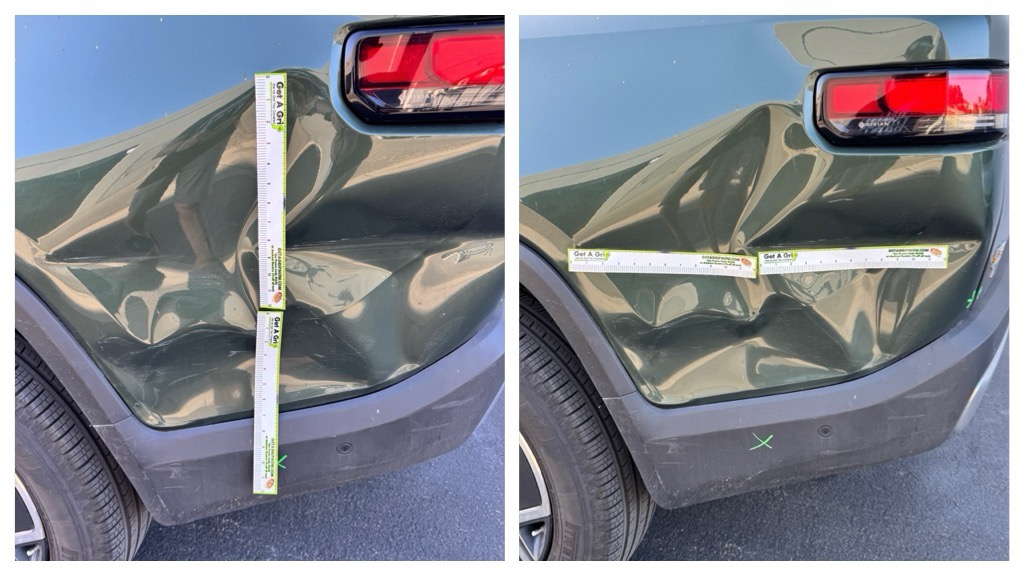
Paintless Dent Repair (PDR) has revolutionized the way we approach vehicle dent removal, but how big can a dent be for PDR to still be effective? At Dent Time, San Diego’s leader in PDR, we’re often asked this question. While there isn’t a universal size limit, the effectiveness of PDR depends on several factors such as dent location, depth, and the type of metal. Let’s dive deeper into the possibilities and limitations of PDR.
What is the largest dent PDR can repair?
PDR can handle dents as large as a beach ball, but success depends on factors like depth and location. Large, shallow dents are more manageable than deep, sharp ones. Our experienced technicians assess each case individually, using specialized tools to access and gently massage the metal back to its original form. In general, dents up to 6 inches or more can be repaired with PDR, with most large dent repairs starting at $400 and potentially taking up to four hours.
Does the location of the dent affect PDR?
Yes, the dent’s location significantly impacts the complexity of the repair. Dents on body lines or near structural supports are more challenging due to the increased rigidity of the metal in those areas. These repairs require master-level expertise and precision to ensure the metal is manipulated without damaging the original paint. At Dent Time, our technicians are adept at handling such technically demanding repairs, which can range from $225 to $600 or more.
How does the type of metal affect PDR?
The type of metal plays a crucial role in PDR. Aluminum, commonly used in modern vehicles like Tesla and Rivian, lacks the “metal memory” of steel and requires sharper precision tools and more force. Our technicians are IMI/EV certified, ensuring safe handling around high-voltage components in electric vehicles. Aluminum repairs are typically 25-50% more expensive than steel due to these complexities.
Is there a difference in PDR approach for EVs?
Electric vehicles (EVs) present unique challenges for PDR, primarily due to their lightweight aluminum body panels and sensitive electrical systems. Our team at Dent Time is IMI/EV certified, which means we’re trained to safely perform dent repairs on EVs without compromising their electrical systems. This certification is crucial for ensuring safety and the highest quality repair outcomes.
How does PDR compare to traditional body shop repairs?
PDR offers several advantages over traditional body shop repairs. It is faster, often taking just hours compared to days or weeks. It is also more cost-effective and preserves the vehicle’s original paint, maintaining its resale value and eliminating the risk of color mismatch. While PDR isn’t always cheaper, it is generally a better option for maintaining the car’s integrity without invasive procedures.
Real-World Example: Tackling a Major Dent
Consider a case where a large dent spans across a vehicle’s rear quarter panel, creating a significant visual blemish. In this scenario, our technicians would use line board lights to accurately assess the dent’s impact and determine the best tools for the job. By accessing the panel from behind, they would apply gentle, precise pressure to gradually restore the surface. This method ensures the paint remains intact, showcasing the effectiveness of PDR even in challenging cases.
Next Steps for Your Repair
Ready to have your vehicle looking its best? Contact us for a free estimate. Whether you’re in La Jolla, Carlsbad, or anywhere in San Diego County, Dent Time is here to help. Call us at 858-408-6200 or visit our shop at 2120 W. Mission Rd. #240, Escondido, CA 92029. Check out our location on the map: Dent Time Map.
Frequently Asked Questions
Can PDR fix all types of dents?
While PDR is highly versatile, it isn’t suitable for every dent. Dents with severe creases or those located on the edge of panels where access is limited may require traditional repair methods. However, for most minor to moderately severe dents, PDR remains a viable and efficient option.
How long does a typical PDR job take?
The duration of a PDR job varies based on the dent’s size and complexity. Simple dents can be fixed in as little as 45 minutes, while larger or more complex dents may take up to four hours or more. Our technicians prioritize precision, ensuring the best results while minimizing the time your vehicle is off the road.
Is PDR covered by insurance?
Yes, most insurance companies recognize PDR as a legitimate repair method and often prefer it due to its cost-effectiveness and preservation of the vehicle’s original paint. At Dent Time, we welcome insurance claims and can assist you in navigating the process to ensure a hassle-free experience.